
The Risks of a Narrow Rally: Why Non-Tech Stocks Are Lagging and What Investors Should Do
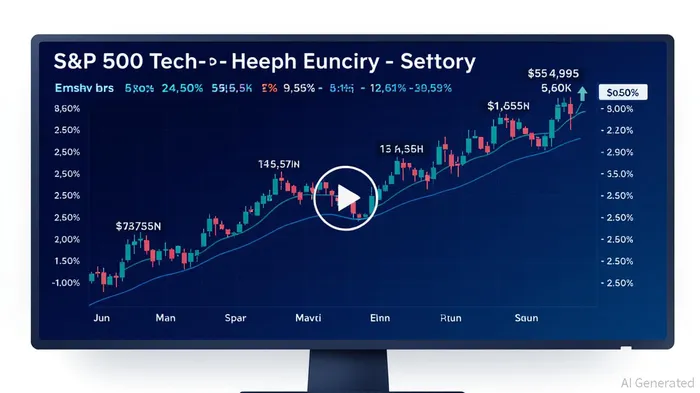
The S&P 500's recent gains have been strikingly narrow, with the bulk of the market's momentum concentrated in a handful of tech giants and defensive sectors. This uneven advance masks underlying vulnerabilities, as cyclical and non-tech stocks lag far behind—a divergence that could spell trouble for investors overly reliant on the market's current winners.
The Tech/Defensive Rally: Overvalued or Overlooked?
The Information Technology sector has been the clear star of Q2 2025, with a projected 17.1% earnings growth led by NVIDIANVDA--, MicrosoftMSFT--, and AppleAAPL--. Meanwhile, defensive sectors like Utilities and Consumer Staples have also thrived, buoyed by their recession-resistant profiles and high dividend yields. Together, these groups have driven the S&P 500's modest 1.8% EPS growth, even as seven of the 11 sectors face declines.
But this narrow rally is not sustainable. The market's reliance on a few sectors is evident in its recent stumble: on July 14, the S&P 500 briefly hit an intraday high only to retreat sharply, underscoring investor anxiety over overconcentration. The Energy sector, for instance, faces a 26.5% EPS drop due to collapsing oil prices, while Financials—excluding JPMorgan's drag—are still growing at 9.3%, highlighting the fragility of macroeconomic assumptions baked into stock prices.
Why Cyclical Stocks Are Struggling—and Why It Matters
Cyclical sectors, which depend on economic growth, are being held back by two forces: trade tariffs and sector-specific headwinds. Industries like Industrials and Materials face rising input costs from prolonged tariffs on steel and aluminum, while Energy grapples with a 19% annual drop in crude prices. Even within Financials, banks are under pressure as JPMorgan's 29% EPS decline (due to a tough year-over-year comparison) drags down the sector.
The data is stark:
- Over half of small-cap stocks (market cap < $30B) are projected to report EPS declines, including NucorNUE-- Corp. (steel) and LennarLEN-- Corp. (homebuilding).
- Tesla, a rare tech laggard, faces a 19% EPS drop amid weak revenue, signaling that even growth darlings aren't immune to macro challenges.
The Vulnerability of a Narrow Rally
The market's reliance on tech and defensive stocks creates two risks:
1. Overvaluation: Tech's 19.8% average annual return over 15 years has made it a crowded trade, with valuations stretched compared to historically volatile sectors like Energy or Materials.
2. Macro Sensitivity: Should trade tensions escalate or oil prices rebound, the market's narrow advance could unravel quickly. The Energy sector's 26.5% EPS decline alone highlights how external factors can destabilize the broader market.
What Investors Should Do Now
The path forward requires a dual strategy: rebalance to undervalued cyclical sectors and hedge with defensive assets.
1. Reallocate to Cyclical Sectors with Structural Tailwinds
- Consumer Finance: Capital One's 23% EPS growth shows demand for credit remains resilient, even as banks struggle. Look for firms with diversified revenue streams.
- Industrial Sub-Sectors: Focus on companies insulated from tariffs, such as logistics firms or those with domestic supply chains.
- Materials: Companies exposed to infrastructure spending (e.g., cement or construction materials) could benefit from policy tailwinds.
2. Hedge with Defensive Assets—But Be Selective
- Utilities: Despite rising Treasury yields, utilities' stable cash flows and 10.7% YTD returns make them a solid hedge. Avoid those with high debt or exposure to rising interest costs.
- Dividend Leaders: The Morningstar Dividend Leaders Index (+6.5% YTD) outperformed the broader market due to holdings like IBMIBM-- and CVS HealthCVS--. Prioritize firms with sustainable payout ratios and diversified earnings.
3. Monitor Macro Triggers
- Tariff Policy: A resolution on steel/aluminum tariffs (post-August) could lift Industrials and Materials.
- Fed Policy: If the Fed signals a rate cut, cyclicals like Financials and Industrials could rebound. Conversely, sustained high rates favor defensives.
- Oil Prices: A rebound in WTI crude could salvage Energy sector earnings—but remain cautious until geopolitical risks subside.
Conclusion
The S&P 500's narrow rally is a warning sign, not a buy signal. Investors should avoid complacency and rebalance portfolios to capture opportunities in undervalued cyclical sectors while hedging with defensive assets. As the old adage goes: “Diversification is the only free lunch in investing.” In this market, it's not just a meal—it's a survival strategy.
Investment advice: Past performance does not guarantee future results. Consult a financial advisor before making significant portfolio changes.

Stay ahead of the market.
Get curated U.S. market news, insights and key dates delivered to your inbox.
AInvest
PRO
AInvest
PRO



Comments
No comments yet