
Risk Reassessment in Regional Banks and Credit Unions: Navigating the Student Loan Default Landscape Post-OBBB


 Aime Summary
The financial sector's exposure to student loan defaults has emerged as a critical risk factor for regional banks and credit unions in 2025, driven by policy shifts, rising delinquency rates, and evolving regulatory scrutiny. The One Big Beautiful Bill (OBBB), enacted in July 2025, has reshaped the student loan landscape by eliminating the Grad PLUS loan program and imposing stringent caps on Parent PLUS loans, forcing borrowers to seek private financing. This transition has created both opportunities and vulnerabilities for regional lenders, which must now balance growth potential with heightened credit risk and compliance challenges.
Policy Shifts and the Rise of Private Lending
according to reports. These changes, effective July 1, 2026, are expected to drive demand for private student loans, a sector where regional banks and credit unions can offer competitive terms, such as no origination fees and flexible repayment options
according to analysis. However, private loans lack federal protections like income-based repayment plans and deferment options,
exposing borrowers-and by extension, lenders-to greater default risks.
This policy-driven shift has already begun to reshape lending dynamics. Credit unions, for instance,
reported that 20% of their members hold student loans from other lenders, totaling $430 billion in outstanding debt. ,
their indirect influence is significant, as members with existing student debt face financial stress that could limit their capacity to take on new credit.
Delinquency Trends and Balance Sheet Pressures
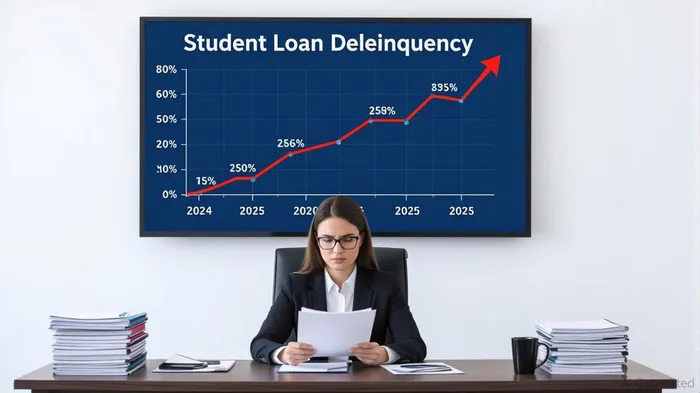
Student loan delinquency rates have surged in 2025, ,
. This spike reflects broader financial strain, as the resumption of federal loan payments post-pandemic has left over five million borrowers seriously delinquent,
facing wage garnishments or Social Security deductions. For regional banks and credit unions, these trends pose a dual threat: declining credit quality in existing portfolios and increased costs to service high-risk borrowers.
The Federal Reserve Bank of New York's Household Debt and Credit Report
highlights that student loans . This rapid deterioration has downstream effects,
as borrowers with delinquent student loans face reduced access to other forms of credit, dampening overall loan growth for institutions. While auto and credit card delinquency rates remain stable, the student loan crisis underscores a sector-specific vulnerability that could ripple through regional lenders' balance sheets.
Regulatory Scrutiny and Compliance Challenges
Regulatory actions have intensified as delinquency rates climb.
The CFPB's from July 2024 flagged systemic issues in student loan servicing, including inaccurate borrower communications and excessive barriers to assistance. These findings signal heightened scrutiny for institutions managing student debt, particularly credit unions, which must now navigate complex compliance requirements to avoid infractions.
The regulatory environment has also grown more complex due to 2025 updates to audit thresholds, the , and Bank Secrecy Act (BSA) regulations
according to compliance experts. For regional banks and credit unions, compliance with these evolving rules adds operational costs and operational risk, especially as they expand into private student lending-a sector with less established regulatory guardrails compared to federal programs.
Risk Management and Strategic Adaptation
To mitigate these risks, regional banks and credit unions are adopting proactive credit risk management frameworks.
The NCUA has emphasized stress testing and scenario analysis to evaluate how severe economic downturns could impact student loan portfolios. Institutions are also diversifying exposure through loan participations and setting sector-specific concentration limits to avoid overreliance on high-risk segments
according to industry analysis.
, rising unemployment, and inflationary pressures-have further complicated risk management strategies
according to analysis. High interest rates, while beneficial for net interest margins, also increase borrowing costs for students, potentially exacerbating default risks. Credit unions, in particular, are balancing deposit growth with profitability challenges,
as they seek to maintain competitive lending rates without eroding margins.
Conclusion: A Delicate Balancing Act
The OBBB's policy shifts have positioned regional banks and credit unions at a crossroads. While the expansion of private student lending offers a lucrative growth opportunity, it also exposes lenders to heightened default risks and regulatory scrutiny. Institutions that successfully navigate this landscape will likely combine aggressive risk management-such as stress testing and diversified portfolios-with tailored borrower education programs to mitigate delinquency pressures.
For investors, the key question is whether these lenders can adapt their strategies to align with the new reality of student debt. Those that prioritize credit quality, regulatory compliance, and borrower support may emerge stronger, while those that overextend into high-risk private lending could face significant balance sheet strain. As the 2026–2028 transition period unfolds, the financial sector's ability to manage this evolving risk will be a defining factor in its resilience.

Stay ahead of the market.
Get curated U.S. market news, insights and key dates delivered to your inbox.


AInvest
PRO
AInvest
PRO



Comments
No comments yet