
Rising Waters, Rising Opportunities: How Texas Floods Are Shaping the Future of Climate Resilience Investing
The catastrophic flooding of the Guadalupe River in Texas this year, which submerged neighborhoods in hours and left over 20 people missing, has become a stark symbol of climate volatility. Yet amid the devastation, a clear investment thesis emerges: extreme weather is accelerating demand for climate resilience infrastructure, creating fertile ground for strategic capital allocation. From flood defense systems to smart grids and resilient housing, the Texas floods are a case study in how governments, insurers, and private firms are racing to adapt—and investors can profit from their urgency.
The Texas Floods: A Catalyst for Climate Adaptation
The 2025 Texas floods exposed systemic vulnerabilities: aging infrastructure, inadequate floodplain mapping, and underfunded recovery systems. Over 10 inches of rain in hours overwhelmed rivers and drainage systems, while communities like Bumble Bee Hills—built in floodplains without proper safeguards—highlighted the cost of ignoring risk. But the crisis has also galvanized action. The Texas Water Development Board's Flood Infrastructure Fund (FIF), initially capitalized with $793 million, is now projected to expand to over $5 billion by 2030. This funding, paired with federal grants like FEMA's $4.7 billion unspent Hurricane Harvey recovery funds, signals a multi-decade investment cycle in flood mitigation.
Investing in Flood Defense: Engineering Firms at the Forefront
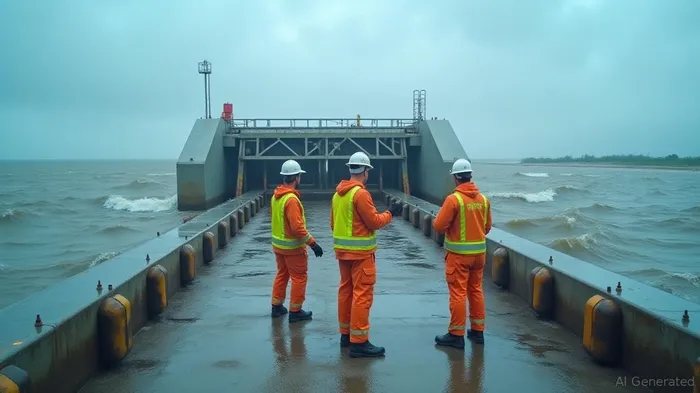
The demand for physical infrastructure—retention ponds, barrier islands, and real-time monitoring—is creating opportunities for firms with specialized expertise. WSP, a leader in coastal resilience projects like the proposed “Ike Dike” for Houston, now derives 30% of its North American revenue from climate adaptation. Its role in the Texas General Land Office's $85M Resilient Infrastructure Program positions it to benefit from FIF-funded projects. Meanwhile, Tetra Tech and ICF are leveraging their federal grant navigation expertise to secure contracts for debris cleanup and floodplain re-zoning.
WSP's stock has outperformed the S&P 500 by 22% since 2023, reflecting investor confidence in its climate resilience pipeline.
Smart Grids and Resilient Housing: Tech-Driven Solutions
Extreme weather is also driving demand for grid hardening and disaster-resistant housing. NextEra Energy (NEE) and Entergy Texas are investing billions to insulate power systems against floods and wildfires. Verisk Analytics (VRSK), a leader in geospatial risk modeling, is aiding municipalities in updating floodplain maps—a prerequisite for securing FEMA grants. For housing, firms like Brookway (a rapid-response remediation company) are gaining traction, as mold and structural damage from floods fuel demand for post-disaster rebuilds.
VRSK's 22% YTD stock rise in 2025 reflects its role in climate risk assessment for infrastructure projects.
Insurance-Linked Securities (ILS): A New Frontier for Risk Mitigation
The Texas floods underscore the limits of traditional insurance. With only 7% of Texas homes insured against floods, insurers are turning to catastrophe bonds and parametric policies to transfer risk. The Bluebonnet Re Ltd. series (2025), issued by the Texas Windstorm Insurance Association, raised $550 million to cover storm-related losses. Such bonds not only provide capital for recovery but also offer investors uncorrelated returns.
ILS have delivered an average annual return of 8.3% since 2020, outperforming Treasuries during market stress periods.
Municipal Bonds: The Long Game in Climate Funding
State and local governments are issuing climate resilience bonds to fund projects like drainage systems and early warning networks. The Texas Resilience Infrastructure Bond (TRIB), backed by the Flood Infrastructure Fund, offers tax-exempt yields while financing projects like Houston's Ike Dike. Investors in these bonds benefit from steady income and alignment with state policy priorities.
Risks and Considerations
Despite the opportunities, risks persist. Federal funding volatility—Texas relies on 38% federal revenue—could stall projects. Outdated FEMA flood maps and slow adoption of nature-based solutions (e.g., wetland restoration) also limit progress. Investors must prioritize firms with federal grant experience and scalable tech solutions, like TRC's Climate Rapid Risk Screening Tool.
Strategic Allocation for Climate Resilience
- Short-Term Plays: Invest in emergency response firms (e.g., Brookway) and debris removal contractors.
- Medium-Term Growth: Allocate to engineering firms (WSP, Tetra Tech) and geospatial tech (VRSK).
- Long-Term Income: Buy into ILS funds (e.g., Bluebonnet Re) and municipal bonds tied to Texas's $49 billion state flood plan.
Texas's flood plan targets $49 billion in investments by 2030, creating decades of capital deployment opportunities.
Conclusion
The Texas floods are not just a disaster—they're a catalyst for a $trillion market in climate resilience. Investors who allocate capital to infrastructure engineering, smart grid tech, and ILS today will be positioned to profit as governments and insurers rebuild for a more volatile future. The next storm is inevitable, but the right investments can turn rising waters into rising returns.
Avi Salzman
June 19, 2025

Stay ahead of the market.
Get curated U.S. market news, insights and key dates delivered to your inbox.
AInvest
PRO
AInvest
PRO



Comments
No comments yet