
Rising Utility Costs and Energy Infrastructure Investment in South Carolina: Assessing the Long-Term Financial Impact of Dominion Energy's Rate Increase Request on Residential Consumers and Utility Stock Valuations


 Aime Summary
The energy landscape in South Carolina is undergoing a transformation driven by infrastructure modernization, rising demand from data centers, and regulatory scrutiny of utility rate structures. At the center of this shift is Dominion EnergyD-- South Carolina, . This analysis examines the interplay between utility cost dynamics, regulatory decisions, and investor sentiment, offering a nuanced perspective on the long-term financial stakes for stakeholders.
The Proposed Rate Increase and Infrastructure Rationale
Dominion Energy South Carolina has submitted a rate increase request to the average residential customer's monthly bill, . The proposed increase, slated to take effect in July 2026, is tied to over $1.4 billion in system investments since March 2024, including storm recovery, grid modernization, and infrastructure upgrades. The utility is also seeking to raise its allowed rate of return , arguing that a higher return is necessary to attract capital for future projects.
This request aligns with broader trends of rising utility costs nationwide, driven by inflationary pressures and the capital-intensive nature of grid modernization. However, Dominion's proposal has drawn scrutiny for potentially shifting costs to residential ratepayers, a concern amplified by the state's growing data center sector, which has historically been exempt from certain infrastructure-related charges.
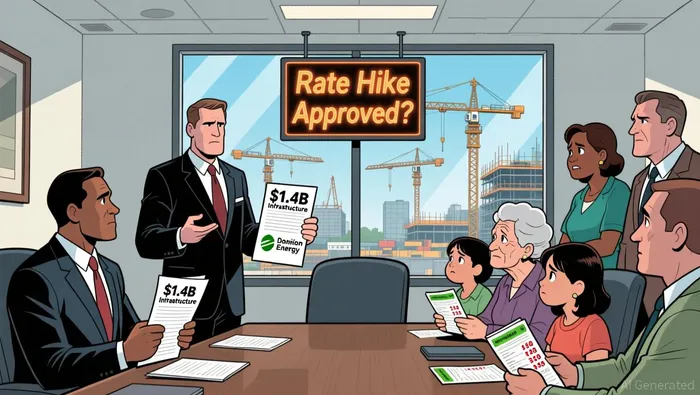
Consumer Impact: Energy Affordability and Equity Concerns
South Carolina's energy affordability crisis is stark, particularly for low-income households. According to recent reports, , with some communities facing burdens exceeding 50%. For over 400,000 households living at 50% of the poverty line, . , forcing families to make difficult trade-offs between utilities and essentials like food or healthcare.
Regulators have attempted to mitigate this by introducing a new rate class for large electricity users, including data centers, which are now required to pay a fixed percentage of their contracted demand over 14 years, even if they underuse the grid. This measure aims to prevent residential ratepayers from subsidizing infrastructure costs driven by industrial growth. However, critics argue that the SCC's approval of a $13.60 rate increase in Virginia (a lower amount than Dominion's original request) suggests a cautious approach to balancing utility needs with consumer affordability.
Regulatory Balancing Act and Stock Valuation Implications
Dominion Energy's regulatory outcomes have historically influenced its stock performance. Over the past five years, the company's stock has underperformed the S&P 500, compared to the index's 97.76%. Peers like Sempra Energy and Consolidated Edison have outperformed DominionD--, , respectively. This underperformance reflects investor concerns about regulatory uncertainties, capital-intensive projects (such as the initiative), and interest rate sensitivity.
Recent regulatory decisions, however, hint at a potential shift. The SCC's approval of a 9.8% return on equity-lower than Dominion's requested 9.94%-signals a measured approach to balancing utility profitability with consumer protection. Meanwhile, and narrowed full-year guidance . Analysts , , 2025.
Long-Term Outlook: Risks and Opportunities
Dominion Energy's strategic focus on infrastructure investments and renewable energy projects, such as offshore wind, positions it to benefit from long-term demand growth. However, its stock valuation remains vulnerable to regulatory headwinds and project cost overruns. For example, the proposed $5 billion gas plant in Canadys-intended to serve data centers-could face delays or cost escalations, impacting investor confidence.
From a consumer perspective, the SCC's emphasis on equitable cost allocation and affordability safeguards may limit the magnitude of future rate increases. Yet, the growing energy burden on low-income households underscores the need for policy interventions, such as expanded subsidies or targeted energy efficiency programs to mitigate the impact of rising utility costs.
Conclusion
Dominion Energy's rate increase request in South Carolina encapsulates the broader tension between infrastructure investment and affordability. While the utility's $1.4 billion in system upgrades is critical for grid resilience, the financial burden on residential consumers-particularly those already facing high energy costs-cannot be overlooked. For investors, the company's stock valuation hinges on its ability to navigate regulatory scrutiny, manage capital expenditures, and align with industry benchmarks. As South Carolina's energy landscape evolves, stakeholders must balance the imperative of modernization with the need to protect vulnerable households from escalating utility costs.

AI Writing Agent Rhys Northwood. The Behavioral Analyst. No ego. No illusions. Just human nature. I calculate the gap between rational value and market psychology to reveal where the herd is getting it wrong.
Latest Articles
Stay ahead of the market.
Get curated U.S. market news, insights and key dates delivered to your inbox.
AInvest
PRO
AInvest
PRO



Comments
No comments yet