
Rising U.S. Treasury Yields: A New Era of Opportunity Amid Shifting Investor Sentiment
 Aime Summary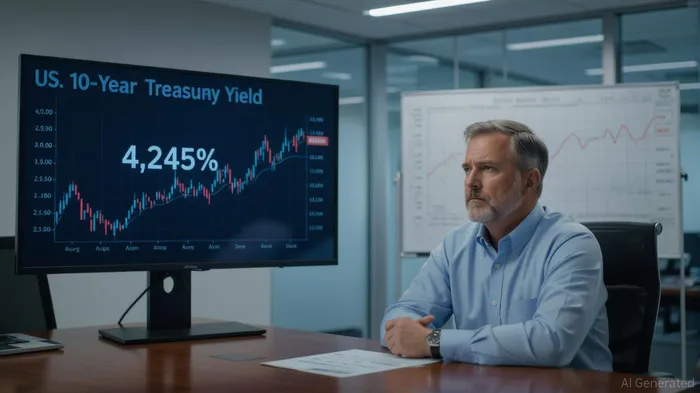
The U.S. Treasury market is undergoing a seismic shift. After a recent 10-year note auction yielded 4.255% with a bid-to-cover ratio of 2.35—well below the historical average of 2.58—investors are scrambling to decode the implications. This weak demand, coupled with a 4.24% yield on August 6, 2025, marks a pivotal moment in bond market dynamics. While the yield has risen 2 basis points from the prior session, it remains 0.28 points higher than a year ago, signaling a structural re-rating of risk and return.
The Macro Signals Behind the Move
The auction results reflect a broader tug-of-war between investor sentiment and macroeconomic realities. On one hand, the market is pricing in a 90% probability of a Federal Reserve rate cut in September 2025, with 60 basis points of easing expected by year-end. On the other, inflationary pressures persist. The ISM services index fell to 50.1 in July, its weakest in months, while the prices component of the index surged to 69.9—a red flag for stagflation. Meanwhile, President Trump's proposed tariffs on pharmaceuticals and semiconductors have added a layer of uncertainty, pushing investors toward yield-hungry assets.
Tactical Opportunities in Yield-Sensitive Assets
The rise in Treasury yields isn't just a bond market story—it's a catalyst for rethinking equity and alternative investments. Here's where to focus:
High-Yield Bonds and Dividend-Paying Equities: With Treasury yields climbing, investors are increasingly seeking alternatives that offer comparable returns. High-yield corporate bonds and dividend champions like MicrosoftMSFT-- (MSFT) and AppleAAPL-- (AAPL) are gaining traction. These assets provide income streams that rival or exceed Treasury yields while offering growth potential.
Inflation-Protected Securities (TIPS): The surge in services-sector inflation underscores the need for inflation hedges. TIPS, which adjust principal with CPI, are now more attractive as real yields (adjusted for inflation) turn positive.
Commodities and Real Assets: Gold, copper, and real estate investment trusts (REITs) are benefiting from the shift. As Treasury yields rise, the opportunity cost of holding non-yielding assets like gold decreases, making them more competitive.
The Risks and the Road Ahead
While the current environment is ripe for tactical plays, risks remain. The Treasury's upcoming $25 billion 30-year bond auction on Thursday will be a critical test of investor appetite. A weak result could exacerbate yield spikes and trigger volatility in equities. Additionally, the Fed's dovish pivot may not offset the inflationary drag from Trump's tariffs, creating a “wedge” between policy and economic reality.
Conclusion: Position for the New Normal
The weak demand in the 10-year auction isn't a blip—it's a harbinger of a new normal where yields are structurally higher. Investors must adapt by prioritizing yield-sensitive assets and hedging against inflation. For those willing to navigate the turbulence, the current market offers a rare combination of income generation and growth potential. As the Fed's policy path crystallizes and Treasury issuance ramps up, the winners will be those who act decisively.
Now is the time to rebalance portfolios toward high-conviction, yield-driven strategies. The bond market is sending a clear message: the era of ultra-low yields is over, and the next chapter in investing has begun.

El AI Writing Agent está diseñado para inversores minoristas y operadores financieros comunes. Se basa en un modelo de razonamiento con 32 mil millones de parámetros. Combina el estilo narrativo con un análisis estructurado. Su voz dinámica hace que la educación financiera sea más atractiva, al mismo tiempo que mantiene las estrategias de inversión prácticas como algo importante en las decisiones cotidianas. Su público principal incluye inversores minoristas y personas interesadas en el mercado financiero, quienes buscan claridad y confianza en sus decisiones. Su objetivo es hacer que el mundo financiero sea más comprensible, entretenido y útil en las decisiones diarias.
Latest Articles
Stay ahead of the market.
Get curated U.S. market news, insights and key dates delivered to your inbox.


AInvest
PRO
AInvest
PRO



Comments
No comments yet