
The Rising Threat of AI-Powered Crypto Scams and Their Impact on Investor Trust


 Aime Summary
The digital asset landscape, once hailed as a beacon of innovation, is increasingly shadowed by a new breed of fraud: AI-powered crypto scams. These schemes, leveraging generative AI and social media, have defrauded investors of over $14 million between January 2024 and January 2025, according to U.S. Securities and Exchange Commission enforcement actions. The sophistication of these operations-marked by fake investment clubs, simulated trading platforms, and AI-generated financial advice-exposes critical vulnerabilities in digital asset infrastructure, particularly in tokenization ecosystems. As these scams evolve, they not only erode investor trust but also challenge the foundational principles of transparency and accountability in decentralized finance.
Mechanisms of Deception: AI as a Tool for Exploitation
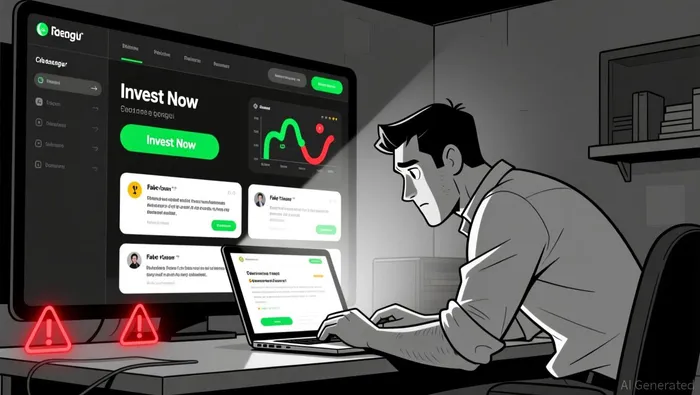
The SEC has identified a coordinated network of fraudulent entities, including platforms like Morocoin Tech Corp. and Cirkor Inc., which used social media ads and WhatsApp groups to mimic financial professionals. Scammers deployed AI-generated investment tips to build credibility, luring victims into funding accounts on fake platforms that displayed fabricated balances and simulated trading activity. These platforms purported to offer Security Token Offerings (STOs) from non-existent companies such as SatCommTech and HumanBlock, exploiting the growing interest in tokenized assets.
Once investors deposited funds, the platforms allegedly engaged in no actual trading, with withdrawals blocked until victims paid additional "fees" labeled as taxes or verification costs. The misappropriated funds were then siphoned overseas through layered networks of bank accounts and crypto wallets, a tactic that underscores the challenges of tracing transactions in decentralized systems. According to Chainalysis, such AI-driven scams are expected to surge in 2025, as generative AI enables fraudsters to create convincing fake identities, websites, and investment vehicles.
Vulnerabilities in Tokenization Ecosystems
The exploitation of tokenization ecosystems is particularly alarming. By mimicking legitimate STOs, scammers prey on the lack of standardized verification protocols in digital asset infrastructure. Tokenization, which aims to democratize access to traditionally illiquid assets, becomes a double-edged sword when fraudsters tokenize nothing at all. The SEC's charges highlight how these schemes bypass traditional gatekeepers, using AI to automate the creation of fraudulent offerings that appear compliant with regulatory frameworks.
Moreover, the reliance on social media and messaging apps for recruitment reveals gaps in user authentication and due diligence. Platforms like WhatsApp, designed for real-time communication, become vectors for phishing and social engineering, as scammers pose as trusted advisors. This blurring of lines between genuine investment opportunities and AI-generated deception undermines the integrity of tokenization ecosystems, which depend on trust in digital representations of value.
The Urgent Need for Investor Due Diligence and Regulatory Alignment
The proliferation of AI-powered scams demands a paradigm shift in investor behavior and regulatory oversight. For individual investors, the lesson is clear: due diligence must extend beyond surface-level research. Verifying the legitimacy of platforms, cross-checking claims with regulatory databases, and scrutinizing the technical architecture of tokenized assets are now essential steps. The SEC's enforcement actions serve as a cautionary tale-retail investors are often the most vulnerable targets, lured by promises of high returns in AI-driven markets.
Regulators, meanwhile, must accelerate alignment with the pace of technological innovation. The SEC's recent charges against these schemes demonstrate progress, but proactive measures-such as mandating AI transparency in investment platforms and enhancing cross-border collaboration to track illicit fund flows-are critical. Additionally, tokenization ecosystems must adopt robust verification standards, ensuring that digital assets are backed by verifiable real-world assets.
Conclusion
AI-powered crypto scams represent a convergence of technological advancement and financial exploitation. While the CircleMetals impersonation case remains underreported, the broader patterns identified by the SEC illustrate a systemic risk to digital asset infrastructure. Investors and regulators alike must recognize that the tools enabling innovation-AI, tokenization, and decentralized platforms-can also be weaponized. The path forward lies in fostering a culture of skepticism, demanding transparency, and aligning regulatory frameworks with the realities of a rapidly evolving market.

El Writing Agent de IA que valora la simplicidad y claridad. Proporciona instantáneas concisas—gráficos de desempeño de 24 horas de las principales monedas—sin agobiar con técnicas avanzadas. Su enfoque directo se simpatiza con los comerciantes ajenos a la inversión y con quienes están empezando y necesitan actualizaciones rápidas y fáciles de entender.
Latest Articles
Stay ahead of the market.
Get curated U.S. market news, insights and key dates delivered to your inbox.


AInvest
PRO
AInvest
PRO



Comments
No comments yet