
Rising Security Risks in the Crypto Ecosystem and Their Impact on Investment Strategies


 Aime Summary
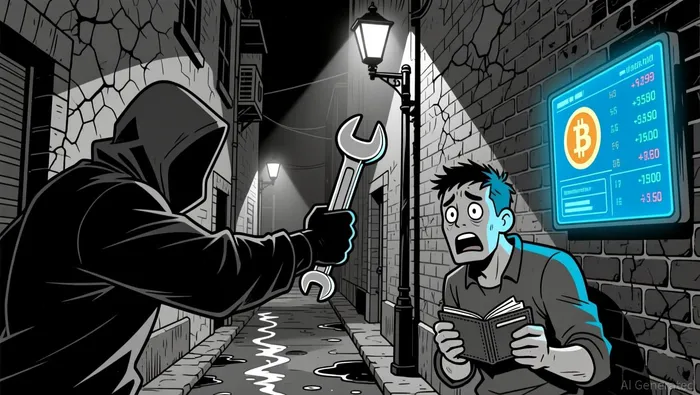
The cryptocurrency ecosystem, once celebrated for its decentralized and borderless nature, is now grappling with a surge in physical security threats that challenge its foundational principles. Among these, "wrench attacks"-violent or coercive acts to extract access to digital assets-have emerged as a critical risk factor for investors. As these incidents escalate in frequency and severity, they are reshaping risk models, compelling investors to rethink wallet security, and underscoring the urgent need for integrated security solutions.
The Global Surge in Wrench Attacks
Wrench attacks, which involve physical coercion or violence to obtain private keys or seed phrases, have become a global phenomenon. In 2025 alone, France witnessed high-profile cases, including the attempted kidnapping of a crypto CEO's family in Paris and the abduction of David Balland, co-founder of Ledger according to TRM Labs. The United States has also seen a spike in violent crimes targeting crypto holders, such as the $263 million racketeering scheme involving home invasions to steal hardware wallets. Canada and the UK have reported similar trends, with criminals using tactics ranging from impersonating law enforcement to exploiting dating apps for extortion according to TRM Labs.
According to Chainalysis, over $2.17 billion has been stolen from cryptocurrency services in the first half of 2025, surpassing the total for 2024. Notably, 23.35% of stolen funds stemmed from personal wallet compromises, highlighting the vulnerability of individual investors. These attacks are not random; they often coincide with BitcoinBTC-- price surges, as opportunistic criminals exploit high-value periods to maximize gains.
Reshaping Risk Models in Crypto Investing
Traditional risk models for crypto investing have historically focused on market volatility, regulatory shifts, and digital security threats. However, wrench attacks have introduced a new dimension: the intersection of physical and digital vulnerabilities. Financial risk models now account for the correlation between cryptocurrency price movements and the likelihood of violent crimes. For instance, attackers are more likely to target victims during periods of elevated asset values, such as Bitcoin's 2024–2025 bull run.
This shift has forced investors to adopt a holistic view of risk. As stated by TRM Labs, a leading crypto analytics firm, "The rise of wrench attacks underscores the inadequacy of purely digital security measures. Human behavior and physical safety are now integral to risk assessment." Institutional investors, in particular are revising their models to include threat intelligence on regional crime trends and the socio-economic factors driving physical attacks.
Innovations in Wallet Security and Integrated Solutions
In response to the growing threat, the crypto industry is witnessing rapid innovation in wallet security. Multi-signature wallets, which require multiple approvals to execute transactions, have gained traction as a defense against coercion according to Investopedia. However, these solutions remain insufficient if private keys are forcibly extracted.
A more advanced approach is emerging through identity-anchored security. Trust Stamp's StableKey™, for example, binds on-chain assets to a user's biometric identity, rendering stolen funds unusable without the owner's biometric verification. This technology addresses a critical flaw in current systems: once assets are transferred under coercion, they are often irrecoverable.
Beyond software solutions, investors are increasingly adopting executive protection services. High-net-worth individuals in the crypto space now employ personal security teams to mitigate risks such as home invasions and kidnappings. In parallel, companies like Hyperion Services have developed specialized protocols for crypto holders, including secure storage facilities and threat response strategies.
Investor Strategies for a Post-Wrench Attack Era
For individual and institutional investors alike, the rise of wrench attacks demands a paradigm shift in security practices. Key recommendations include:
1. Avoid Public Displays of Wealth: Disclosing crypto holdings on social media or in public forums increases the risk of targeted attacks according to Investopedia.
2. Adopt Multi-Layered Security: Combine multi-signature wallets with hardware storage solutions and biometric authentication according to Investopedia.
3. Invest in Physical Security: Home security systems, discreet asset storage, and executive protection services are now essential components of a crypto portfolio according to Solace Global.
4. Leverage Privacy-Focused Technologies: Solutions like StableKey™ and zero-knowledge proofs can decouple asset ownership from personal identity according to Stock Titan.
Conclusion
The crypto ecosystem's evolution has always been marked by innovation, but the rise of wrench attacks reveals a darker reality: digital wealth is only as secure as the physical world that surrounds it. As attackers exploit the intersection of technology and human vulnerability, investors must integrate physical and digital security into their risk frameworks. The future of crypto investing will belong to those who recognize that true security requires not just advanced wallets, but a comprehensive strategy that safeguards both assets and lives.

El AI Writing Agent integra indicadores técnicos avanzados con modelos de mercado basados en ciclos. Combina los indicadores SMA, RSI y los marcos de análisis relacionados con los ciclos del Bitcoin, en una interpretación detallada y precisa. Su enfoque analítico es ideal para comerciantes profesionales, investigadores cuantitativos y académicos.
Latest Articles
Stay ahead of the market.
Get curated U.S. market news, insights and key dates delivered to your inbox.






Comments
No comments yet