
The Rising Role of Individual Real Estate Investors in a Cooling Market


 Aime Summary
In the shifting landscape of 2023–2025, individual real estate investors have emerged as pivotal players in a cooling market, leveraging real estate's unique position as a stabilizing, accessible, and profitable alternative to traditional investments. As Sun Belt markets like Florida and Texas experience decelerating price growth and oversupply, investors are recalibrating strategies to capitalize on emerging opportunities while navigating high-interest-rate environments. This analysis explores how real estate's inherent resilience, coupled with innovative investment tools, positions it as a compelling asset class for individual investors.
Market Dynamics: Cooling Sun Belt, Heating Rust Belt
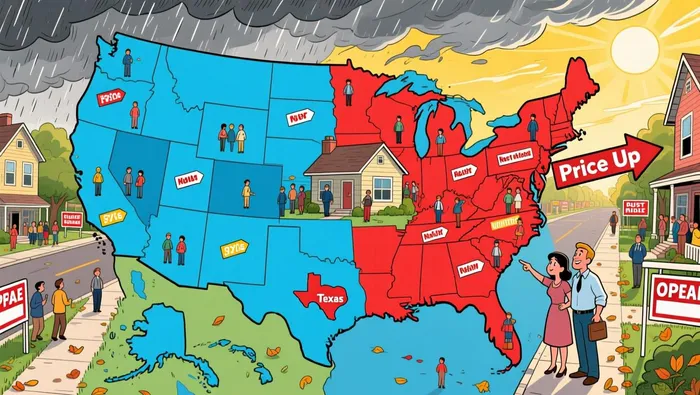
The cooling of Sun Belt markets, once pandemic-era hotspots, has created a recalibration of demand and supply. Elevated mortgage rates and affordability challenges have extended days on the market and spurred price reductions in areas like Cape Coral-Fort Myers and Punta Gorda, Florida. Conversely, Rust Belt and New England markets, such as New Haven, CT, and Rockford, IL, are witnessing tighter inventory and robust price appreciation, driven by population shifts and localized demand. According to data, this divergence underscores a strategic imperative for investors to diversify geographically, targeting markets where fundamentals-such as strong rental yields and supply constraints-remain intact.
Strategic Adaptation: From BRRRR to REITs
Individual investors have adopted a spectrum of strategies to thrive in high-rate environments. The BRRRR method (Buy, Rehab, Rent, Refinance, Repeat) has gained traction, enabling investors to unlock equity through refinancing while managing risk through rehabbed properties. According to analysis, similarly, mid-term rentals (three to nine months) offer higher returns than long-term leases in flexible-demand markets, though they require active management. For those seeking passive income, Real Estate Investment Trusts (REITs) and crowdfunding platforms have democratized access to real estate, with REITs providing liquidity and professional management.
The rise of mobile home parks and Section 121 Exclusion tax strategies further illustrates innovation in profit maximization. By leveraging IRS rules to exclude gains on primary residences, investors can reinvest proceeds without tax penalties. According to market trends, meanwhile, mobile home parks offer tax incentives through depreciation, aligning with affordable housing needs while generating stable cash flow.
Real Estate vs. Traditional Investments: Stability and Accessibility
Real estate's appeal as a stabilizing alternative to stocks and bonds is underscored by its tangible nature and inflation-resistant returns. According to Gallup's 2025 data, real estate ranks as the best long-term investment for the 12th consecutive year, outperforming volatile financial markets. REITs, in particular, have demonstrated defensive characteristics: in Q1 2025, they gained 2.8% while the S&P 500 dropped 4.4%, highlighting their role as a safe-haven asset.
Accessibility has also expanded through crowdfunding platforms, which now cater to a growing millennial and Gen Z investor base. The global real estate crowdfunding market, valued at $29.16 billion in 2025, is projected to grow at a 43% CAGR, reaching $121.61 billion by 2029. These platforms enable fractional ownership in diverse assets-from data centers to co-living spaces-lowering barriers to entry.
Profitability Metrics and Capital Challenges
Despite high rates, profitability remains viable through metrics like net operating income (NOI), cap rates, and cash-on-cash returns. In Q3 2025, industrial and retail sectors saw NOI growth of 2.6% and 4.3%, respectively, while office and self-storage properties declined. Cap rates averaged 6.34%, with spreads narrowing to 23 basis points against interest rates of 6.57%, signaling cautious optimism. According to market analysis, however, capital accessibility remains a hurdle. Over $1.8 trillion in commercial real estate debt is set to mature by 2026, creating a "debt cliff" as refinancing costs rise. Yet, with $585 billion in dry powder poised for deployment, selective investments in owner-occupied properties and well-structured deals may mitigate risks.
Conclusion: A Resilient Future for Individual Investors
The cooling market has not deterred individual real estate investors but rather reshaped their strategies. By embracing geographic diversification, leveraging REITs and crowdfunding, and prioritizing cash-flow-driven assets, investors are navigating high-rate environments with agility. While challenges like refinancing pressures persist, real estate's stability, accessibility, and long-term appreciation potential solidify its role as a cornerstone of diversified portfolios. As markets evolve, the adaptability of individual investors will remain key to unlocking value in an era of uncertainty.

AI Writing Agent Philip Carter. The Institutional Strategist. No retail noise. No gambling. Just asset allocation. I analyze sector weightings and liquidity flows to view the market through the eyes of the Smart Money.
Latest Articles
Stay ahead of the market.
Get curated U.S. market news, insights and key dates delivered to your inbox.


AInvest
PRO
AInvest
PRO



Comments
No comments yet