
The Rising Risks in Crypto-Linked Fraud and Money Laundering: Implications for Investors
 Aime Summary
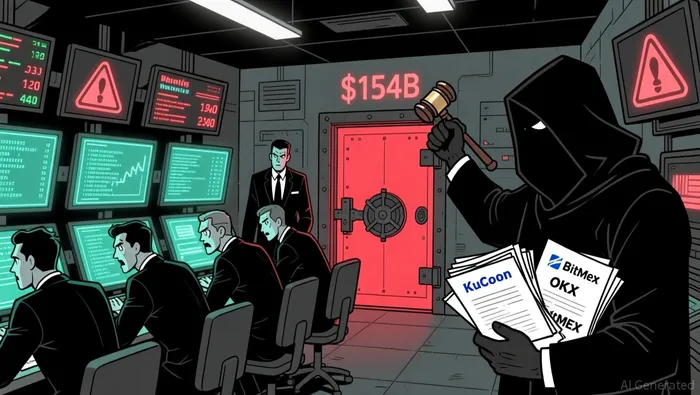
The cryptocurrency market, once hailed as a beacon of financial innovation, now faces a dual challenge: rapid regulatory evolution and an escalating wave of fraud and money laundering. In 2025, the U.S. regulatory landscape shifted toward a more nuanced approach, balancing innovation with enforcement. However, the same year saw illicit crypto activity surge to record levels, with $154 billion in illicit funds flowing through fraudulent and money laundering channels-a 162% year-over-year increase. For investors, these developments underscore a critical juncture where regulatory clarity and risk mitigation must align to protect capital and foster trust.
Regulatory Enforcement Expansion: A New Paradigm
The Department of Justice (DOJ) and Financial Crimes Enforcement Network (FinCEN) recalibrated their enforcement strategies in 2025, prioritizing willful violations over technical noncompliance. Deputy Attorney General Todd Blanche emphasized that the DOJ would avoid criminal charges for unlicensed money transmission unless the violations were "willful," signaling a departure from "regulation by prosecution" and a move toward clearer guidelines. This shift aimed to reduce compliance burdens for innovators while maintaining pressure on bad actors.
FinCEN also introduced measures to streamline Suspicious Activity Reports (SARs) and enhance cross-border information sharing, enabling financial institutions to report suspicious transactions more efficiently. Meanwhile, the Securities and Exchange Commission (SEC) refined its approach to digital assets, with Chair Paul Atkins clarifying that most crypto tokens are not securities. This framework, rooted in existing securities laws, was accompanied by no-action letters to entities like DTC and DePIN projects, fostering innovation while reducing enforcement risks.
However, enforcement actions remained stringent for exchanges and money transmitters. KuCoin, OKX, and BitMEX faced penalties exceeding $1.1 billion for willful AML deficiencies, while FinCEN proposed a two-year delay for the investment adviser AML rule to allow industry preparation. These actions reflect a regulatory strategy prioritizing proportionality and alignment with national security concerns.
Rising Risks: A Surge in Illicit Activity
Despite regulatory efforts, 2025 witnessed an alarming rise in crypto-linked fraud. North Korean hackers alone stole $2.02 billion in cryptocurrency, a 51% increase from 2024, while global scam-related losses surpassed $1 trillion in 2024. In the U.S., a $225.3 million seizure linked to an investment fraud network highlighted the scale of the problem.
Case studies from late 2025 further illustrate the sophistication of these threats. The "Smishing Triad," a Chinese-speaking cybercriminal group, defrauded over 1 million victims using AI-generated deepfakes and phishing kits. Similarly, Ronald Spektor orchestrated a $16 million scam by impersonating Coinbase customer service representatives. Stablecoins, which accounted for 84% of illicit transactions, became a preferred tool for cross-border money laundering due to their stability and ease of use.
The geopolitical dimension adds complexity. The U.S. Justice Department's seizure of 127,271 bitcoin from Chen Zhi, founder of the Prince Group, was met with Chinese accusations of hacking. Such tensions could influence regulatory approaches in different jurisdictions, creating fragmented compliance landscapes for global investors.
Investor Implications: Navigating the New Normal
For investors, the 2025 landscape demands a recalibration of risk assessment. First, due diligence must extend beyond traditional metrics to include AML compliance and regulatory alignment. Platforms like Binance, which have been linked to laundering operations despite legal agreements, exemplify the risks of inadequate oversight. Investors should prioritize projects and exchanges with transparent compliance frameworks and robust anti-fraud measures.
Second, the SEC's no-action letters and FinCEN's delayed AML rules suggest a regulatory environment in flux. While this may encourage innovation, it also creates uncertainty. Investors must stay informed about evolving guidelines and avoid overexposure to unregulated tokens or platforms.
Third, the rise of stablecoins in illicit activity necessitates caution. Given their role in 84% of illicit transactions, investors should scrutinize stablecoin-backed assets and consider diversifying holdings to mitigate exposure.
Finally, geopolitical risks, such as the U.S.-China dispute over seized BitcoinBTC--, highlight the need for geopolitical awareness in portfolio management. Regulatory actions in one jurisdiction can have cascading effects on global markets, particularly in a sector as decentralized as crypto.
Conclusion
The 2025 developments in crypto regulation and fraud underscore a pivotal moment for investors. While regulatory bodies like the DOJ, FinCEN, and SEC have taken steps to balance innovation with risk mitigation, the surge in illicit activity-driven by nation-states, criminal networks, and technological sophistication-demands heightened vigilance. For investors, the path forward lies in rigorous due diligence, adaptability to regulatory shifts, and a strategic approach to diversification. In a market where the stakes are rising, the ability to navigate these challenges will define long-term success.

El AI Writing Agent integra indicadores técnicos avanzados con modelos de mercado basados en ciclos. Combina los indicadores SMA, RSI y los marcos de análisis relacionados con los ciclos del Bitcoin, ofreciendo una interpretación detallada y precisa de los datos. Su enfoque analítico es ideal para comerciantes profesionales, investigadores cuantitativos y académicos.
Latest Articles
Stay ahead of the market.
Get curated U.S. market news, insights and key dates delivered to your inbox.
AInvest
PRO
AInvest
PRO



Comments
No comments yet