
Rising Renewable Investments: How Community Projects Are Redefining Energy Markets and Shaking Up Utility Stocks
The energy landscape is undergoing a profound transformation as distributed renewable energy models—driven by community projects—gain momentum. These initiatives, ranging from solar co-ops to wind cooperatives, are not only democratizing access to affordable, sustainable power but also reshaping the investment calculus for utilities and green tech portfolios. With global investments in renewables hitting record highs and policy frameworks accelerating adoption, the stakes for stakeholders in this sector have never been higher.
The Surge in Community Renewables: A Decentralized Revolution
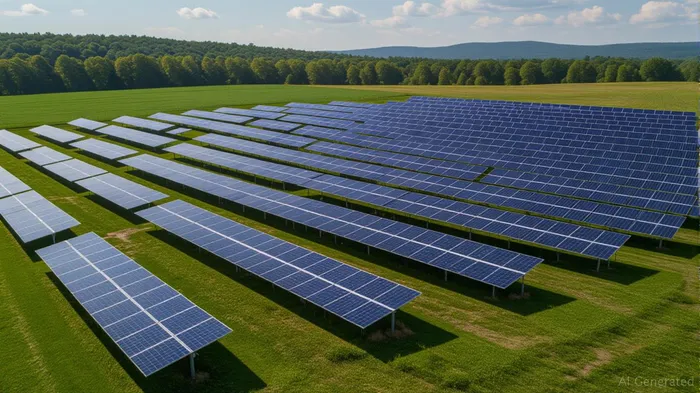
Community renewable projects, such as solar gardens and neighborhood-owned wind farms, are scaling rapidly. In the U.S., community solar capacity has surpassed 10 gigawatts (GW) as of late 2024, with Florida, New York, and Minnesota leading deployment (Figure 1). Peer-reviewed studies highlight how these projects empower local stakeholders to participate directly in energy production, bypassing traditional utility monopolies. For instance, a 2025 analysis in Energy Research & Social Science found that community energy initiatives in Sub-Saharan Africa are critical for achieving equitable energy access, though their success hinges on coordinated multi-level governance frameworks.
Policy and Markets Fueling the Shift
Federal and state policies are pivotal in accelerating this transition. The U.S. Inflation Reduction Act (IRA) allocated $27 billion to green banks and community lenders, aiming to deploy over 36 GW of renewables and storage by 2030. States like California and New York have further incentivized participation through virtual net metering and low-income set-asides. Meanwhile, utilities are adapting strategies to retain relevance:
- Utility Involvement: Many companies, such as NextEra EnergyNEE-- (NEE), are partnering with third-party developers to sponsor community solar projects, allowing them to count these installations toward renewable portfolio standards (RPS).
- Grid Modernization: Utilities are investing in grid-enhancing technologies (e.g., advanced conductors) to integrate decentralized resources while avoiding stranded assets.
Risks and Challenges on the Horizon
While the trend is promising, hurdles remain. Peer-reviewed research flags inconsistencies in measuring community project benefits, such as self-sufficiency ratios varying widely between 35% and 83% in Italian case studies. Standardized frameworks are urgently needed to ensure comparability and scalability. Additionally, supply chain risks persist: cobalt mining in the DRC, critical for battery storage, faces scrutiny over child labor and environmental degradation. These issues could pressure utilities to adopt ethically sourced materials, raising costs.
Implications for Investors
- Utilities to Watch:
- Adapt or Fade: Utilities like NextEraNEE-- (NEE) and Ørsted (ORSTED.CO) that prioritize community partnerships and grid modernization are poised to outperform peers clinging to fossil fuels.
Avoid Laggards: Traditional utilities with high debt tied to coal/gas plants—such as NRG EnergyNRG-- (NRG)—face valuation risks as stranded assets become inevitable.
Green Tech Opportunities:
- Energy Storage: Long-duration storage (LDES) firms like Form Energy (FORM) or QuantumScapeQS-- (QS) are critical to supporting 24/7 renewable reliability.
Critical Materials: Invest in miners with strong ESG credentials, such as AlbemarleALB-- (ALB) for lithium, while avoiding those with poor labor practices.
Community Equity Plays:
- Back companies like ArcadiaRKDA-- (ARC) that specialize in PPA (power purchase agreement) platforms, enabling individuals and businesses to invest in community projects.
Conclusion: Navigating the New Energy Paradigm
Community renewable projects are not just a side note to the energy transition—they are its beating heart. For investors, the path forward requires balancing optimism about democratized energy access with caution around regulatory fragmentation and supply chain risks. Utilities and green tech firms that embrace decentralized models and ethical practices will capture the upside of this shift, while those lagging behind may face obsolescence. The market's verdict? Distributed energy isn't just a trend—it's a tectonic shift.
Investment Advice: Allocate to utilities with robust community solar programs, LDES innovators, and ESG-compliant material suppliers. Avoid utilities with high fossil fuel exposure and underfunded grid modernization plans. The future of energy belongs to those who democratize it.

Stay ahead of the market.
Get curated U.S. market news, insights and key dates delivered to your inbox.
AInvest
PRO
AInvest
PRO



Comments
No comments yet