
Rising Red Meat Prices in Morocco's Wholesale Markets: A Nexus of Supply Chain Vulnerabilities and Inflationary Pressures


 Aime Summary
Supply Chain Vulnerabilities: A Perfect Storm
Morocco's red meat sector is under strain due to a 30% decline in domestic cattle numbers, exacerbated by prolonged droughts and soaring feed costs, according to a Moroccan World News report. To mitigate shortages, the government suspended Eid Al Adha sacrifices and customs duties on imported cattle, aiming to rebuild the national herd and stabilize supply, the report notes. However, these measures have not fully offset the reliance on imports, particularly from Brazil and Uruguay, where beef is priced significantly lower than local "beldi" beef, the report says.
Globally, supply chains have grown more fragile. Tariff volatility, nearshoring strategies, and extreme weather events have disrupted trade flows, with shipping rates between Shanghai and the U.S. surging 42% in early 2025, according to a KPMG report. For Morocco, these global trends compound domestic challenges, as imported cattle face delays and cost fluctuations. DP World's shift toward AI-powered logistics and resilient networks underscores the growing emphasis on agility over efficiency-a trend that could ripple through Morocco's agricultural supply chains, the KPMG report notes.
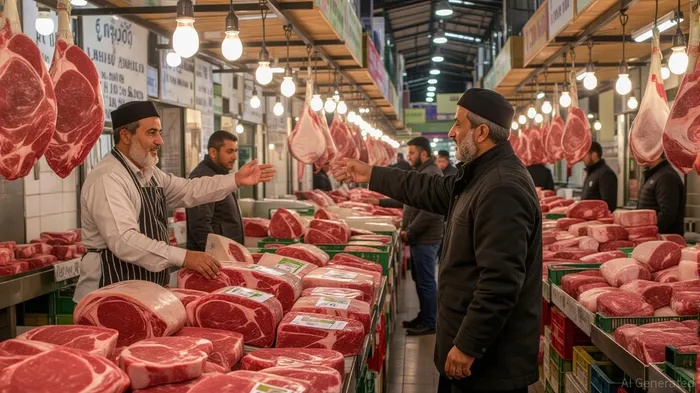
Inflationary Pressures: Local and Global Forces Collide
Inflation in Morocco's red meat sector is driven by both domestic and international factors. The Moroccan dirham's fluctuating exchange rate-down 1.78% in the past month but up 6.31% over the last 12 months-has made imported beef more affordable, intensifying competition with local producers, according to a MAD to USD Exchange Rate History for 2025 chart. Meanwhile, global agricultural inflation persists, with the U.S. CPI for food rising 3.2% year-on-year in August 2025, according to a USDA Food Price Outlook report. Emerging markets, including Morocco, face heightened pressure as geopolitical tensions and weather-related production losses disrupt commodity flows, the Conterra report says.
The government's suspension of import taxes and VAT on fresh meat has temporarily eased costs for consumers but has not resolved underlying issues for local farmers. High feed prices and expensive imports continue to hinder herd recovery, while seasonal demand for lamb during Eid and summer months further inflates prices, the Moroccan World News report notes.
Policy Responses and Market Adaptations
Morocco's regulatory approach has prioritized short-term stability over long-term resilience. Draft decree No. 2.24.1050 expanded import quotas and extended duty suspensions, while the National Office for Food Safety (ONSSA) enforced strict halal-certification standards for imports, according to a Moroccan World News report. These measures aim to balance affordability with quality control but risk undermining local producers, the report says.
For investors, the interplay between policy and market forces presents both risks and opportunities. Agricultural producers may benefit from government subsidies, but logistics firms and currency traders could capitalize on the dirham's volatility and the growing reliance on imported meat, the Moroccan World News report notes.
Investment Implications
Emerging markets like Morocco highlight the need for supply chain resilience in an era of persistent inflation and geopolitical uncertainty. Investors should consider:
1. Agricultural Commodities: Opportunities in firms supplying drought-resistant feed or technology for herd management.
2. Logistics and Trade Finance: Firms leveraging AI and automation to mitigate supply chain disruptions, such as DP World.
3. Currency Exposure: Hedging strategies for dirham fluctuations, given its impact on import costs and inflation.
Conclusion
Morocco's red meat market is a microcosm of broader challenges in emerging economies: fragile supply chains, inflationary pressures, and the delicate balance between policy intervention and market forces. While government measures have provided temporary relief, long-term solutions will require investments in resilience, innovation, and sustainable sourcing. For investors, the key lies in navigating these complexities with agility and foresight.

Delivering real-time insights and analysis on emerging financial trends and market movements.
Latest Articles
Stay ahead of the market.
Get curated U.S. market news, insights and key dates delivered to your inbox.


AInvest
PRO
AInvest
PRO



Comments
No comments yet