
Rising Rates and Stagnant Demand: Navigating Real Estate Opportunities in a High-Cost Landscape
The U.S. housing market finds itself at a crossroads. Mortgage rates, though slightly elevated in July 2025, remain elevated compared to pandemic lows, while housing demand has cooled significantly. Yet within this challenging environment, strategic investors can identify opportunities in two sectors: rental REITs and homebuilders with disciplined land management. Supported by data on interest rate sensitivity and supply-demand dynamics, this article outlines how prolonged high rates and inventory imbalances are reshaping real estate investment strategies.
The Mortgage Rate Conundrum: A New Normal?
Current 30-year fixed mortgage rates hover around 6.72%, down slightly from 2023 peaks but far above the 2.65% lows of 2021 (Freddie Mac). Historical trends reveal that rates are unlikely to return to those extremes, with forecasts suggesting they will remain in the mid-6% range through 2026. This “new normal” of elevated rates is driven by the Federal Reserve's pause at 4.50% and persistent inflationary pressures.
The prolonged period of high rates has dampened homebuying activity, with housing starts declining by 11.4% year-over-year in March 2025. However, this same environment creates opportunities for investors willing to navigate the structural shifts in real estate demand.
Rental REITs: Resilience Amid Rising Rates
Rental REITs, which derive income from leased properties, are often seen as rate-sensitive investments. Yet their performance is more nuanced than headlines suggest:
Interest Rate Sensitivity and Valuation Dynamics
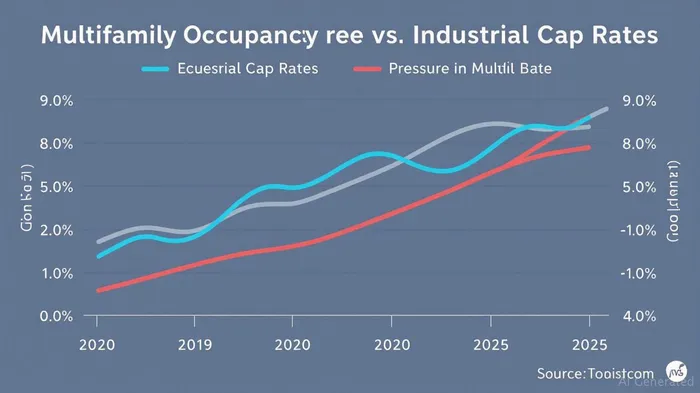
- Cap Rate Expansions: Rising long-term rates have pushed cap rates (the ratio of net operating income to property value) higher. Multifamily cap rates, for example, rose to 6.1% in Q1 2025, up from 6.0% in 2024, while industrial properties saw increases of 100–150 basis points.
- Dividend Yield vs. Treasuries: The MSCIMSCI-- REIT Index currently offers a 4.1% dividend yield, slightly below the 10-year Treasury's 4.0%. This inverted spread suggests REITs are pricing in recession risks, but also presents a discounting opportunity if rates stabilize or decline.
Sector-Specific Opportunities
Not all REITs are created equal. Multifamily and industrial REITs show relative resilience:
- Multifamily: Despite a 6.3% vacancy rate (the highest since 2010), multifamily demand remains anchored by demographics and urbanization trends. New supply is concentrated in Sunbelt markets, where affordability and job growth persist.
- Industrial: E-commerce and supply chain resilience have kept industrial rents firm, even as cap rates rise.
Investors should prioritize REITs with fixed-rate debt (e.g., Public StoragePSA--, which has 90% of its debt fixed) and exposure to sectors with inelastic demand. Avoid office REITs, where vacancies hit 20.4%—a sector facing structural overcapacity.
Homebuilders: Land Hoards as a Strategic Asset
While single-family homebuilding has slowed, certain builders are positioned to capitalize on inventory imbalances:
The Inventory Divide
- Regional Disparities: The South and Sunbelt face affordability challenges due to rising land and construction costs, while the West and Northeast struggle with tight supply and high prices.
- Strategic Land Management: Builders like Lennar and D.R. Horton have reduced land acquisitions and canceled underperforming contracts, focusing on high-margin markets. Lennar's backlog retention rate of 85% (vs. KB Home's 26.7% decline) highlights the importance of cost discipline and geographic focus.
Why Land Hoards Matter
Builders with strategic land positions can thrive if demand rebounds. Key criteria include:
- Low-Cost Land: Access to affordable land in growth markets (e.g., Texas, Florida) provides a margin buffer.
- Flexible Development: Builders able to pivot from single-family to townhome or multifamily projects (e.g., PulteGroup's mixed-use developments) are better positioned for shifting demand.
Risks to Avoid
- Overexposure to Tariff-Affected Materials: Builders reliant on imported lumber or steel (e.g., KB Home's 28% wage increases) face margin pressure.
- High Debt Burden: Avoid builders with >50% variable-rate debt or debt maturing within three years.
Investment Strategy: Allocate for Resilience
- Prioritize Rental REITs with Defensive Sectors:
- Multifamily: Equity ResidentialEQR-- (EQR), which focuses on high-barrier-to-entry markets like Washington, D.C., and Boston.
Industrial: PrologisPLD-- (PLD), benefiting from e-commerce and supply chain investments.
Target Homebuilders with Strategic Land and Balance Sheets:
- Lennar (LEN): Strong Sunbelt exposure and a 90% fixed-rate debt portfolio.
D.R. Horton (DHI): Disciplined land spending and a backlog retention strategy.
Avoid Overvalued and Rate-Sensitive Sectors:
Office REITs (e.g., SL Green Realty) and builders with high debt or overexposure to expensive markets.
Monitor Rate Signals:
- A Fed rate cut before year-end could spark a REIT rally. Track the 10-year Treasury yield and Cap Rate Trends for timing opportunities.
Conclusion: A New Playbook for Real Estate Investors
The era of ultra-low rates is over. In its place is a market demanding precision in sector selection and geographic focus. Rental REITs with exposure to multifamily and industrial assets, coupled with homebuilders that manage land and costs prudently, offer compelling risk-adjusted returns. As mortgage rates stabilize and demand shifts toward rental housing, investors who align with these themes will position themselves to capitalize on the next phase of the real estate cycle.

Stay ahead of the market.
Get curated U.S. market news, insights and key dates delivered to your inbox.
AInvest
PRO
AInvest
PRO



Comments
No comments yet