
Rising Private Market Opportunities Amid Public Volatility: Renewable Energy and Tech Infrastructure Lead the Way
The global investment landscape is at a crossroads. Public markets, buffeted by tariff wars, geopolitical tensions, and the specter of recession, have become increasingly volatile. Meanwhile, private markets—particularly in sectors like renewable energy and tech infrastructure—are emerging as stable havens for long-term growth. Recent tariff-related shifts and expert analysis from Wealth Enhancement's 7 Market Movers 2025 reveal a compelling case for investors to rebalance portfolios toward these underappreciated assets.
The Public Market Quagmire: Tariffs, Tariffs Everywhere
The U.S. tariffs on Chinese solar panels, polysilicon, and Vietnamese/Cambodian imports—now at 175%, 195%, and 46-49%, respectively—have sent shockwaves through clean energy supply chains. These measures, combined with existing duties on steel and aluminum, have driven up costs for solar developers, wind turbine manufacturers, and battery producers. The result? A $7.7 billion cancellation of clean manufacturing projects in early 2025, up from $1.8 billion in 2024.
This volatility has left public equities in sectors like utilities and industrials swinging wildly. Take TeslaTSLA-- (TSLA), for example: its stock price has fluctuated by over 40% in the past year amid tariff-related battery cost pressures.
Private Markets: A Steadier Path Forward
While public markets lurch from crisis to crisis, private markets—especially infrastructure and real estate—are proving their mettle. Wealth Enhancement's analysis highlights three key pillars of opportunity:
Infrastructure Debt: A Cash-Flow Machine
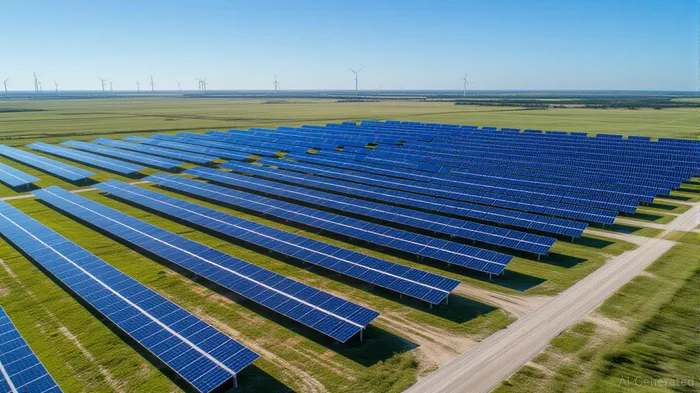
Toll roads, renewable energy projects, and utility grids offer contractual cash flows insulated from short-term market swings. Infrastructure debt has delivered 5–7% annual returns over the past decade, with minimal correlation to equities. For instance, a $500 million solar farm in Texas, backed by a 20-year power purchase agreement, provides predictable income streams even as tariff policies shift.Real Estate: Inflation's Anchor
Industrial warehouses and multifamily housing have thrived as inflation hedges. With the 10-year Treasury yield now at 4.23%, real estate investment trusts (REITs) and private equity-backed properties offer steady yields of 5–6%.Global Diversification: Mitigating U.S. Policy Risks
Offshore opportunities, such as European logistics hubs or Asian solar manufacturers, buffer against domestic regulatory uncertainty. China's state-backed green tech push—see companies like Tongwei Solar and BYD—has driven a 14% rise in high-tech exports in Q1 2025, underscoring global demand for these assets.
The Regulatory Crossroads: Labor Stability and Policy Tailwinds
The June 2025 court ruling in Barbara v. Trump, which blocked birthright citizenship restrictions, has stabilized labor markets critical to sectors like agriculture and construction. With 70% of U.S. farmworkers born abroad, this decision averted a labor shortage that could have spiked food prices and disrupted supply chains. Meanwhile, the Supreme Court's stay on federal workforce cuts preserved agencies like the Department of Labor, ensuring oversight of workplace safety and labor standards.
These developments have bolstered private equity investments in farmlandFPI-- and construction firms. For example, a private equity fund acquiring a Midwest corn farm can now operate with greater labor certainty, while a firm building wind turbine blades in Ohio benefits from stabilized supply chains.
The Case for Strategic Rebalancing
Wealth Enhancement advises investors to allocate 5–10% of their capital to private markets, focusing on:
- Sectors with contractual cash flows: Toll roads, renewable energy projects, and utility grids.
- Inflation-resistant assets: Industrial and multifamily real estate.
- Global diversification: European logistics or Asian renewables to hedge against U.S. tariff risks.
The S&P 500's 22x forward P/E ratio—a 25% premium to its historical average—suggests public markets may be overvalued. Meanwhile, private market valuations remain more grounded, offering entry points for patient investors.
The Bottom Line: Think Long-Term, Act Now
The writing is on the wall. Public markets will remain volatile as tariffs, trade wars, and central bank policies collide. Private markets, by contrast, offer a path to steady returns in sectors vital to the energy transition and infrastructure modernization.
Investors should:
1. Reallocate to private infrastructure: Target projects with locked-in revenue streams, like solar farms or toll roads.
2. Embrace global diversification: Allocate to Asian solar manufacturers or European data centers to avoid U.S. policy whiplash.
3. Avoid overconcentration: Don't let the top 10 S&P 500 stocks—which now account for 38% of the index—drag down your portfolio.
The next decade will reward those who look beyond the daily noise of public markets. Private assets in renewable energy and tech infrastructure are not just defensive plays—they're the engines of tomorrow's economy.
Investment Thesis: Allocate 5–10% of capital to private infrastructure and real estate funds. Target sectors with contractual cash flows and global exposure. Avoid chasing overvalued public equities; instead, build a diversified portfolio anchored in the “new energy economy.”
The time to act is now. The next market shift won't wait.

Stay ahead of the market.
Get curated U.S. market news, insights and key dates delivered to your inbox.


AInvest
PRO
AInvest
PRO



Comments
No comments yet