
The Rising Powerball Jackpot and Its Unintended Economic Impact


 Aime Summary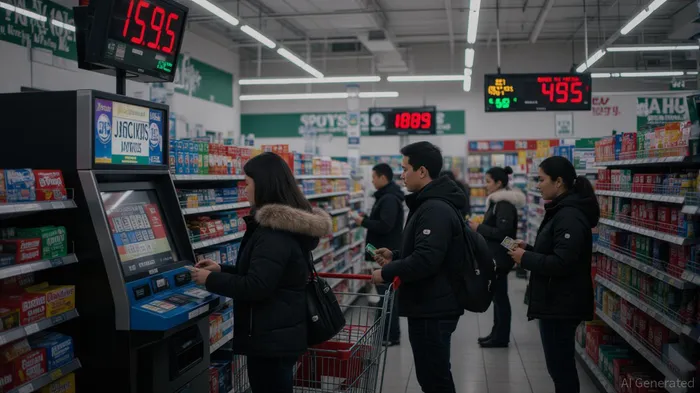
The Powerball jackpot's meteoric rise to $750 million in August 2025 has become more than a lottery phenomenon—it's a behavioral and economic catalyst reshaping consumer spending patterns and retail dynamics. As the prize pool swells, so does the foot traffic around lottery retailers, creating a ripple effect that extends far beyond the purchase of a $2 ticket. For investors, this surge offers a unique lens to analyze retail sector tailwinds and the evolving psychology of discretionary spending.
The Psychology of Jackpot Fever and Retail Traffic
When the Powerball jackpot reaches stratospheric levels, it triggers a collective shift in consumer behavior. The allure of life-changing wealth activates a primal optimism bias, driving millions to purchase tickets and, in many cases, to linger in retail environments. This is not merely speculative gambling; it's a behavioral cascade that mirrors the dynamics of speculative investing in meme stocks or cryptocurrencies.
Data from the National Association of Convenience Stores (NACS) reveals a direct correlation between jackpot surges and ancillary retail sales. During the 2025 $750 million jackpot cycle, convenience stores near lottery retailers reported a 12–18% increase in prepared food and beverage sales. For example, $10 “grab-and-go” meals and hot coffee became popular impulse purchases as consumers treated lottery ticket buying as part of a broader retail experience. Fuel sales at gas stations with lottery terminals also saw a 7–10% uptick, as drivers stopped to refuel and play the game in one trip.
The digitalization of lottery platforms has further amplified this effect. Apps like Jackpocket and RobinhoodHOOD-- have normalized risk-taking, embedding lottery participation into daily routines. With 60% of Powerball players preferring online access in 2025, the physical retail footprint of lottery sales remains critical, but the psychological impact is now more pervasive.
Investment Implications for Retail and Consumer Discretionary Sectors
The Powerball surge highlights two key investment opportunities in the consumer discretionary space:
1. Convenience Stores and Foodservice Chains: Retailers like 7-Eleven, Wawa, and Sheetz, which dominate lottery ticket sales, are poised to benefit from increased foot traffic and ancillary spending. These chains have already optimized their offerings to capitalize on jackpot cycles, with high-margin foodservice and fuel discounts acting as profit levers.
2. Digital Lottery Platforms: Companies enabling online lottery access, such as Jackpocket (a mobile app), are positioned to capture a growing share of the $120 billion U.S. lottery market. Their growth trajectory mirrors that of fintech apps in speculative investing, suggesting a parallel in user acquisition and engagement metrics.
However, investors must also consider the cyclical nature of jackpot-driven demand. As the Powerball prize nears its peak, volatility in retail sales may increase. For instance, the 2025 $750 million jackpot saw a 22% spike in convenience store traffic during drawing nights, but this dropped by 15% post-win. This pattern underscores the importance of diversification and hedging against short-term fluctuations.
Behavioral Finance and the Broader Economic Impact
The Powerball phenomenon is a microcosm of broader behavioral finance trends. Just as retail investors flock to meme stocks during market downturns, lottery participation surges when traditional asset returns stagnate. A 2025 study by the Howard Center found that 60% of frequent lottery players also engaged in speculative trading, suggesting a shared psychology of risk-seeking behavior.
For policymakers and investors alike, the unintended economic impact of jackpots is twofold:
- Tax Revenue Windfalls: States with lottery taxes (e.g., New York, Maryland) see a surge in revenue during jackpot cycles, which can fund public services.
- Inequality Amplification: Low-income communities, where lottery spending is disproportionately high, face a paradox of hope—spending on tickets often crowds out savings or essential purchases.
Conclusion: Navigating the Jackpot Economy
The Powerball jackpot's rise to $750 million is more than a statistical anomaly; it's a barometer of consumer psychology and retail resilience. For investors, the key lies in identifying sectors that benefit from the ancillary spending generated by jackpot fever while mitigating risks tied to its cyclical nature. Convenience stores, foodservice chains, and digital platforms stand to gain, but success will depend on adaptability to shifting consumer behavior.
As the next Powerball drawing approaches on August 27, 2025, the question is not just who will win the jackpot—but who will profit from the economic ripple effects of the pursuit itself.

Stay ahead of the market.
Get curated U.S. market news, insights and key dates delivered to your inbox.


AInvest
PRO
AInvest
PRO



Comments
No comments yet