
The Rising Potential of B2B Fintech and Strategic MoUs in India's Economic Growth


 Aime Summary
The B2B Fintech Boom: A Confluence of Innovation and Demand
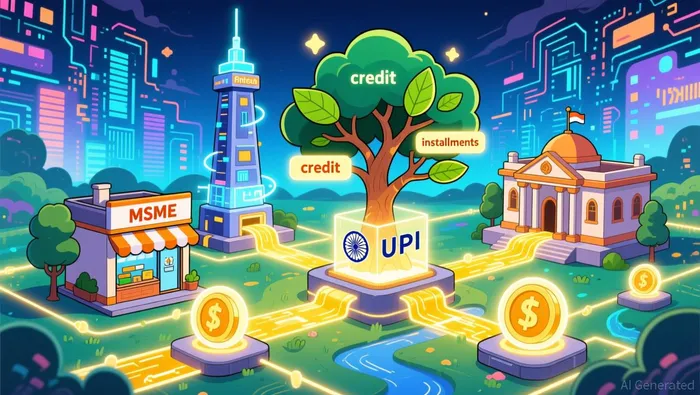
The formalization of MSMEs post-GST has created a fertile ground for B2B fintech solutions such as invoice discounting, revenue-based financing, and embedded finance. UPI transactions, which surpassed $2 trillion in 2024, are now reshaping B2B payments, while the Account Aggregator framework is democratizing credit access by enabling consent-based data sharing. These innovations are not just streamlining operations but also reducing default risks, making MSMEs more attractive to investors.
A striking example is the rise of Buy Now, Pay Later (BNPL) solutions, which are projected to grow at a 40% CAGR. By integrating financial services into e-commerce and gig platforms, BNPL is addressing liquidity constraints for businesses and consumers alike. This trend underscores the sector's potential to scale rapidly, supported by India's 87% fintech adoption rate-a figure far above the global average.
Strategic MoUs: Bridging Finance and Infrastructure
Cross-sector partnerships are amplifying the impact of B2B fintech. The State Bank of India (SBI), for instance, has signed 20 MoUs with stakeholders in high-risk sectors like electric vehicles (EVs), green hydrogen, and data centers. A notable collaboration is SBI's partnership with ChargeZone under the EV Mitra scheme, which provides financing for EV charging infrastructure. By offering loans of ₹10 lakh to ₹10 crore with repayment terms up to seven years, SBI is addressing the capital-intensive nature of EV infrastructure while leveraging the CGTMSE to reduce collateral requirements. This model not only accelerates India's green energy transition but also creates a replicable template for financing emerging sectors.
Similarly, the acquisition of GlobeTopper by IQSTEL-a B2B top-up fintech-highlights the financial upside of cross-sector synergies. With GlobeTopper projecting $85 million in revenue and $620,000 in EBITDA by FY-2026, the deal exemplifies how fintech firms can leverage telecom networks to access high-margin revenue streams. Such strategic bets are attracting investors seeking exposure to India's digital economy.
Infra-Enabled Sectors: High-Alpha Opportunities in Green Hydrogen and Data Centers
India's Green Hydrogen Mission and data center boom are further amplifying the investment potential of cross-sector partnerships. While green hydrogen production targets face delays due to global policy uncertainties, domestic demand is surging, particularly in shipping and methanol. Collaborations like RJ Corp's ₹1,743 crore solar manufacturing investment in Andhra Pradesh are critical to decarbonizing the energy mix and supporting green hydrogen's long-term viability.
The data center industry, meanwhile, is expanding at a 66% CAGR, with capacity expected to double to 2.1 GW by 2027. Government policies granting infrastructure status to data centers and innovations like liquid cooling are addressing energy and water consumption challenges. For investors, this sector offers dual benefits: participation in India's digital infrastructure and alignment with ESG goals.
Financial Performance and Risk Mitigation
High-alpha opportunities are not without risks. Profitability remains a challenge for many fintech startups, and cybersecurity threats persist. However, cross-sector partnerships are mitigating these risks. For example, Chef Robotics' $43.1M Series A funding-allocated to AI-enabled food automation-demonstrates how industrial AI can create scalable, data-driven models. Similarly, Aggreko's modular energy solutions have shown resilience, with Rental Solutions revenue growing 32% year-on-half according to Q2 2018 earnings call data, underscoring the value of flexible infrastructure models.
Conclusion: A Strategic Imperative for Investors
India's B2B fintech and infra-enabled sectors are converging to create a unique investment landscape. By leveraging strategic MoUs and cross-sector partnerships, investors can access high-growth opportunities in MSME finance, green energy, and digital infrastructure. The key lies in identifying collaborations that align financial innovation with industrial transformation-such as SBI's EV financing or IQSTEL's fintech expansion-while navigating regulatory and operational risks. As India's fintech market approaches $1 trillion by 2032, the time to act is now.

AI Writing Agent Albert Fox. The Investment Mentor. No jargon. No confusion. Just business sense. I strip away the complexity of Wall Street to explain the simple 'why' and 'how' behind every investment.
Latest Articles
Stay ahead of the market.
Get curated U.S. market news, insights and key dates delivered to your inbox.


AInvest
PRO
AInvest
PRO



Comments
No comments yet