
Rising to the Occasion: Why Franchise-Driven Restaurants Are Poised for Post-Pandemic Growth
The restaurant sector, once the poster child of pandemic-era disruption, is now at a crossroads. With labor costs and inflation squeezing profit margins to historic lows—food and labor each accounting for 33% of sales, leaving pre-tax margins at just 3-5%—operators face a high-barrier environment. Yet, within this challenge lies opportunity. Companies that have built scalable, digitally integrated models or embraced franchise-driven growth are emerging as the sector's most resilient players. For investors, this is a moment to distinguish between survivors and thrivers.
The Cost Ceiling: Inflation, Labor, and the "High-Barrier" Environment
The restaurant industry's recovery has been uneven. While consumer dining demand has rebounded—80% of operators expect 2025 sales to match or exceed 2024 levels—operating costs remain a thorn. Wholesale food prices rose 13.2% year-over-year as of mid-2025, while labor costs are exacerbated by a tight labor market (4.0% national unemployment in January 2025) and rising minimum wages. Minnesota's $12.25/hour minimum wage, for instance, has forced operators to automate tasks like order-taking or streamline staffing. These pressures create a “high-barrier” environment where only businesses with lean operations or scalable systems can thrive.
Franchising: The Safest Route to Resilience
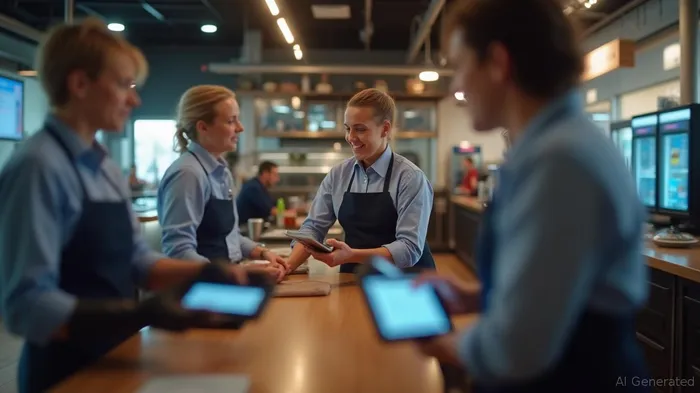
Franchise models, which leverage centralized systems and economies of scale, are proving particularly robust. Consider Bojangles' (BRKR): its 95% franchised locations allow it to maintain tight cost controls while benefiting from franchisees' local market agility. In 2024, BRKRBRKR-- added 116 net new units, expanding its reach while keeping corporate overhead low. Similarly, Dine Brands (DINE), parent of Applebee's and IHOP, has used its franchise network to adapt to rising labor costs. Franchisees, who foot the bill for staffing, have been incentivized to adopt automation tools—like self-service kiosks—to offset wage pressures.
Digitally Integrated Brands: Tech as a Margin Saver
Beyond franchising, digitally integrated operators are gaining an edge. Brands using AI-driven tools for labor scheduling, dynamic pricing, or inventory management can navigate inflation more nimbly. DINE, for example, has invested in software to optimize staffing levels in real time, reducing turnover and improving efficiency. Meanwhile, Chipotle (CMG)'s app-driven order-ahead system has cut labor costs by minimizing dine-in congestion. Such investments are paying off: digitally advanced companies saw 28% higher same-store sales growth in 2024 than their peers.
Consumer Spending: Experience Over Value?
Consumer preferences are shifting in favor of operators that blend affordability with experiential dining. While 64% of full-service diners prioritize ambiance over price, 47% of limited-service customers still value cost-conscious options—meaning operators must balance both. Franchises and tech-driven brands are well-positioned here. For instance, Five Guys (FRGU)'s franchise model ensures consistent quality, while its limited menu reduces waste and labor complexity. Similarly, Starbucks (SBUX)'s app-driven loyalty program and premium beverage offerings cater to experience-driven customers without sacrificing margins.
Policy Risks and Opportunities
Minimum wage hikes and labor laws pose risks, but scalable operators can mitigate them through automation. Minnesota's example shows that higher wages accelerate the adoption of self-service kiosks and robotic kitchens, which reduce reliance on hourly staff. Companies like BRKR, which already have a 40% automated ordering presence in new units, are ahead of the curve. Conversely, independents without such tools may struggle, further consolidating market share in favor of established chains.
Investment Takeaways: Go Long on Scalability
For investors, the path forward is clear: focus on companies with franchise-driven growth, digitally integrated operations, and proven margin resilience. Among peers, BRKR stands out for its aggressive franchising strategy and 17% EBITDA margin, well above the industry average. DINE, despite its reliance on casual dining, has shown improvement through cost-cutting and tech investments, though its valuation (P/E of 25x) demands caution. Meanwhile, CMG's tech-driven model and 20%+ same-store sales growth justify its premium valuation.
Conclusion: The New Restaurant Economics Favor the Prepared
The post-pandemic restaurant landscape is a tale of two businesses: those with scalable, cost-efficient models and those without. As inflation moderates but labor costs linger, franchises like BRKR and tech-savvy chains like CMGCMG-- are best placed to navigate the high-barrier environment. For investors, selective long positions in these operators—paired with caution toward smaller, independent players—could yield outsized returns as the sector's shakeout continues. The restaurant renaissance isn't for everyone, but it's a golden age for the prepared.

Delivering real-time insights and analysis on emerging financial trends and market movements.
Latest Articles
Stay ahead of the market.
Get curated U.S. market news, insights and key dates delivered to your inbox.
AInvest
PRO
AInvest
PRO



Comments
No comments yet