
Rising Mortgage Rates and the Reshaping of Housing and Investment Landscapes
 Aime Summary
The U.S. housing market has long been a cornerstone of economic stability, but the persistent stickiness of mortgage rates in 2025 is upending traditional assumptions. With the 30-year fixed mortgage rate hovering near 7% for months, the interplay between elevated borrowing costs, housing wealth, and consumer behavior is reshaping both real estate and financial asset allocations. Investors and policymakers alike must grapple with a landscape where home price appreciation and constrained affordability coexist, driving shifts in spending patterns and investment strategies.
The Housing Wealth Effect in a High-Rate Environment
Despite the pain of unaffordable mortgage rates for first-time buyers, the broader economy is benefiting from the wealth effect of rising home prices. The Case-Shiller U.S. National Home Price Index has posted a 0.3% monthly gain for nearly all of 2024, with total home value gains reaching $3.3 trillion in the first nine months of the year. This surge in housing equity has translated into a $165 billion boost in consumer spending, per historical wealth effect estimates. By 2025, market pricing suggests an additional 5% home price appreciation, potentially adding $120 billion to consumer outlays.
However, this wealth effect is unevenly distributed. Existing homeowners, many of whom locked in low rates during the 2008–2022 period, are less likely to move, creating a "lock-in" effect. With 30-year mortgage rates now at 7%, refinancing is unattractive for those with sub-6.5% rates, leaving inventory of existing homes at historic lows. Meanwhile, first-time buyers face a median monthly mortgage payment of $2,200 (excluding taxes and insurance), representing ~30% of median household income—a level not seen in 25 years. This bifurcation between sellers and buyers is stifling home sales activity but sustaining price momentum.
Shifting Financial Asset Allocations
The stickiness of mortgage rates has forced investors to recalibrate their portfolios. With real estate becoming less accessible, capital is flowing into equities and alternative investments. A 2025 Deloitte survey notes that 68% of commercial real estate professionals expect improved fundamentals by year-end, but the immediate focus is on sectors with durable cash flows. Multifamily housing, student accommodations, and logistics properties—often described as "infrastructure-like" assets—are gaining traction due to their resilience against rate volatility.
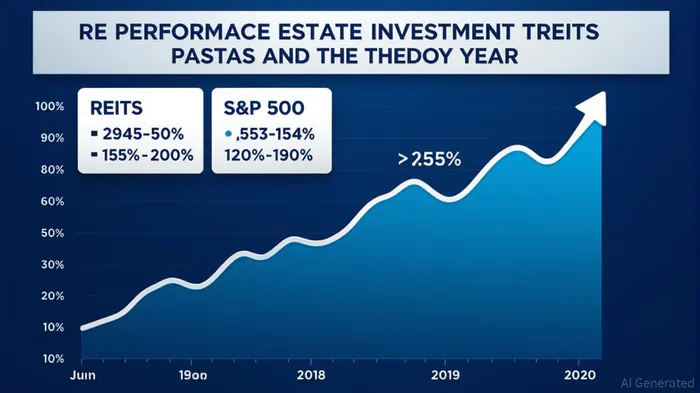
Equity markets, meanwhile, are benefiting from the wealth effect. Strong corporate earnings, a robust consumer sector, and anticipation of deregulation and tax cuts underpin optimism for risk assets. The S&P 500's performance in 2025 reflects this, with sectors like industrials and consumer discretionary outperforming. For investors, the shift from real estate to equities represents a strategic pivot: while housing wealth drives consumer spending, the stock market offers more liquid and scalable opportunities for capital appreciation.
Navigating the New Normal
The Federal Reserve's cautious approach to rate cuts—reducing 2025 projections from four to two cuts—has added to market uncertainty. While bond yields remain elevated, investors are seeking yield elsewhere. High-quality corporate bonds and hybrid real estate debt instruments (e.g., mezzanine loans, bridge financing) are attracting attention for their downside protection and capital efficiency.
For individual investors, the key lies in balancing exposure to sectors insulated from rate sensitivity. Digital infrastructure, necessity-based retail, and senior housing are prime examples. These assets generate stable cash flows, mitigating the drag of high borrowing costs. Additionally, alternative investments such as private equity and venture capital are gaining ground as public markets become more volatile.
Conclusion: A Call for Strategic Diversification
The long-term stickiness of mortgage rates is not merely a housing market issue—it is a systemic force reshaping capital flows and consumer behavior. While home price appreciation continues to bolster consumption, the barriers to homeownership are pushing households and institutions toward alternative avenues for growth. Investors must prioritize durable income streams, geographic and sectoral diversification, and active asset management to navigate this complex environment.
In this new normal, the mantra is clear: adapt or risk obsolescence. For those who recognize the interplay between housing wealth and financial markets, the opportunities are vast—but so are the risks. The challenge lies in aligning portfolios with the evolving realities of a high-rate world.

Stay ahead of the market.
Get curated U.S. market news, insights and key dates delivered to your inbox.


AInvest
PRO
AInvest
PRO



Comments
No comments yet