
Rising Momentum in U.S. Space Startups: Firefly Aerospace's Market Debut and Lunar Ambitions
 Aime Summary
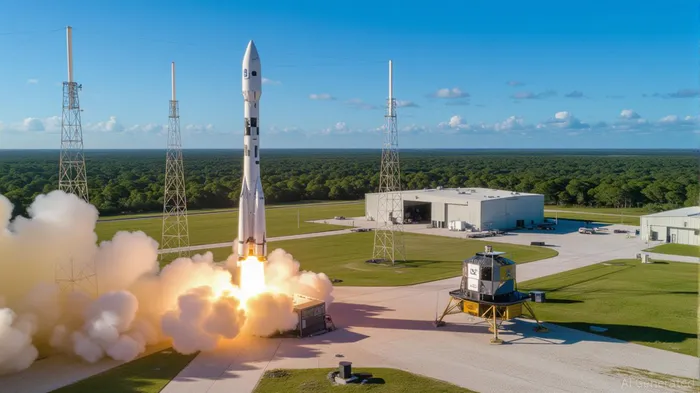
The U.S. commercial space sector is undergoing a seismic shift, driven by regulatory reforms, technological breakthroughs, and a surge in private-sector innovation. At the forefront of this transformation is Firefly AerospaceFLY-- (FLY), a company that has captured investor attention with its historic lunar landing, strategic partnerships, and a $8.5 billion market valuation following its August 2025 Nasdaq debut. For investors seeking exposure to the next industrial revolution, Firefly's trajectory offers a compelling case study of how regulatory tailwinds and technological ambition can converge to create long-term value.
Regulatory Tailwinds: A Catalyst for Growth
The U.S. government's push to streamline space commerce has created a fertile environment for companies like FireflyFLY--. The proposed LAUNCH Act, backed by bipartisan lawmakers, aims to reduce bureaucratic hurdles by enabling weekly approvals for commercial launches and reentries. This shift aligns with Firefly's need to scale production rapidly to meet demand from national security clients, commercial satellite operators, and lunar missions. For context, SpaceX's 73 Falcon 9 launches in 2025 highlight the sector's growth potential, and Firefly's Alpha rocket is positioned to capture a slice of this expanding market.
Technological Edge: From Lunar Landings to In-Space Services
Firefly's March 2025 lunar landing—marking the first commercial upright moon touchdown—cemented its reputation as a mission-critical player. The Blue Ghost lander's success, coupled with a $176.7 million NASA contract for a fourth lunar mission, underscores the company's technical prowess. Beyond lunar exploration, Firefly is developing Elytra, a space-tug designed for satellite servicing and orbital logistics, a sector projected to grow as satellite constellations expand.
The company's partnership with Northrop GrummanNOC-- to co-develop the Eclipse rocket further diversifies its offerings. Eclipse, set for a 2026 debut, targets the mid-sized launch market, a niche where Firefly can compete with SpaceX's Falcon 9 and Blue Origin's New Glenn. This strategic move addresses a critical gap in the U.S. launch ecosystem, particularly as geopolitical tensions reduce reliance on foreign providers.
Financial Strength and Strategic Partnerships
Firefly's $868 million IPO, priced at $45 per share, provided a financial lifeline to accelerate production and R&D. The funds will be allocated to repaying debt, expanding manufacturing in Texas, and scaling its Alpha rocket line. With a $1.1 billion backlog and over 30 planned launches, Firefly's revenue trajectory is robust. However, the company's $60.1 million net loss in the latest quarter highlights the high R&D costs inherent in the space industry.
Strategic partnerships amplify Firefly's credibility. A $50 million investment from Northrop Grumman and a $21.81 million U.S. Space Force contract for the VICTUS SOL mission demonstrate alignment with national security priorities. Internationally, the UAE's $21.81 million contract to deliver the Rashid 2 rover to the moon's far side underscores Firefly's global reach.
Investment Considerations: Balancing Risk and Reward
While Firefly's valuation appears lofty, its position in a high-growth sector justifies optimism. The global space economy, valued at $469 billion in 2023, is projected to surpass $1 trillion by 2040, driven by lunar exploration, satellite servicing, and space-based manufacturing. Firefly's diversified portfolio—spanning launch vehicles, lunar landers, and in-space services—positions it to benefit from multiple growth vectors.
However, risks remain. The space industry is capital-intensive, and technical setbacks could delay milestones. Additionally, competition from SpaceX, Blue Origin, and emerging players like Relativity Space could pressure margins. Investors should monitor Firefly's gross margin trends and production scalability post-IPO.
Conclusion: A Lunar Leap for Long-Term Investors
Firefly Aerospace's market debut and lunar ambitions reflect the maturation of the commercial space sector. With regulatory tailwinds, a robust pipeline of contracts, and a clear technological roadmap, the company is well-positioned to capitalize on the cislunar economy's rise. For investors with a long-term horizon, Firefly represents a high-conviction bet on the future of space exploration—and a reminder that the next industrial revolution is no longer confined to Earth.
Investment Advice: Consider a cautious allocation to Firefly, given its growth potential and alignment with U.S. space policy. Diversify across the sector by pairing FLY with established players like SpaceX (if public) and emerging innovators to mitigate risk. Monitor regulatory developments and contract wins for signals of sustained momentum.

Delivering real-time insights and analysis on emerging financial trends and market movements.
Latest Articles
Stay ahead of the market.
Get curated U.S. market news, insights and key dates delivered to your inbox.
AInvest
PRO
AInvest
PRO



Comments
No comments yet