
Rising Jet Fuel Crossings: How Asia's Surplus is Transforming European Energy Markets
The global jet fuel market is undergoing a quiet revolution. Over the past six months, Northeast Asia—led by China, Japan, and South Korea—has become a key supplier of aviation fuel to Europe, driven by structural shifts in supply chains and energy arbitrage opportunities. This trend, exemplified by record June 2024 exports of 350,000–465,000 tons, signals a new era for energy traders and investors. But what makes this shift sustainable, and where does it leave refineries and logistics firms? Let's dissect the dynamics.
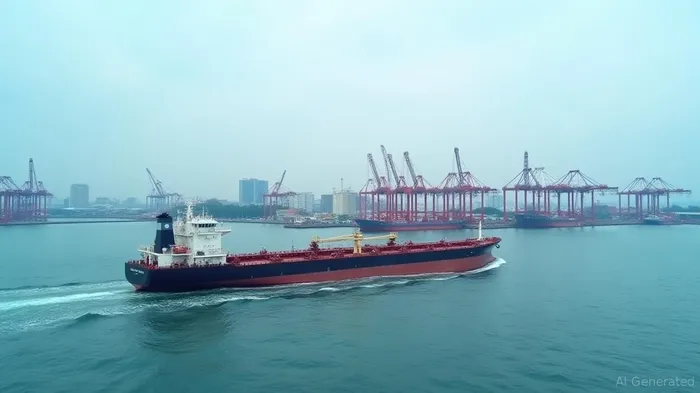
The Perfect Storm for Arbitrage: Freight, Surplus, and Pricing Gaps
The surge in exports is no accident. Three factors have aligned to create a “sweet spot” for traders:
1. Falling Freight Costs: LR2 tanker rates for East-to-West shipments dropped to $40–$45/ton in June—near a one-month low—due to competitive shipping markets and geopolitical timing. This reduced the cost of moving fuel westward, even as tensions in the Middle East (e.g., Iran-Israel conflict) introduced volatility.
2. Asia's Chronic Surplus: Asian refineries, particularly in China, are swimming in excess jet/kerosene supply. China's May 2024 exports hit 1.92 million tons, up 20% year-on-year, and Beijing aims to push monthly exports past 2 million tons. This surplus keeps Asian prices depressed, creating a $60–$80/ton arbitrage gap with European prices.
3. Geopolitical Demand Surge: European refineries face constraints from Middle Eastern supply risks, while summer travel demand (up 5.2% YoY in June) has tightened regional supply.
The result? Traders like Vitol, BPBP--, and Unipec (Sinopec's trading arm) are capitalizing on transcontinental arbitrage. A single 90,000-ton shipment to Europe can yield profits exceeding $5 million, given current spreads.
Is This a Structural Shift or a Fleeting Opportunity?
The sustainability of these exports hinges on two variables: Asia's surplus and Middle Eastern competition.
Asia's Surplus Looks Sticky:
China's state-owned refiners are under pressure to export to avoid domestic oversupply. Even with rising U.S. West Coast exports (due to widened transpacific price gaps), Asia's net long position in jet/kerosene remains around 625,000 barrels/day. This suggests a persistent oversupply, keeping Asian prices low and arbitrage viable.
Middle Eastern Competition:
Middle Eastern refineries have been undercutting Northeast Asia in European markets for years, but their influence may wane. Geopolitical instability in the region could disrupt their supply chains, while Asian exporters benefit from shorter transit times and lower freight costs.
Impact on Refinery Margins
- Asian Refiners Win: Companies like Sinopec (SHI) and SK Innovation (SKIXY) gain from higher export volumes. Their margins could expand further if China's export targets are met.
- European Refiners Struggle: European refineries face margin pressure as cheaper Asian imports flood their markets. This could force some to shift production toward higher-value fuels or close entirely.
Investment Plays: Logistics and Asian Energy Stocks
- Energy Logistics: Tanker operators like FrontlineFRO-- (FRO) and TeekayTK-- (TNK) stand to benefit from increased East-to-West traffic.
- Asian Energy Exporters: Sinopec (SHI) and Cosco Shipping Energy (01651.HK) are well-positioned to capitalize on China's export ambitions.
- Arbitrage-Driven Traders: Publicly traded traders like BP (BP.L) or Marathon PetroleumMPC-- (MPC) may see uplift in their trading divisions if arbitrage opportunities persist.
Risks to Watch
- Freight Cost Volatility: Middle East conflicts or sanctions could spike tanker rates, eroding arbitrage profits.
- Policy Shifts: China might curb exports if domestic demand rebounds sharply.
- European Demand Slump: A recession could reduce jet fuel consumption, weakening price support.
Conclusion
The rise of Northeast Asian jet fuel exports to Europe is more than a temporary arbitrage play—it's a structural shift rooted in Asia's surplus and evolving logistics. For investors, the winners are clear: logistics firms that move the fuel and Asian energy producers that sell it. However, the path isn't without potholes—geopolitics and policy could still upend the calculus. Stay tuned to freight rates and export data to navigate this jet-fueled opportunity.

Stay ahead of the market.
Get curated U.S. market news, insights and key dates delivered to your inbox.
AInvest
PRO
AInvest
PRO



Comments
No comments yet