
Rising Infrastructure Costs and Stadium Uncertainty in St. Petersburg
 Aime Summary
In the heart of Florida's Gulf Coast, St. Petersburg is grappling with a dual challenge: the escalating costs of infrastructure upgrades and the shifting landscape of sports-driven urban development. For investors, this dynamic interplay between public investment and private ambition presents a complex calculus of risk and reward. From the city's aggressive utility rate hikes to the uncertain future of its flagship stadium project, the stakes for real estate and municipal bond markets are higher than ever.
Infrastructure Costs: A Double-Edged Sword for Real Estate
St. Petersburg's infrastructure spending has surged in 2025, driven by a $6.8 billion capital improvement plan over 30 years. The St. Pete Agile Resiliency Plan (SPAR), aimed at modernizing stormwater and wastewater systems, has become a focal point. By fiscal year 2026, residents face an 8-9% increase in utility bills, with sewer capacity fees jumping from $600 to $1,000—a 66.67% spike. Stormwater rates are projected to rise by 17.5%, while SPAR-related funding could push them 20-75% higher in 2027.
These hikes are not merely a financial burden but a test of the city's ability to balance infrastructure modernization with affordability. For real estate, the implications are twofold. On one hand, improved infrastructure—particularly flood-resistant systems—could enhance property values by mitigating climate risks. On the other, the immediate strain on household budgets may dampen housing demand, especially in lower-income neighborhoods.
The city's proposed $614 million in SPAR-related projects over five years, to be funded by a mix of utility fees and potential general obligation bonds, raises questions about long-term sustainability. While developers may benefit from upgraded sewer and drainage systems, homeowners could see their property tax liabilities rise if SPAR is paired with a new resiliency tax.
Stadium Uncertainty: The Rays' Retreat and Bond Market Volatility
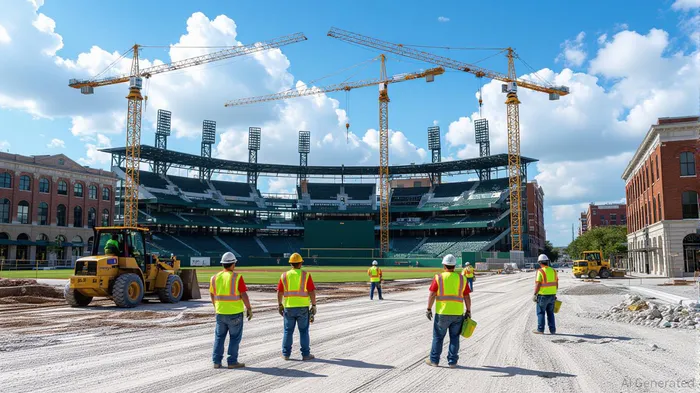
The most contentious element of St. Petersburg's urban development is the $6.5 billion redevelopment of the Historic Gas Plant District (HGPD). Once anchored by the Rays' new $1.3 billion stadium, the project now teeters on the edge of collapse. In March 2025, the Rays abruptly terminated the stadium development agreements, citing financial uncertainties tied to hurricane damage and rising construction costs.
The city's response? A narrow 4-3 City Council vote to approve $287.5 million in tax-exempt bonds for the stadium and infrastructure, despite the Rays' exit. Pinellas County followed with $312.5 million in tourist development tax funding. Yet, the Rays' absence has left a void in the project's financial architecture, raising red flags for bond investors.
Municipal bonds, which typically rely on stable revenue streams and clear repayment timelines, now face a new risk: the Rays' ability to cover cost overruns. The team has committed $700 million to the stadium but warned that delays could erode their financial flexibility. If the Rays fail to meet March 2025 milestones, the city and county could face legal and financial repercussions, including the need to reimburse public funds.
For bondholders, this uncertainty is a critical red flag. The HGPD bonds are structured as general obligation debt, meaning the city's credit rating will be directly tied to the project's success. If the Rays' withdrawal forces a renegotiation or abandonment of the stadium, the city's ability to service debt could be compromised, leading to a downgraded credit rating and higher borrowing costs.
Investment Risks and Opportunities
The interplay between infrastructure costs and stadium-driven development creates a volatile environment for real estate and municipal bonds. Here's how investors can navigate it:
- Real Estate: Diversify Exposure
- Opportunities: Properties in areas benefiting from SPAR-funded infrastructure—such as improved stormwater systems—could see long-term value appreciation. The Shore Acres Resiliency Infrastructure project, for example, is expected to boost property values in flood-prone zones.
Risks: Over-leveraged neighborhoods with high utility costs may see declining demand. Investors should avoid properties in lower-income areas where rate hikes could trigger affordability crises.
Municipal Bonds: Prioritize Liquidity and Credit Quality
- Opportunities: Short-term bonds tied to the $55.7 million Tropicana Field repairs are less risky, as they are backed by immediate revenue from construction contracts.
- Risks: Long-term HGPD bonds carry significant uncertainty. Investors should monitor the Rays' financial disclosures and the city's debt-to-revenue ratio. A downgrade in St. Petersburg's credit rating could trigger a sell-off in its bonds.
The Path Forward: Balancing Resilience and Fiscal Prudence
St. Petersburg's leaders face a pivotal choice: continue accelerating infrastructure spending to meet climate challenges or temper growth to preserve fiscal stability. For investors, the key is to assess whether the city's debt load is manageable. The $6.8 billion capital improvement plan, combined with the HGPD bonds, represents a 30-year financial commitment. If managed prudently, this could bolster the city's credit rating and attract long-term capital. However, missteps—such as a delayed Rays stadium or a SPAR funding shortfall—could trigger a crisis.
In the short term, the state's FY 25-26 budget, which includes $1.05 million for the Historic Manhattan Casino Renovations and $1 million for the Shore Acres Resiliency project, offers a lifeline. These state-funded initiatives could offset some of the city's infrastructure costs and stabilize its credit profile.
Conclusion: A Calculated Bet on Resilience
St. Petersburg's infrastructure and stadium projects exemplify the risks and rewards of sports-driven urban development. For real estate investors, the city's push for climate resilience is a long-term play on property value appreciation, but the immediate rate hikes and affordability challenges cannot be ignored. For bond investors, the HGPD project is a high-stakes gamble—its success hinges on the Rays' financial commitment and the city's ability to adapt.
In a market where uncertainty is the norm, the best strategy is to diversify and stay informed. Investors should closely monitor the Rays' financial disclosures, the city's bond repayment schedules, and the outcomes of the November 2026 referendum on SPAR funding. Those who bet on St. Petersburg's resilience may reap rewards, but only if they're prepared for the turbulence along the way.

Delivering real-time insights and analysis on emerging financial trends and market movements.
Latest Articles
Stay ahead of the market.
Get curated U.S. market news, insights and key dates delivered to your inbox.


AInvest
PRO
AInvest
PRO



Comments
No comments yet