
Rising Hidden Homeownership Costs in Atlanta and Their Impact on Real Estate Markets


 Aime Summary
The Hidden Cost Burden: A Growing Drag on Affordability
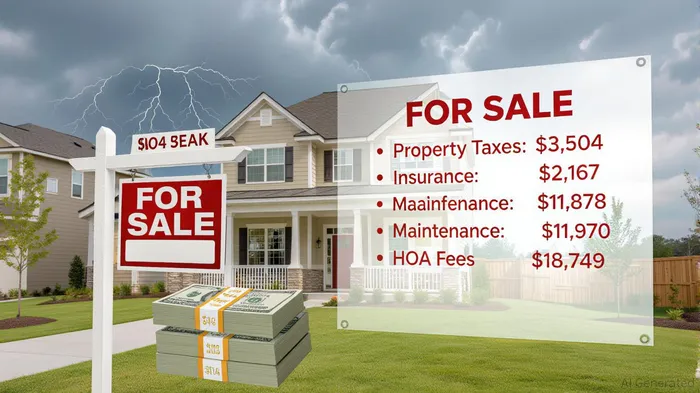
According to a Zillow report, the average Atlanta homeowner now faces , a figure that includes , , and . These costs have outpaced income growth, with . For context, . Such trends are forcing buyers to rethink their priorities, with many shifting toward townhomes and condos that offer lower maintenance demands and HOA-managed amenities.
The implications for investors are stark. Properties in neighborhoods with high-maintenance single-family homes may struggle to attract price-sensitive buyers, while those with HOA-managed communities could see stronger demand. However, even HOA fees-a perceived solution to maintenance burdens-carry risks. In some Atlanta subdivisions, to cover infrastructure repairs, squeezing budgets for both owners and investors.
Market Cooling and Demand Shifts: A New Equilibrium
Atlanta's 2025 market is no longer the hypercompetitive arena it was in 2021. While the median sale price remains robust at according to market analysis, price growth has flattened, and inventory levels have stabilized. This cooldown, however, is not a collapse-it's a recalibration driven by shifting demand. Buyers are prioritizing affordability over square footage, and .
Infrastructure developments, such as the "Moving Atlanta Forward" Bond Program, are also influencing demand. , while over-supplied suburban complexes face stagnation according to market forecasts. For investors, this means strategic location analysis is more critical than ever. Properties near future infrastructure projects could appreciate by , but or operational efficiencies to remain competitive.
Environmental and Financial Risks: A Dual Challenge
Environmental risks are compounding financial pressures. Approximately lie in high-risk flood zones, with in vulnerable areas. For investors, this translates to higher operating costs and potential devaluation of assets. However, properties retrofitted with resilience features-such as raised mechanical systems or permeable driveways-could qualify for insurance discounts and attract eco-conscious buyers according to industry analysis.
The interplay between these risks and returns is complex. While Atlanta's population and job growth continue to underpin long-term demand, short-term volatility from rising costs and environmental exposure necessitates a more nuanced approach. Investors who fail to account for these factors may find themselves overexposed to properties with declining cash flow or appreciation potential.
Recalibrating Investment Strategies: A Call for Prudence
The Atlanta market's evolution demands a recalibration of investment strategies. Key adjustments include:
1. Prioritizing to mitigate maintenance burdens, though investors must vet fee structures for sustainability.
2. Focusing on according to market data.
3. Incorporating according to investment research.
4. within the metro area to capitalize on infrastructure-driven growth while avoiding oversaturated markets.
For first-time buyers and seasoned investors alike, the lesson is clear: Atlanta's real estate market is no longer a one-size-fits-all proposition. Hidden costs are no longer hidden-they are a defining factor in risk assessment and portfolio performance.

Delivering real-time insights and analysis on emerging financial trends and market movements.
Latest Articles
Stay ahead of the market.
Get curated U.S. market news, insights and key dates delivered to your inbox.


AInvest
PRO
AInvest
PRO



Comments
No comments yet