
Rising Healthcare Costs and Their Impact on Personal and Corporate Financial Planning
 Aime Summary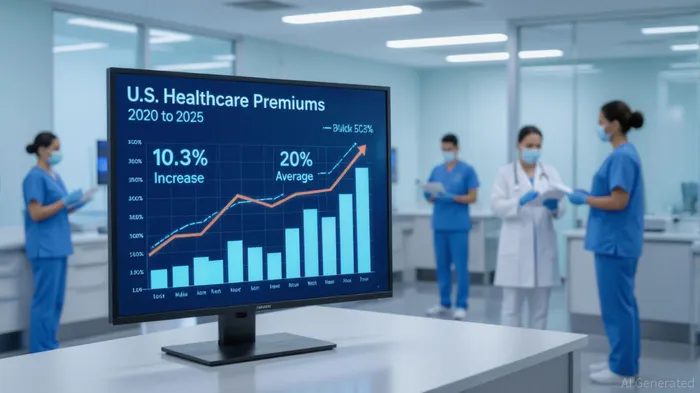
The post-pandemic era has ushered in a new paradigm of economic uncertainty, with healthcare inflation emerging as a defining challenge for both individuals and corporations. As medical costs outpace general inflation, the need for strategic asset allocation and risk management has never been more urgent. Covered California's 10.3% premium increase for 2026—while lower than the national 20% average—serves as a microcosm of broader trends: rising drug prices, hospital consolidation, and demographic shifts. For investors, this landscape demands a dual focus on hedging against cost pressures and capitalizing on innovation-driven opportunities.
The Covered California Case: A Microcosm of National Trends
Covered California's 10.3% rate hike reflects a delicate balance between state-level interventions and systemic cost drivers. While the state's 2026 increase is half the national average, it still incorporates factors like the expiration of federal premium tax credits and rising pharmacy costs (e.g., GLP-1 drugs). This underscores a critical insight: even in markets with robust subsidies, healthcare inflation is inescapable. Nationally, the 20% average is fueled by hospital system consolidation, labor shortages, and the growing demand for high-cost treatments. For example, specialty drugs now account for 50% of total U.S. prescription drug spending, with prices for breakthrough therapies like gene therapies soaring by 30% annually.
Investment Strategy 1: Healthcare P&C Insurers as Inflation Hedges
Healthcare-focused property and casualty (P&C) insurers are uniquely positioned to benefit from the current environment. These insurers, which cover risks like medical malpractice, clinical liability, and pharmaceutical supply chain disruptions, have seen underwriting gains surge as they pass rising claims costs to policyholders. In Q2 2025, U.S. healthcare P&C insurers reported a combined ratio of 94.2%, driven by disciplined rate increases and improved investment yields. For instance, UnitedHealth Group's P&C arm capitalized on elevated interest rates, boosting net investment income by 33% year-over-year. Investors should prioritize insurers with strong underwriting margins and diversified portfolios, as these firms can navigate both inflationary and deflationary cycles.
Investment Strategy 2: Health Tech Innovation for Long-Term Growth
The integration of artificial intelligence (AI) and digital tools into healthcare is not just a trend—it's a structural shift. Health systems are investing heavily in AI-driven diagnostics, agentic AI for administrative automation, and cloud-based EMRs. These innovations reduce operational costs and improve patient outcomes, creating a flywheel effect for tech-enabled insurers and providers. For example, AI-powered risk modeling is enabling more accurate pricing of health insurance861218-- products, while blockchain-based claims processing is cutting fraud-related losses. Investors should target companies at the intersection of health tech and insurance, such as startups leveraging AI for predictive analytics or established firms like Teladoc HealthTDOC-- (TDOC), which is expanding telehealth infrastructure.
Investment Strategy 3: Inflation-Protected Securities for Stability
As healthcare costs remain stubbornly high, inflation-protected securities (IPS) offer a critical hedge. Treasury Inflation-Protected Securities (TIPS) and other indexed bonds adjust principal values in line with the Consumer Price Index (CPI), preserving real returns. In 2025, TIPS yields have outperformed traditional bonds, with the 10-year TIPS yield reaching 1.8%—a 10-year high. For corporations and high-net-worth individuals, allocating a portion of fixed-income portfolios to IPS can mitigate the erosion of purchasing power. Additionally, catastrophe bonds (cat bonds) are gaining traction as alternative investments, offering higher yields while diversifying risk exposure.
Demographic-Driven Demand Shifts: Preparing for the Silver Tsunami
The aging U.S. population is amplifying healthcare inflation, with Medicare beneficiaries projected to reach 80 million by 2030. This “silver tsunami” is driving demand for long-term care insurance, home health services, and chronic disease management. Investors should consider allocating to companies specializing in geriatric care or developing AI-driven tools for elderly patient monitoring. For example, startups like Current Health, which offers remote monitoring solutions, are seeing rapid adoption in Medicare Advantage plans. Meanwhile, corporations must adjust retirement planning strategies to account for rising healthcare costs, potentially increasing contributions to health savings accounts (HSAs) or investing in longevity insurance products.
Conclusion: A Portfolio for the New Normal
The convergence of healthcare inflation, demographic shifts, and technological disruption demands a multifaceted investment approach. By diversifying into healthcare P&C insurers, health tech innovators, and inflation-protected securities, investors can hedge against rising costs while capturing growth opportunities. Covered California's 10.3% increase may seem modest, but it signals a broader reality: healthcare inflation is here to stay. Those who adapt their portfolios to this new normal will be best positioned to navigate the challenges—and opportunities—of the post-pandemic era.

Stay ahead of the market.
Get curated U.S. market news, insights and key dates delivered to your inbox.
AInvest
PRO
AInvest
PRO



Comments
No comments yet