
Rising Geopolitical Tensions in South Asia: Assessing the Economic and Investment Implications of India-Pakistan Hostilities
 Aime Summary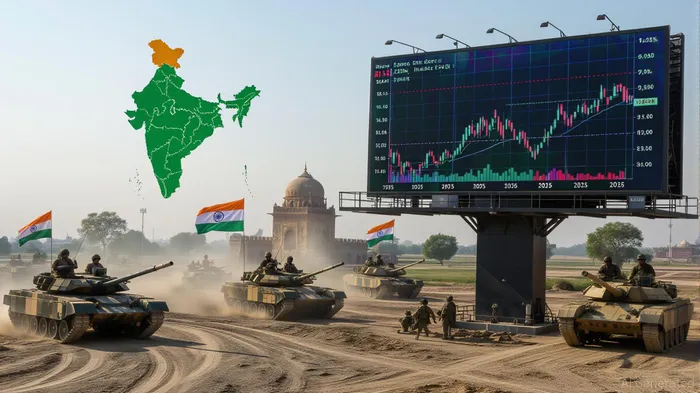
The recent escalation of hostilities between India and Pakistan has reignited long-standing geopolitical tensions in South Asia, with profound implications for regional markets and global investors. The April 22, 2025, terrorist attack in Pahalgam and India's subsequent military response—Operation Sindoor—triggered a chain reaction of economic and political volatility. While the U.S.-brokered ceasefire of May 10, 2025, has temporarily stabilized the situation, the underlying risks remain acute. For international investors, the challenge lies in navigating the dual forces of short-term uncertainty and long-term resilience in a region where economic fundamentals and strategic posturing are inextricably linked.
Market Volatility and Currency Pressures
The immediate aftermath of the conflict saw sharp sell-offs in regional stock markets. India's Nifty 50 index, for instance, experienced a 1.4% depreciation in the Indian rupee (INR) against the U.S. dollar, a divergence from the broader global trend of dollar weakness. This currency pressure was exacerbated by capital outflows and heightened risk aversion, as foreign investors recalibrated their exposure to South Asian markets. Pakistan's rupee (PKR) fared worse, depreciating by nearly 5% in a month, reflecting the country's fragile macroeconomic position.
The volatility underscores the sensitivity of emerging markets to geopolitical shocks. While India's equity markets rebounded relatively quickly—outperforming historical averages in the subsequent month—the resilience of the rupee remains a critical concern. A weaker currency could elevate import costs, reignite inflationary pressures, and strain India's current account, even as the country's domestic consumption-driven growth model offers a buffer.
Trade Disruptions and Supply Chain Risks
Bilateral trade between India and Pakistan has been suspended, with key border crossings and air corridors closed. This has disrupted supply chains for sectors such as textiles, agriculture, and pharmaceuticals, which rely on cross-border logistics. For example, India's pharmaceutical industry, a global exporter of generic drugs, now faces delays in sourcing raw materials from Pakistan, while Pakistani textile manufacturers have lost access to Indian markets.
The ripple effects extend beyond the region. Global supply chains, particularly in energy and manufacturing, face indirect risks as rerouted shipments and increased insurance costs raise operational expenses. For investors, this highlights the importance of diversifying supply chain exposure and prioritizing companies with robust contingency planning.
Opportunities in Defense and Strategic Sectors
Amid the chaos, certain sectors have emerged as beneficiaries. India's defense industry, for instance, has seen a surge in government spending and private investment. Companies like Bharat Electronics and Larsen & Toubro have gained traction as key players in modernizing India's military infrastructure. Similarly, the U.S.-India defense partnership has deepened, with increased procurement of advanced technology and joint ventures in aerospace and cybersecurity.
Safe-haven assets have also attracted capital. Gold prices in India rose by 8% in May 2025, while U.S. Treasuries saw a 12% inflow from South Asian investors. These trends reflect a shift in portfolio allocations toward assets perceived as less correlated with regional volatility.
The Role of U.S. Policy and Trade Agreements
The U.S. has played a pivotal role in mitigating the crisis, leveraging its diplomatic influence to broker a ceasefire. This intervention has not only stabilized markets but also reinforced the U.S. as a key partner for India's economic ambitions. A pending U.S.-India trade deal, if finalized, could further insulate the region from geopolitical risks by expanding market access for Indian exports and reducing reliance on volatile trade routes.
However, the Trump administration's recent imposition of 50% tariffs on Indian goods—targeting sectors like textiles and gems—has complicated this dynamic. While India has vowed to retaliate, the long-term impact of such measures remains uncertain. Investors must weigh the potential for a trade war against the broader strategic alignment between the two nations.
Investment Strategies for a Volatile Landscape
For international investors, the key lies in balancing risk mitigation with long-term growth opportunities. Diversification across asset classes—such as equities in resilient sectors, currency-hedged funds, and global bonds—is essential. Additionally, a focus on mid- and small-cap stocks in India's infrastructure and technology sectors could yield outsized returns as the country accelerates its development agenda.
Active portfolio management is also critical. Systematic investment plans (SIPs) and dollar-cost averaging can help navigate short-term volatility, while hedging strategies—such as options on the Nifty 50 or PKR forwards—can mitigate currency risks. Investors should also monitor geopolitical indicators, including ceasefire durability and U.S. policy shifts, to adjust positions proactively.
Conclusion: Navigating Uncertainty with Caution and Vision
The India-Pakistan conflict of 2025 has exposed the fragility of regional markets to geopolitical shocks. Yet, it has also revealed the resilience of economies with strong fundamentals and strategic adaptability. For international investors, the path forward requires a nuanced approach: hedging against immediate risks while capitalizing on long-term opportunities in sectors poised to benefit from regional realignments. As South Asia recalibrates its economic and political landscape, those who combine prudence with foresight will be best positioned to thrive in an era of uncertainty.

Stay ahead of the market.
Get curated U.S. market news, insights and key dates delivered to your inbox.


AInvest
PRO
AInvest
PRO



Comments
No comments yet