
Rising Geopolitical Tensions in Australia-China Relations and Their Implications for Global Markets
 Aime Summary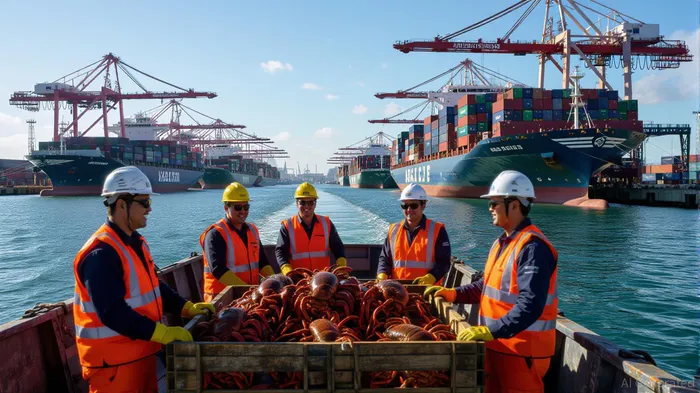
The Australia-China relationship has long been a linchpin of global trade, but recent developments underscore both the fragility and resilience of this partnership. While high-level diplomacy has normalized key trade sectors, lingering geopolitical tensions—stemming from U.S.-China rivalry, resource dependencies, and shifting economic priorities—pose risks for cross-border investors. For those navigating this complex landscape, understanding sector-specific vulnerabilities and opportunities is critical to building a diversified, resilient portfolio.
Assessing Risk Exposure: The Commodity Conundrum
Australia's economy remains deeply intertwined with China's demand for commodities, particularly iron ore and coal. However, China's transition to a consumption-driven growth model has dampened demand for construction-related materials. Iron ore prices, for instance, have swung between 15-25% volatility in 2025, reflecting the property market slump and a pivot toward green energy.
Investors with heavy exposure to mining stocks (e.g., BHP GroupBHP--, Rio Tinto) face elevated risk as China's decarbonization agenda threatens long-term demand for coal. Meanwhile, liquefied natural gas (LNG) exports, while less volatile, are expected to grow at a muted 3-5% annually, down from previous double-digit rates. This shift demands a reevaluation of capital allocations in resource sectors.
Key Takeaway: Diversify commodity exposure by overweighting sectors aligned with China's green transition, such as critical minerals (lithium, rare earths) and renewable energy infrastructure.
Resilient Sectors: Agriculture, Green Energy, and Digital Services
Recent trade normalization efforts—such as the resumption of live rock lobster and red meat exports—highlight Australia's competitive edge in agriculture. These sectors, valued at over $2.2 billion in beef and veal exports alone, are benefiting from streamlined customs procedures and improved market access.
Equally promising is the green energy sector. Australia's abundant solar and wind resources, coupled with China's push for low-carbon iron and hydrogen projects, position firms like Fortescue Metals Group and Hyatt Energy as key players. The Joint Outcomes Statement from PM Albanese's 2025 visit emphasized collaboration in green hydrogen, a sector expected to grow 10x by 2030.
Digital services, including cross-border e-commerce and AI, also present opportunities. China's tech-driven consumption upgrade and Australia's innovation ecosystem are fostering partnerships in fintech, healthcare R&D, and data infrastructure.
Key Takeaway: Allocate capital to sectors with structural growth drivers, such as agriculture (AGL.AX), green hydrogen (HYG.AX), and tech-enabled services (ASX-listed fintechs like Airwallex).
Geopolitical Risks and Hedging Strategies
While trade normalization is progressing, U.S.-China tensions—exemplified by the April 2025 “Liberation Day” tariff escalation—remain a wildcard. These events have pressured the Australian dollar (AUD/USD), with analysts forecasting a 5-10% depreciation in 2025.
To mitigate currency risk, investors should consider hedging via forward contracts or diversifying into non-AUD-denominated assets. Additionally, geopolitical risks in resource sectors necessitate a focus on companies with strong balance sheets and diversified markets (e.g., Woodside Energy's pivot to LNG and hydrogen).
Key Takeaway: Prioritize defensive investments with stable cash flows (utilities, healthcare) and hedge currency exposure to buffer against trade war volatility.
Conclusion: Balancing Caution and Opportunity
The Australia-China relationship remains a double-edged sword for investors. While geopolitical tensions and economic transitions introduce risks, they also create openings in resilient sectors. By diversifying portfolios across agriculture, green energy, and digital services, while hedging against currency and commodity volatility, investors can navigate this dynamic landscape with strategic foresight.
As the global economy recalibrates, the lesson from 2025 is clear: adaptability—not overreliance on any single market—is the cornerstone of long-term success.

Stay ahead of the market.
Get curated U.S. market news, insights and key dates delivered to your inbox.
AInvest
PRO
AInvest
PRO



Comments
No comments yet