
Rising Gas Prices: How Middle East Tensions Impact U.S. Fuel Costs
 Aime Summary
Rising tensions in the Middle East have pushed U.S. gas prices above $3.25 per gallon as of early March 2026. - Military actions against Iran and instability around the Strait of Hormuz are accelerating seasonal price increases and disrupting global oil flows. - Analysts warn prolonged conflict could lead to crude oil prices reaching $100 per barrel and gasoline prices potentially exceeding $3.50 per gallon.
Gasoline prices in the U.S. have surged in recent days due to the escalating conflict in the Middle East, with national averages now above $3.25 per gallon. The situation is intensifying at a time when seasonal factors—such as increased travel and summer-blend production—typically push prices higher. But the current spike is being accelerated by geopolitical developments involving military actions against Iran and growing uncertainty around oil supply routes.
Why Are Gas Prices Rising Sharply Amid Middle East Conflicts?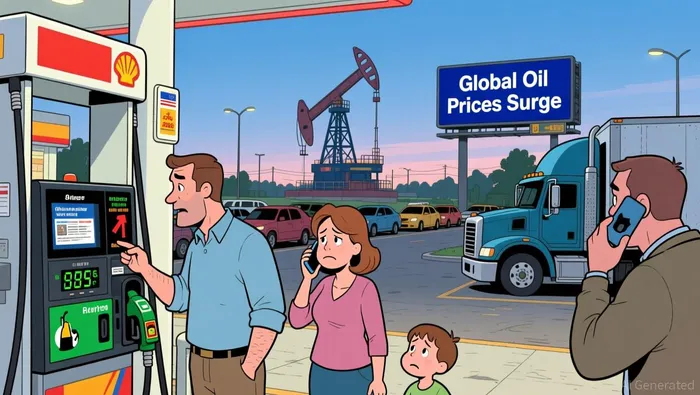
Gasoline prices are sensitive to shifts in crude oil supply and global demand. The Strait of Hormuz, a key shipping route for roughly 20% of the world's daily oil supply, has become a focal point of recent volatility. Insurance costs for tankers are spiking, and some large crude carriers are delaying passage through the strait, which has tightened global oil markets.
Analysts like Patrick De Haan from GasBuddy say the market is reacting to fears of prolonged disruptions. If the conflict escalates and oil production in the region is impacted, prices could climb significantly. Barclays energy analysts project crude could reach $100 per barrel if the situation persists.
In Tennessee, for example, regular gasoline prices have risen from $2.55 to $2.61 in just days. Diesel prices have also climbed sharply. While the immediate effects are measured in cents, the cumulative impact could lead to much higher costs for consumers as the conflict continues.
What Does the Recent Gas Price Jump Mean for U.S. Consumers and Investors?
The U.S. gas price surge is having both immediate and long-term implications. As of March 5, 2026, the national average was $3.25 per gallon, up nearly 27 cents in a week. In Nashville, prices have already jumped 13 cents. This puts the U.S. in a similar price position as early April 2025 and the early days of the Russia–Ukraine War in March 2022.
For investors, the situation presents both risks and opportunities. Energy companies may benefit from higher oil prices, especially if OPEC+ continues to tighten output. However, prolonged high prices could dampen consumer spending and slow economic growth. This could weigh on stocks in sectors like retail, travel, and consumer discretionary.
On the global stage, the U.S. and Israel have agreed to a short-term increase in OPEC+ production—adding 206,000 barrels per day for April—which may help ease some pressure. Still, unless a broader resolution is reached, volatility is likely to persist.
What Should Investors Watch for in the Coming Weeks?
The next few weeks will be crucial in determining whether the current gas price spike becomes a short-lived blip or the start of a longer-term upward trend. Investors should closely monitor the following developments:
- The duration of the conflict and whether it expands beyond the current military actions.
- Whether oil infrastructure in Iran or neighboring countries is targeted.
- The movement of crude tankers through the Strait of Hormuz and global insurance costs.
- OPEC+ decisions on production levels and any additional agreements to boost supply.
The bottom line is that while the current price increases are measured in cents per gallon, the long-term trajectory will depend on the scale and duration of the geopolitical instability. For now, the U.S. gas price climb is a real-time reminder of how global events can directly affect consumers and investors alike.

Stay ahead of the market.
Get curated U.S. market news, insights and key dates delivered to your inbox.


AInvest
PRO
AInvest
PRO



Comments
No comments yet