
Rising Floodwaters: Navigating Climate Risk and Seizing Infrastructure Opportunities
The escalating threat of climate-related flooding is reshaping the global economic landscape. By 2030, 24% more people will face flood exposure under even 1.5°C of warming, per the IPCC. For businesses, this translates to existential risks—from supply chain disruptions to irreversible asset damage. Yet, within this crisis lies a transformative opportunity: strategic investments in resilient infrastructure and adaptive strategies could yield robust returns while mitigating systemic vulnerabilities.
The Flood Risk Imperative
Floods are already devastating economies. The 2023 Slovenian floods caused €10 billion in damages, 16% of its GDP, while Hurricane Otis in Mexico wiped out $16 billion in coastal tourism infrastructure. By 2035, climate hazards could cost listed companies $560–610 billion annually, with utilities, telecoms, and travel sectors facing EBITA declines exceeding 20%.
The sectoral heterogeneity of these impacts is stark. Manufacturing and trade face immediate output shocks due to supply chain paralysis, while construction and civil engineering sectors experience temporary booms post-disaster. Yet, without sustained adaptation, middle-income regions—where 40% of flood defenses are in disrepair—will suffer permanent declines in industrial output.
Mitigation Strategies: Infrastructure as the New Safe Asset
Businesses must adopt a tripartite approach: adaptive infrastructure, insurance innovation, and ESG-aligned capital allocation.
1. Adaptive Infrastructure: Building Back Better
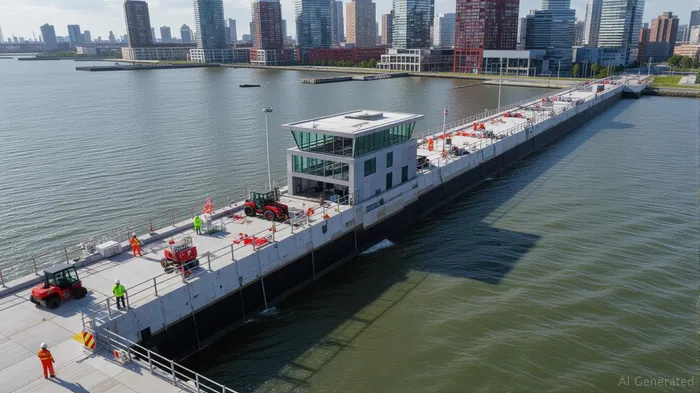
Every $1 invested in flood defenses yields $2–$19 in returns, according to recent studies. Sustained capital allocation—such as raising adaptation spending to 1% of GDP—can reduce flood frequency by up to 44.9% over five years.
- Opportunity: Infrastructure firms specializing in flood-resistant engineering (e.g., AECOMACM--, Tetra Tech) and materials (e.g., waterproof composites) are poised for growth.
- Data Insight:
2. Insurance: Bridging the Protection Gap
Only 25% of European flood damages are insured, leaving SMEs vulnerable to liquidity crises. The ECB's proposed EU catastrophe bond system—coupled with parametric insurance, which pays out automatically on triggers like rainfall levels—could unlock $127 billion annually for adaptation.
- Investment Play: Insurers offering climate-linked parametric products (e.g., Swiss Re, Munich Re) or reinsurance platforms like RMS, which model flood risks, offer defensive positions.
3. ESG Capital: The New Due Diligence
Investors must demand ESG-aligned capital allocation. Firms in vulnerable regions (e.g., Southeast Asia, sub-Saharan Africa) must channel profits into resilient supply chains and green bonds for flood defenses.
- Data Insight:
The Investment Case: Where to Deploy Capital
The most compelling opportunities lie in sectors that future-proof assets:
- Resilient Infrastructure:
- Civil Engineering: Companies designing permeable pavements, elevated data centers, and floating neighborhoods.
Smart Urban Tech: Firms like Siemens or CiscoCSCO-- developing real-time flood monitoring systems.
Insurance and Risk Management:
Parametric Insurance: Firms pioneering index-based flood coverage (e.g., AXA's Climate Impact Bonds).
ESG-Driven Equity:
- Utilities and Telecoms: Companies with flood-hardened infrastructure (e.g., NextEra Energy, Verizon) will outperform peers lacking resilience.
Risks and Caveats
- Time Lag: Flood defenses take 2–5 years to build and yield benefits. Investors must adopt a long-term horizon.
- Maintenance Costs: Neglecting existing infrastructure—over 4,000 English flood defenses are “very poor”—will erode returns.
- Regional Disparities: High-income regions with robust governance will dominate adaptation, leaving low-income areas exposed.
Conclusion
Climate change is rewriting the rules of risk management. Businesses that prioritize adaptive infrastructure, insurance innovation, and ESG capital allocation will thrive—and investors who back these strategies will profit. The alternative is stark: underprepared firms face stranded assets, while regions without defenses risk becoming economic wastelands. The time to act is now. As flood risks rise, so does the imperative to build resilience—and with it, the opportunity to profit from the new climate economy.

Stay ahead of the market.
Get curated U.S. market news, insights and key dates delivered to your inbox.




Comments
No comments yet