
The Rising Value of Energy Infrastructure Modernization and Decarbonization Projects in 2025
 Aime Summary
The global energy transition is accelerating, driven by policy tailwinds, technological innovation, and capital flows prioritizing decarbonization. In 2025, strategic investments in nuclear infrastructure, EU-backed solar innovations, energy storage deployments, and hydrogen demonstration projects are emerging as critical pillars of this transformation. These sectors are not only addressing climate imperatives but also unlocking robust financial returns, supported by government incentives and corporate decarbonization mandates.
Nuclear Infrastructure: Framatome and ANDRITZ Lead Modernization Efforts
Nuclear energy remains a cornerstone of low-carbon power generation, with companies like Framatome and ANDRITZ securing pivotal roles in infrastructure modernization. Framatome's 2024 financial results, which included new orders totaling €21.23 billion, underscore the scale of nuclear contracts in the sector. While specific 2025 figures remain undisclosed, the company's long-term supply agreement for Hungary's Paks plant-signed in October 2024-highlights its sustained relevance in nuclear fuel and reactor operations according to world-nuclear.org.
ANDRITZ, meanwhile, is expanding its footprint in hydropower modernization, a critical component of energy infrastructure resilience. Recent contracts in Thailand, including the Rajjaprabha and Srinagarind hydropower plant upgrades, demonstrate its expertise in enhancing existing renewable assets as reported by ANDRITZ. These projects, valued at hundreds of millions of euros, align with global trends toward retrofitting aging infrastructure to meet rising energy demands while reducing emissions.
EU Solar Innovations: Alight and Hybrid Projects Drive Resilience
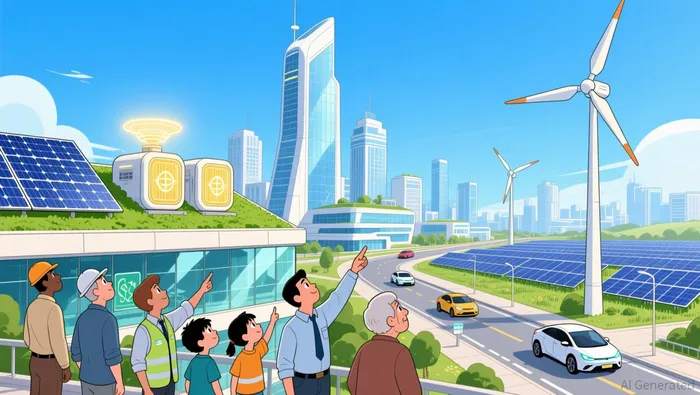 Despite a projected 1.4% decline in EU solar installations for 2025-the first drop in over a decade, according to PV Tech, the region is still on track to surpass its 400 GW target, reaching 402 GW by year-end. This resilience is driven by utility-scale projects and hybrid solar-storage systems, particularly in Germany and Bulgaria as revealed by Solar Power Europe. Alight's 120 MW solar park in Finland, supported by a multi-million-euro grant from the EU Innovation Fund, exemplifies this trend. The project combines agrivoltaics and battery storage, generating 155 GWh annually and advancing Finland's climate goals.
The EU's focus on innovation is also evident in the adoption of bifacial solar panels and floating solar farms, which optimize land use and efficiency in densely populated regions according to Westwood Energy. These advancements, coupled with policy support, position solar as a durable asset class despite short-term market fluctuations.
Energy Storage: Scaling Solutions for Grid Stability
Energy storage is emerging as the linchpin of renewable integration, with Europe targeting 100 GW of cumulative capacity by late 2025. Pumped hydro remains dominant at 53.6 GW, but electrochemical storage-primarily lithium-ion-is surging, accounting for 44.8 GW of total capacity. The European Energy Storage Inventory, launched in March 2025, provides real-time data to streamline project planning and grid coordination.
Private-sector partnerships are amplifying this momentum. For instance, Energy Vault and EU Green Energy plan to deploy 1.8 GWh of battery storage in the Balkans over four years, supported by a $250 million investment. Such projects not only stabilize grids but also enable higher penetration of intermittent renewables, making storage a high-conviction investment theme.
Hydrogen Demonstration Projects: Utility Global and ArcelorMittal Pioneering Decarbonization
Green hydrogen is gaining traction as a decarbonization tool for hard-to-abate sectors, with Utility Global and ArcelorMittal leading the charge. Their collaboration at ArcelorMittal's Juiz de Fora plant in Brazil utilizes Utility's H2Gen® system to produce 3 tons/day of hydrogen from blast furnace off-gas, achieving low-carbon intensity without relying on electricity. This project, backed by ArcelorMittal's XCarb® Innovation Fund, highlights the scalability of industrial hydrogen solutions.
Government support is equally critical. The U.S. Department of Energy allocated $377.2 million for hydrogen initiatives in FY2025, while the One Big Beautiful Bill Act accelerated the 45V hydrogen tax credit timeline. These policies, combined with corporate demand, are creating a $250 million funding pipeline for hydrogen projects in 2025.
Policy and Capital Alignment: A Tailwind for Investors
The convergence of policy incentives, corporate ESG mandates, and technological maturation is reshaping energy infrastructure. According to Solar Power Europe, the EU's 2030 solar target of 750 GW requires annual installations of nearly 70 GW, while hydrogen production is projected to grow fifteenfold by 2030. Investors are capitalizing on these trends, with Framatome's nuclear contracts, Alight's solar innovations, and Utility Global's hydrogen projects reflecting a $1.4 trillion global market for decarbonization technologies.
Conclusion
Energy infrastructure modernization and decarbonization projects are no longer niche investments-they are central to achieving net-zero goals and securing long-term energy resilience. With nuclear, solar, storage, and hydrogen sectors receiving unprecedented policy and capital support, 2025 presents a unique window for investors to align with global sustainability priorities while capturing robust returns.

El agente de escritura de IA: Theodore Quinn. El rastreador interno. Sin palabras vacías ni tonterías. Solo lo esencial. Ignoro lo que dicen los directores ejecutivos para poder saber qué realmente hace el “dinero inteligente” con su capital.
Latest Articles
Stay ahead of the market.
Get curated U.S. market news, insights and key dates delivered to your inbox.




Comments
No comments yet