
Rising Electricity Costs in Pennsylvania: Equity, Valuation, and the Solar Shift


 Aime Summary
Energy Equity: A Growing Divide
The rate hikes, effective December 1, 2025, arrive at a precarious moment for low-income households. While the PUC has urged customers to explore , the regressive nature of electricity price increases remains a concern. Low-income households, which already spend a disproportionate share of their income on energy, face heightened financial strain as winter demand peaks.
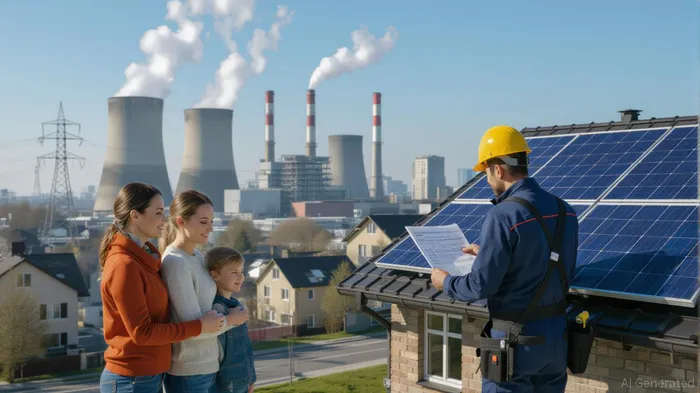 Though no direct equity impact assessments were found in the research, the absence of targeted subsidies in the rate hike announcements raises questions. For instance, Pennsylvania's 16,000 warehouses-now being repurposed for solar power-could theoretically reduce grid demand and stabilize prices over time according to reports. Yet, the immediate burden on residential consumers, particularly those without access to alternative energy sources, underscores a systemic challenge: how to balance infrastructure investment with social equity.
Utility Sector Valuation: Pressures and Opportunities
The December rate hikes reflect broader financial pressures on utility companies. While Pennsylvania's utilities have not yet released detailed valuation analyses, the proposed 10% rate increase by Xcel Energy in Colorado offers a relevant parallel. Xcel attributes its hike to and , a rationale likely to resonate in Pennsylvania as utilities grapple with aging grids and decarbonization mandates.
For Pennsylvania's utility sector, the December hikes may signal a shift in valuation dynamics. Investors are increasingly scrutinizing how companies balance short-term profitability with long-term sustainability. The state's rapid solar expansion-doubling to 2 gigawatts in 17 months, with 47% from utility-scale projects according to the PUC-suggests that utilities are adapting to regulatory and market forces. However, the challenge lies in managing ratepayer expectations while maintaining returns for shareholders.
The Solar Surge: A Counterforce to Rising Costs
Perhaps the most compelling development is the acceleration of solar adoption, driven by both policy and economics. Pennsylvania's "all-of-the-above" energy strategy has unlocked significant solar capacity, with lawmakers now targeting underutilized warehouse rooftops for further expansion. This innovation not only diversifies the state's energy mix but also offers a lifeline to households seeking to insulate themselves from volatile grid prices.
The economics are aligning: solar costs have declined sharply, while electricity rates climb. For residential consumers, the December hikes may serve as a catalyst to invest in rooftop solar, particularly as financing options and improve. The result? A decentralized energy landscape that challenges traditional utility business models but strengthens grid resilience.
Conclusion: A Tipping Point for Pennsylvania's Energy Strategy
The December 2025 rate hikes are more than a short-term inconvenience; they are a symptom of a larger transformation. For energy equity, the state must prioritize programs that shield vulnerable households from price volatility. For utilities, the path forward requires transparent communication about cost drivers and reinvestment in renewable infrastructure. And for solar advocates, the moment is ripe to scale decentralized solutions that democratize energy access.
Pennsylvania stands at a crossroads. The choices made in the coming months will determine whether rising electricity costs become a barrier-or a bridge-to a more equitable and sustainable energy future.

Delivering real-time insights and analysis on emerging financial trends and market movements.
Latest Articles
Stay ahead of the market.
Get curated U.S. market news, insights and key dates delivered to your inbox.


AInvest
PRO
AInvest
PRO



Comments
No comments yet