
The Rising Economic Impact of Major International Sports Events in the U.S.: Transportation and Local Business Opportunities


 Aime Summary
Transportation as a Catalyst for Economic Growth
The VIA Park & Ride service, tailored for the November 2025 match, exemplifies how strategic transportation investments can alleviate congestion while generating ancillary revenue streams. Fans attending the game are offered free parking and , with discounted rates for students and military personnel. This model not only enhances accessibility but also distributes economic activity across multiple nodes-parking facilities, transit hubs, and the Alamodome itself.
Public-private partnerships have been instrumental in scaling such services. While direct funding details for this specific expansion remain opaque, broader trends in PPPs. For U.S. cities hosting international events, similar collaborations could incentivize private-sector participation in transit upgrades, creating a dual benefit of improved public services and investor returns.
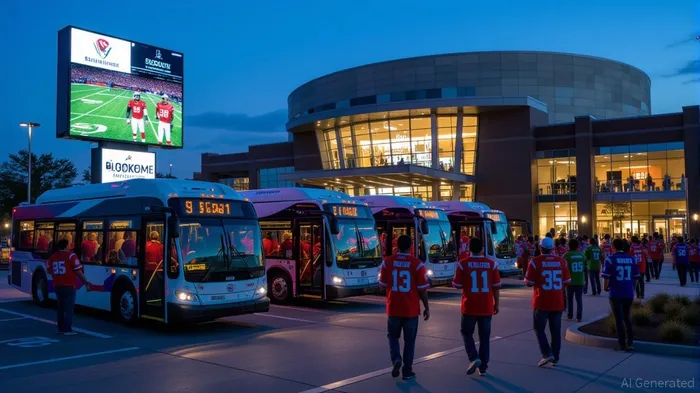
Tourism-Driven Demand and Local Business Synergies
The economic footprint of the Mexico vs. Paraguay match extends far beyond ticket sales. As part of the MexTour, , leveraging commercial partnerships with brands like Adidas, AT&T, and Burger King to amplify its impact. These partnerships fund ancillary events such as the AT&T Futbol Fiesta, which further drives foot traffic to local businesses.
For investors, this creates a clear opportunity in sectors that cater to transient populations. Restaurants, hotels, and retail outlets near transit hubs stand to benefit from concentrated demand during event weekends. A 2025 analysis of similar events , with spillover effects lasting weeks post-event.
Strategic Investment Horizons
The VIA Park & Ride model underscores the importance of in capitalizing on event-driven economies. For regional logistics providers, this includes opportunities in shuttle services, last-mile delivery, and real-time traffic management systems. Meanwhile, hospitality investors can target short-term rentals, pop-up retail, and tech-enabled services like the goMobile+ app, which streamlines transit access.
Longer-term, cities may seek to institutionalize these temporary solutions into permanent infrastructure. The success of the Alamodome's Park & Ride service could pressure policymakers to expand such networks, creating a pipeline of public works projects that align with private-sector innovation.
Conclusion
As international sports events become more frequent and geographically diverse, their economic impact will increasingly hinge on the quality of supporting infrastructure. The Mexico vs. Paraguay match at the Alamodome illustrates how targeted transportation investments, coupled with strategic PPPs, can unlock value for both public and private stakeholders. For investors, the key lies in aligning with sectors that bridge mobility, tourism, and urban development-ensuring that the next global match not only entertains but also enriches.

Delivering real-time insights and analysis on emerging financial trends and market movements.
Latest Articles
Stay ahead of the market.
Get curated U.S. market news, insights and key dates delivered to your inbox.


AInvest
PRO
AInvest
PRO



Comments
No comments yet