
The Rising Dollar and Its Critical Role in Q4 2024 Earnings Season
The strength of the U.S. dollar has emerged as a central narrative for the Q4 2024 earnings season, with its rapid appreciation expected to weigh heavily on multinational corporations. The dollar index, which measures the value of the dollar against a basket of major currencies, surged to 110.17 in January 2025. This marked its highest level since November 2022 and represented a 10% increase since early September. Such a swift and substantial rise in the dollar creates a complex landscape for companies with significant international exposure.
As multinationals gear up to report their fourth-quarter results, the dollar's rise will likely lead to notable headwinds, particularly in revenue and earnings translation. These impacts, compounded by competitive challenges and sector-specific vulnerabilities, are set to dominate the discussions in conference calls and earnings outlooks for 2025.
The Currency Translation Effect: Shrinking Dollar Values
For U.S. companies operating in global markets, the revenue translation effect is a primary concern. Earnings generated in foreign currencies lose value when converted back to dollars at stronger exchange rates. For example, a company earning euros or yen sees a lower dollar-denominated figure for the same amount of sales. This dynamic does not reflect a reduction in sales volumes or demand but erodes reported revenue and profits, creating an optical headwind that investors are keen to parse.
Companies with substantial operations in Europe, Asia, and emerging markets are particularly vulnerable. Sectors such as technology, consumer goods, and industrials, which typically derive a significant percentage of their revenue from international markets, are expected to feel the brunt of these currency pressures. Analysts anticipate that the Q4 earnings season will see a notable impact on these firms’ topline results, even for those reporting solid underlying performance.
Competitive Disadvantages in Global Markets
The stronger dollar also creates pricing challenges for U.S. exporters. Goods and services priced in dollars become more expensive for foreign buyers, often resulting in reduced demand and market share losses in international markets. This has implications for export-heavy industries like aerospace, machinery, and agriculture, where U.S. products face stiff competition from international rivals benefiting from weaker local currencies.
For example, industrial firms selling equipment overseas or technology companies reliant on global demand for software and hardware could see slower growth. The pricing disadvantage might also force some companies to absorb costs by cutting prices, which would further compress margins.
Mixed Effects: Cost Advantages for Importers
While the strong dollar creates revenue challenges, it also provides cost benefits for companies reliant on imports. U.S. firms purchasing raw materials or components priced in foreign currencies benefit from paying less in dollar terms. This dynamic could help improve gross margins for some businesses, partially offsetting the headwinds faced on the revenue side.
For instance, consumer goods manufacturers importing ingredients or parts might see cost savings that help maintain profitability. However, this advantage may not fully counteract the broader pressure of declining international revenue contributions.
Emerging Market Risks and Broader Implications
Emerging markets add another layer of complexity to the strong-dollar narrative. Many emerging economies carry dollar-denominated debt, and a stronger dollar increases the cost of servicing this debt, potentially straining their financial systems. For U.S. companies, weaker economic conditions in these regions could translate into slower demand for goods and services, compounding the currency-related revenue declines.
Moreover, as global capital flows toward dollar-denominated assets during periods of dollar strength, it can tighten financial conditions internationally. This broader economic effect could ripple into corporate earnings as companies face a more challenging global economic backdrop.
Managing Currency Risks: Hedging and Guidance
Many multinationals employ hedging strategies to mitigate the volatility of currency impacts. Forward contracts, options, and other financial instruments provide some stability, but these measures come at a cost and are often only partially effective. As a result, companies increasingly turn to "constant currency" reporting to provide clarity on their underlying operational performance.
However, even with these adjustments, the impact of the strong dollar is expected to result in cautious guidance for 2025. Some companies may choose to revise their forecasts downward to reflect the dollar’s sustained strength, particularly if it continues to rise further.
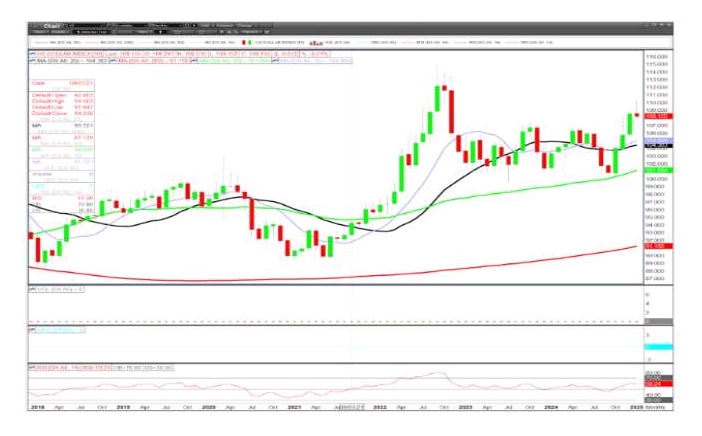
Dollar Index Chart
A Sector-by-Sector Breakdown
Certain sectors are more exposed to currency fluctuations than others:
- Technology: Giants like Apple and Microsoft derive a majority of their revenue from international markets, leaving them highly sensitive to the dollar's strength.
- Consumer Goods: Companies like Procter & Gamble and Coca-Cola face challenges in maintaining pricing competitiveness while contending with translation losses.
- Industrials: Export-dependent firms, including Caterpillar and Boeing, may see a direct hit to sales volumes.
- Energy: While commodity prices are dollar-denominated, global demand for U.S. energy products could decline due to higher costs.
Setting the Stage for 2025
The Q4 2024 earnings season will not only reveal how companies managed the strong-dollar environment but also set the tone for how they plan to navigate the issue in 2025. Analysts will closely scrutinize management commentary to assess whether cautious guidance reflects conservative positioning or genuine concern over prolonged currency headwinds.
As the earnings season unfolds, the strong dollar is poised to remain a central theme, shaping both results and investor sentiment for months to come. Multinationals must balance the immediate challenges with strategic adjustments to thrive in this increasingly dollar-dominated landscape.
The following is a list of companies that Goldman Sachs earmarked as having significant exposure to FX:
Communication Services
- Meta Platforms (62%)
- Netflix (60%)
- Electronic Arts (68%)
- Match Group (65%)
- Sector median: 35%
Consumer Discretionary
- Las Vegas Sands (100%)
- Booking Holdings (84%)
- Warner Bros. Discovery (29%)
- Aptiv (84%)
- McDonald's (55%)
- Sector median: 29%
Consumer Staples
- Philip Morris International (100%)
- Estee Lauder Companies (76%)
- Bunge Global (76%)
- Sector median: 21%
Energy
- Schlumberger Limited (84%)
- Baker Hughes (55%)
- Sector median: 26%
Financials
- Mastercard (72%)
- Aflac (62%)
- MSCI (69%)
- Visa (62%)
- Aon (66%)
- Marsh & McLennan (52%)
- Sector median: 33%
Health Care
- Moderna (72%)
- Waters Corp. (66%)
- Agilent Technologies (59%)
- Mettler-Toledo (62%)
- Abbott Laboratories (67%)
- Sector median: 37%
Industrials
- Otis Worldwide (66%)
- Nordson Corp. (62%)
- Expeditors International (67%)
- Emerson Electric (56%)
- Sector median: 56%
Information Technology
- Qualcomm (83%)
- Monolithic Power Systems (89%)
- Lam Research Corp. (87%)
- NXP Semiconductors (86%)
- KLA Corp. (88%)
- Jabil Inc. (84%)
- Applied Materials (86%)
- Teradyne (85%)
- ON Semiconductor (81%)
- Broadcom Inc. (89%)
- Microchip Technology (85%)
- TE Connectivity (86%)
- Intel (67%)
- Fortinet (73%)
- Western Digital (62%)
- Corning Inc. (60%)
- Sector median: 69%
Materials
- Newmont Corp. (100%)
- Sector median: 100%
A few of those companies have already reported. Let us take a look at the impact the dollar had on results and how it is providing a headwind for outlooks.
Netflix (NFLX)
Netflix delivered a blowout earnings report, with stellar subscriber growth and robust revenue numbers overshadowing concerns about foreign exchange (FX) headwinds. The company discussed the FX impact in its Shareholders Letter.
On the earnings call, the company was questioned about the impact of currency fluctuations, an issue it also addressed in its shareholder newsletter. Despite these challenges, Netflix’s strong performance demonstrated its ability to navigate FX pressures effectively.
This resilience is one of the key reasons investors were eager to buy the stock, driving it to new highs in after-hours trading. The results underscore Netflix's strength in executing its strategy and maintaining momentum, even in a challenging macroeconomic environment.
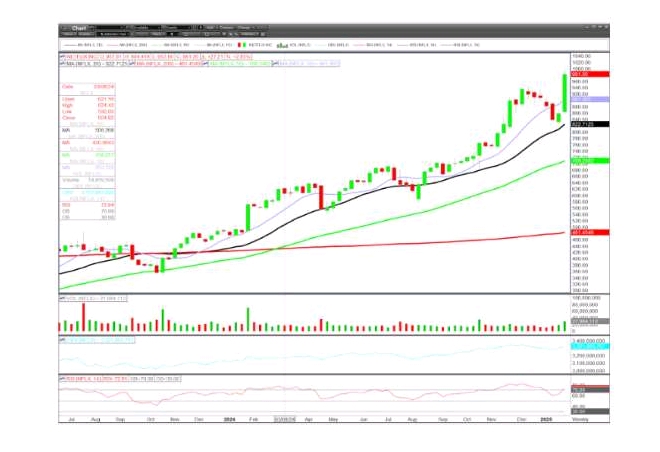
NFLX Shareholders letter:
Based on January 1, 2025 F/X rates, we now project 2025 revenue of $43.5-$44.5B, $0.5B higher than our prior forecast range. This updated guidance reflects improved business fundamentals and the expected carryover benefit of our stronger-than-forecasted Q4’24 performance, net of headwinds from the strengthening of the US dollar over the past few months. Since the forecast we published with our Q3’24 results, the appreciation of the US dollar vs. most currencies has negatively impacted our 2025 revenue forecast by ~$1B, net of hedging (this F/X impact is included in our updated guidance).
NFLX Conference Call:
Analyst: The U.S. dollar has strengthened since your last results, and you said that you'll tend to underperform your margin targets when the dollar is stronger. What FX volatility do you think you can successfully hedge out in 2025? And what are the best ways to estimate the impact of currency movements, net of hedging?
Spencer Adam Neumann (CFO)- So, roughly 60% of our revenue is in non-U.S. dollar currencies. And think of it as the way we look at it is of that amount, we try to hedge roughly 50% on a rolling forward 12-month basis. So, you know, I want to stress that we view hedging as sort of a short- to medium-term solution at best. Our focus has always been to manage the underlying operating results of the company through natural hedges where we can, plus pricing and cost structure over time. So, our hedge program is really just a price averaging program to smooth the impact of FX, reduce the volatility from big near-term FX moves, and avoid short-term swings to the business so that we can invest appropriately for both the short and the long term.
Proctor & Gamble (PG)
Procter & Gamble (PG) reported its Q2 earnings on Wednesday morning, delivering results that exceeded expectations as FX impacts were less severe than anticipated. However, the company cautioned about significant FX headwinds expected to weigh heavily on its performance in the second half of the fiscal year. While PG raised its forecast for FX impact, this was offset by its comments on strong pricing power, which helped alleviate some investor concerns.
The better-than-expected results and confidence in pricing strategies overshadowed the FX worries, but these headwinds could still pose challenges in the quarters ahead. Shares of PG gained 2% following the announcement, although it’s worth noting that the stock had dropped 25% in the six weeks leading up to the report, partly due to concerns over FX pressures.
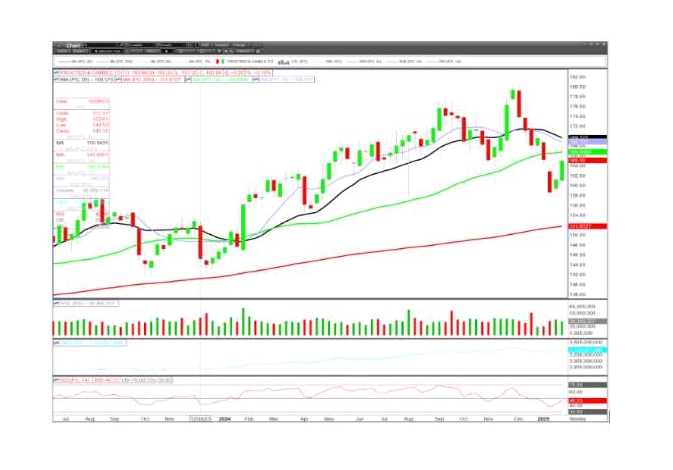
On the Conference Call
“The impact of foreign-exchange rate will mostly hit in the second half. So we saw a lot of the commodity impact in the first-half and the corresponding impact of FX will be mostly in half two. That is built into our guidance logic that we've communicated. Our ability to deal with foreign-exchange as with any headwind is a combination of productivity, which we feel very good about for the year across all productivity buckets. So we're confident in our $1.5 billion productivity guidance on cost-of-goods-sold and the $2 billion guidance overall, including SG&A and pricing levers. Pricing is probably most pronounced in enterprise markets where we see strong foreign-exchange rate exposure, but it's going to be a combination of both. All of that is baked-in in our guidance commentary”.
“we went through the years with really significant headwinds in terms of currency, commodities and FX, and I'm talking there about a 50%, 5-0 percent reduction in our profit over a two year period because of those items”.
SLB Limited (SLB)
SLB Limited (SLB) reported solid earnings last week, with revenue increasing 10% year-on-year to $36.3 billion, driven by a 12% jump in international revenue, particularly in the Middle East and Asia regions. Despite the stronger dollar, foreign exchange fluctuations did not appear to have a material impact on results. Net income rose to $4.6 billion, supported by $6.6 billion in operating cash flow and $4.0 billion in free cash flow. SLB’s Production Systems revenue surged 24%, bolstered by its acquisition of Aker Solutions' subsea business, while its Digital & Integration division posted a 10% revenue increase. Although North American revenue fell 1% due to lower drilling activity, the company's focus on energy transition and digital initiatives, coupled with a 3.6% dividend increase, reflected strong confidence in its outlook.
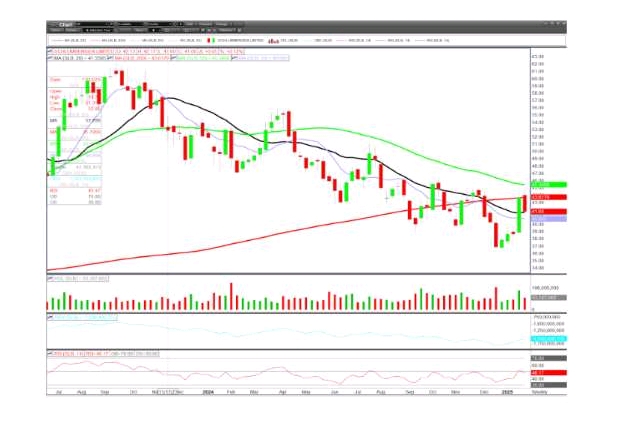
Guidance for 1Q and 2025 surprised positively, with EBITDA for the first quarter projected to exceed $2 billion, beating prior expectations. Despite a softer 1H 2025 outlook, management anticipates a sharp 2H recovery, driven by offshore activity in Brazil and Argentina, though macro uncertainties and a lack of visibility on Mexico's recovery may temper investor optimism. The company also announced a $2.3 billion CapEx plan, down from $2.6 billion in 2024, signaling improved capital efficiency. SLB upgraded its capital return plans to a minimum of $4 billion, supported by an accelerated share repurchase program. As SLB’s acquisition of ChampionX Corporation closes in 1Q 2025, updated guidance will likely reset expectations, potentially complicating comparisons but reinforcing the company’s growth trajectory and focus on shareholder returns.
Electronic Arts (EA)
Electronic Arts (EA) delivered a disappointing earnings preannouncement, cutting FY25 bookings guidance by 7.5%—its largest reduction since FY19—while forecasting Q3 net bookings of $2.215 billion, well below estimates of $2.46 billion. The weaker outlook was primarily attributed to lower-than-expected engagement with EA Sports FC 25, which is struggling with tough year-over-year comparisons, and a 50% shortfall in Dragon Age: The Veilguard sales. Several analysts downgraded the stock, citing reduced growth visibility and structural concerns surrounding EA Sports FC, which has seen both seasonal and potential longer-term headwinds. Shares plunged 18%, marking the company’s worst single-day performance since 2008.
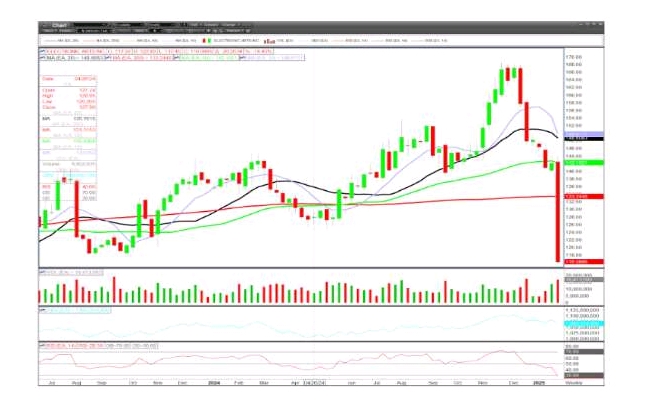
Given that 68% of EA's revenues come from overseas, the stronger dollar likely played a significant role in reducing international consumer spending power, although management provided few details on the impact of FX. Analysts noted that broader challenges, including weaker live services engagement and a lack of clarity around future releases, have added to investor concerns. Capital market sentiment remains cautious as EA faces downgrades from multiple firms, including BAML and BMO, with reduced price targets ranging from $130 to $145. While the long-term risk/reward profile could remain favorable, the sharp revision to FY25 guidance underscores the need for more visibility into EA's strategy and performance amid macro and FX headwinds.
Conclusion
The strength of the U.S. dollar has become a defining factor in the Q4 2024 earnings season, with currency fluctuations playing a significant role in shaping investor sentiment. Companies with substantial international exposure, such as SLB and EA, faced varying degrees of headwinds. While SLB's strong international revenue growth seemed resilient against FX pressures, EA’s sharp guidance cut highlighted the potential for the stronger dollar to weigh on consumer spending overseas. Investors have shown an increasing ability to discern between operational performance and FX-driven impacts, as evidenced by positive reactions to NFLX and PG results, where currency headwinds were either baked into expectations or less severe than anticipated.
Ultimately, the dollar’s appreciation underscores the importance of understanding the context behind reported results, especially for multinational corporations. Investors are increasingly attuned to the distinction between operational challenges and optical revenue or earnings declines caused by currency effects. This dynamic is particularly relevant for companies with large international exposure, where FX-driven misses are often viewed with less severity compared to constant currency underperformance.
As the dollar is expected to remain elevated through 2025, investors must carefully evaluate companies’ geographic revenue breakdowns and the quality of their reported results. Domestic-facing firms may offer a degree of insulation, but the broader takeaway is that companies with significant FX exposure will continue to see their performance scrutinized through a lens that differentiates between fundamental weaknesses and currency-driven optical impacts. This nuanced understanding will remain critical as investors navigate the complex landscape of global earnings in a strong-dollar environment.

Independent investment research powered by a team of market strategists with 20+ years of Wall Street and global macro experience. We uncover high-conviction opportunities across equities, metals, and options through disciplined, data-driven analysis.
Latest Articles
Unlock Market-Moving Insights.
Subscribe to PRO Articles.
Already have an account? Sign in
Unlock Market-Moving Insights.
Subscribe to PRO Articles.
Already have an account? Sign in
Stay ahead of the market.
Get curated U.S. market news, insights and key dates delivered to your inbox.
AInvest
PRO
AInvest
PRO



