
Rising Distress in Asia's Commercial Real Estate Sector: Strategic Due Diligence and Risk Mitigation for Institutional Investors


 Aime Summary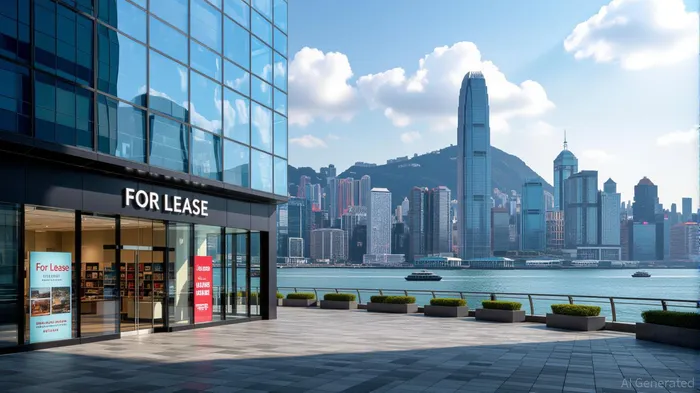
The commercial real estate (CRE) sector in Asia is at a crossroads. Weakening fundamentals, exacerbated by global trade tensions, shifting tenant behaviors, and policy-driven liquidity constraints, have created a perfect storm of distress. Nowhere is this more evident than in Hong Kong, where the confluence of high vacancy rates, declining rents, and a debt crisis among developers has forced institutional investors to rethink their strategies. For those willing to navigate the complexity, opportunities abound—but only for those who approach them with rigorous due diligence and proactive risk management.
Hong Kong's CRE Crisis: A Microcosm of Regional Weakness
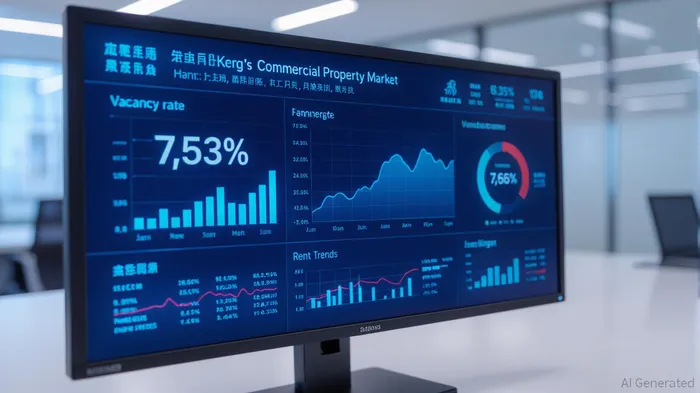
Hong Kong's commercial real estate market in 2025 reflects a broader Asian trend of structural fragility. According to CBRE's H1 2025 report, Grade A office vacancy rates remain stubbornly high at 17.4%, with non-core submarkets like Kowloon East recording record lows in net absorption. Rents have fallen 2.8% year-to-date, and industrial leasing has stagnated as global trade uncertainty deters occupiers. Meanwhile, the debt crisis among developers has intensified, with Hang Seng Bank's non-performing loan (NPL) ratio rising to 6.69% and liabilities for developers projected to exceed HK$210 billion by year-end.
The root causes are multifaceted. The Chinese government's “three red lines” policy, designed to curb property sector leverage, has left developers with limited access to liquidity. Global interest rate hikes have further strained debt-servicing costs, while geopolitical tensions and a slowdown in cross-border trade have dampened demand for industrial and office space. For institutional investors, these factors have forced a recalibration of valuation models, shifting focus from speculative growth to defensive positioning.
Reshaping Valuation Models: From Speculation to Resilience
The traditional CRE valuation framework—reliant on projected rental growth and capital appreciation—is being upended. In 2025, investors are prioritizing sectors with structural demand, such as last-mile logistics, life sciences861094--, and necessity retail, while avoiding cyclical assets like offices and discretionary retail. For example, logistics demand in Australia and Japan remains robust due to e-commerce tailwinds, but Hong Kong's industrial sector lags, with warehouse vacancy rates climbing to 10.3% and rents falling for six consecutive quarters.
Institutional investors are also factoring in macroeconomic tailwinds and headwinds. Dovish monetary policies in developed markets, such as rate cuts by the RBA and BOJ, have provided some relief, but the timing and scale of these interventions remain uncertain. Meanwhile, U.S. tariff policies and China's economic slowdown continue to weigh on regional trade flows. This volatility has led to a divergence in capital values, with core markets like Sydney and Tokyo showing early signs of stabilization, while secondary markets like Hong Kong and Shanghai face prolonged declines.
Strategic Due Diligence: Identifying Undervalued Assets
For institutional investors, the key to navigating this environment lies in rigorous due diligence and proactive asset management. Three strategies stand out:
Sectoral Diversification and Defensive Positioning
Investors are increasingly favoring sectors with inelastic demand. In Hong Kong, for instance, the retail sector's recent stabilization—driven by a 0.9% quarterly rent increase and improved vacancy rates in core districts—has attracted cautious optimism. Necessity retail, such as pharmacies and grocery stores, is outperforming discretionary segments, making it a prime target for value-add opportunities. Similarly, life sciences real estate in Asia, with its high barriers to entry and long-term tenant contracts, offers a hedge against economic volatility.Debt Restructuring and Distressed Asset Opportunities
The debt crisis among developers has created a pipeline of distressed assets ripe for restructuring. Sino-Ocean's $6 billion offshore restructuring, which reduced its debt by 65%, demonstrates the potential for value creation through cross-border legal frameworks. Smaller developers like Parkview Group, however, lack the scale to execute similar strategies, leaving their assets vulnerable to undervaluation. Institutional investors with expertise in debt restructuring can capitalize on these opportunities by acquiring distressed debt at a discount and implementing operational improvements.Technology-Driven Due Diligence
Advanced analytics and AI tools are becoming essential for assessing undervalued assets. For example, platforms like Urban Logistics Co. aggregate data on logistics demand and supply dynamics, enabling investors to identify underappreciated last-mile assets in urban infill locations. In Hong Kong, where industrial supply is constrained, such tools can highlight properties with strong tenant retention and proximity to transportation hubs. Similarly, AI-driven tenant analytics can help investors evaluate the financial health of office tenants, reducing the risk of lease defaults.
Proactive Management: Mitigating Risks in a Volatile Market
Beyond acquisition, proactive asset management is critical. In Hong Kong's office sector, for instance, landlords are experimenting with flexible leasing models, such as co-working spaces and short-term rentals, to offset high vacancy rates. Retailers are leveraging data-driven marketing to attract foot traffic, while logistics operators are investing in automation to reduce labor costs. These strategies not only enhance cash flow but also improve asset resilience in the face of macroeconomic shocks.
Investment Advice: Navigating the Path Forward
For institutional investors, the path to success in Asia's CRE sector requires a balance of caution and opportunism. Here are three actionable steps:
Prioritize Quality Over Quantity
Focus on high-quality assets in prime locations with strong tenant profiles. In Hong Kong, this means targeting Grade A offices in Greater Central or logistics facilities near the Port of Hong Kong, where demand is less sensitive to economic cycles.Leverage Secondaries and GP-Led Transactions
Secondaries investing—purchasing stakes in existing funds—offers access to undervalued assets with in-place cash flows. GP-led transactions, where experienced operators recapitalize portfolios, can further enhance returns by retaining operational expertise.Build Exit Flexibility
Align investments with sectors that have clear exit profiles, such as residential alternatives or critical infrastructure. For example, Hong Kong's pilot scheme to convert offices into student accommodation could unlock value in underutilized assets.
Conclusion
Asia's commercial real estate sector is in the throes of a transformation, driven by weakening fundamentals and regional risks. For institutional investors, the challenge is to separate noise from opportunity. By adopting a disciplined approach to due diligence, leveraging technology, and prioritizing defensive sectors, investors can navigate the current downturn and position themselves for long-term gains. In Hong Kong, where the market is both a cautionary tale and a potential goldmine, the rewards for those who act with foresight will be substantial.

Delivering real-time insights and analysis on emerging financial trends and market movements.
Latest Articles
Stay ahead of the market.
Get curated U.S. market news, insights and key dates delivered to your inbox.
AInvest
PRO
AInvest
PRO



Comments
No comments yet