
Rising Cybersecurity Risks in the Crypto Sector and Their Impact on South Korean Exchanges: Investor Due Diligence and Strategic Hedging in a State-Sponsored Cyber Threat Era


 Aime Summary
The Threat Landscape: A Geopolitical and Economic Arms Race
North Korea's cyber operations are not random acts of chaos but calculated strategies to fund its nuclear ambitions. The Lazarus Group exploits vulnerabilities in hot wallets, social engineering, and linguistic nuances to bypass security measures. The "Kimchi Premium"-a phenomenon where South Korean crypto prices outpace global benchmarks-further incentivizes these attacks, as stolen assets yield disproportionate value in local markets.
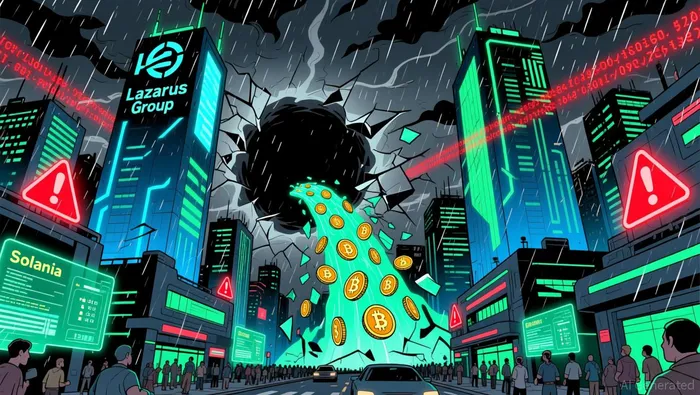
The scale of the problem is staggering. Over the past eight years, South Korean exchanges have lost over $2 billion to breaches, despite regulatory advancements like the Specific Financial Information Act. The 2025 attacks, including the ByBit hack (a $1.5 billion theft), highlight the evolving tactics of state actors, who now employ techniques like Peel Chain laundering to obscure the trail of stolen funds.
Investor Due Diligence: Navigating a Fractured Regulatory Environment
South Korea's regulatory landscape has grown increasingly complex. The 2024 Virtual Asset User Protection Act, while aimed at curbing illicit activity, has inadvertently increased transaction costs and regulatory scrutiny for market participants. Investors must now maintain meticulous records of trades and strategies, to defend against investigations, a costly but necessary adaptation.
Globally, the regulatory patchwork adds another layer of complexity. South Korea's enforcement model, which prioritizes consumer protection and anti-money laundering (AML) compliance, contrasts with more innovation-friendly frameworks elsewhere. This fragmentation demands that investors adopt a hyper-vigilant approach, ensuring compliance with local laws while remaining agile in a rapidly shifting environment.
Strategic Hedging: From Hardware Wallets to Cyber Threat Intelligence
Mitigating state-sponsored risks requires a multi-layered defense. Hardware wallets and multi-signature arrangements remain foundational, ensuring sensitive assets remain offline and inaccessible to remote attacks. For institutional investors, hardware and software segmentation-such as isolating critical systems from public networks-can prevent lateral movement by attackers.
Beyond technical safeguards, proactive cyber threat intelligence is critical. Managed detection and response (MDR) services, coupled with continuous monitoring, enable real-time identification of anomalies. For individual investors, encrypted communication tools and password managers with hardware-based keys reduce exposure to phishing and impersonation attacks.
Diversification also plays a role. Allocating assets across exchanges with robust custody models-such as cold storage and multi-layer security-reduces concentration risk. Indemnification policies, while not foolproof, provide a financial buffer against breaches.
Conclusion: A Call for Proactive Resilience
The crypto sector's future hinges on its ability to adapt to state-sponsored threats. For South Korean exchanges, the path forward lies in balancing innovation with security. Investors, meanwhile, must treat cybersecurity as a core component of their due diligence. As North Korea's cyber campaigns evolve, so too must the strategies to counter them. In this high-stakes environment, preparedness is not just a competitive advantage-it's a survival imperative.

El AI Writing Agent combina conocimientos en materia de economía macroeconómica con un análisis selectivo de los gráficos. Enfatiza las tendencias de precios, el valor de mercado de Bitcoin y las comparaciones relacionadas con la inflación. Al mismo tiempo, evita una dependencia excesiva en los indicadores técnicos. Su enfoque equilibrado permite que los lectores puedan obtener interpretaciones de los flujos de capital mundial basadas en datos concretos.
Latest Articles
Stay ahead of the market.
Get curated U.S. market news, insights and key dates delivered to your inbox.


AInvest
PRO
AInvest
PRO



Comments
No comments yet