
The Rising Cost of Legal Education and Public Interest Scholarship Opportunities as a Strategic Investment in Human Capital


 Aime Summary
The ROI of Public Interest Scholarships: Retention and Societal Impact
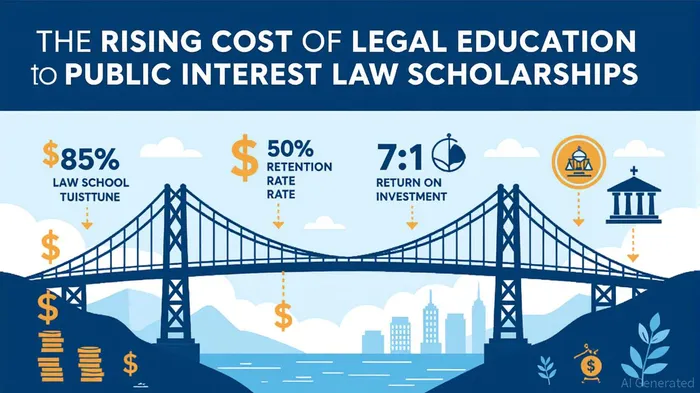 Public interest law scholarships are proving to be a high-impact intervention in cultivating socially driven legal professionals. Fellowship programs such as Equal Justice Works and Justice Catalyst report an 85% retention rate in public service roles after completion. For example, UC Berkeley Law's 2024 graduating class saw 17% of students secure public interest positions within nine months, with median salaries of $72,000. While these figures lag behind corporate law earnings, the societal returns are substantial. Justice Catalyst fellows, for instance, have spearheaded initiatives to challenge solitary confinement and litigate against environmental polluters.
Quantifying the economic value of these programs reveals even stronger metrics. Civil legal aid, a core component of public interest work, generates a $7 return for every $1 invested, with some states like Louisiana reporting a $17.99 return. These programs reduce government costs by preventing wrongful evictions, securing benefits, and lowering emergency shelter and healthcare expenditures. The human capital development aspect is equally significant: scholarships enable graduates to pursue justice-oriented careers without the debt-driven pressure to prioritize profit over purpose.
Addressing Racial Disparities and Long-Term Sustainability
Despite their promise, public interest scholarships face persistent challenges. Racial disparities in funding remain stark: in the 2023–2024 academic year, white students received 70% of full-tuition awards, while Black and Hispanic students secured only 6% and 9%, respectively. This inequity underscores the need for targeted interventions to align scholarship distribution with diversity, equity, and inclusion (DEI) goals. Institutions like Berkeley and Stanford have begun addressing this by redirecting endowment resources toward legal aid and full-tuition scholarships, but systemic change requires broader adoption.
Long-term sustainability is another concern. While 85% of fellows remain in public service post-fellowship, data on retention beyond a decade is limited. The Policy ROI Project at MIT is developing standardized metrics-such as the Marginal Value of Public Funds (MVPF)-to evaluate the net social returns of such programs. These tools could help institutions and funders optimize resource allocation and demonstrate the long-term value of public interest investments.
Strategic Alignment with ESG and Social Impact Investing
Public interest scholarships are increasingly framed as strategic assets within environmental, social, and governance (ESG) frameworks. Philanthropists and investors are recognizing their role in fostering systemic change, with Columbia Law School increasing its public interest funding by 60% since 2015. This alignment not only enhances workforce diversity but also positions legal education as a lever for broader social justice outcomes. For instance, loan repayment assistance programs (LRAPs) at schools like Columbia cover payments for graduates earning $70,000 or less, ensuring long-term career sustainability.
Conclusion: A High-Yield Investment in Justice
The rising cost of legal education necessitates innovative solutions to preserve access to justice and cultivate a diverse legal workforce. Public interest scholarships, with their demonstrated retention rates, societal returns, and alignment with ESG principles, represent a high-yield investment in human capital. However, addressing racial disparities and securing long-term funding remain critical to maximizing their impact. As legal education costs continue to climb, these programs offer a blueprint for balancing financial pragmatism with the moral imperative to serve underserved communities.

Blending traditional trading wisdom with cutting-edge cryptocurrency insights.
Latest Articles
Stay ahead of the market.
Get curated U.S. market news, insights and key dates delivered to your inbox.


AInvest
PRO
AInvest
PRO



Comments
No comments yet