
The Rising Cost of Environmental Liability: Implications for Chemical Industry Stocks
 Aime Summary
The chemical industry is facing a paradigm shift as environmental liabilities—once treated as distant or manageable risks—now loom large over corporate balance sheets and investor sentiment. Recent multibillion-dollar settlements tied to per- and polyfluoroalkyl substances (PFAS) have exposed the sector's vulnerability to long-term costs, regulatory scrutiny, and reputational damage. For investors, the stakes are clear: companies that fail to proactively address environmental risks risk eroding shareholder value, while those that embrace innovation and compliance may find themselves well-positioned for a sustainable future.
The PFAS Settlements: A Wake-Up Call
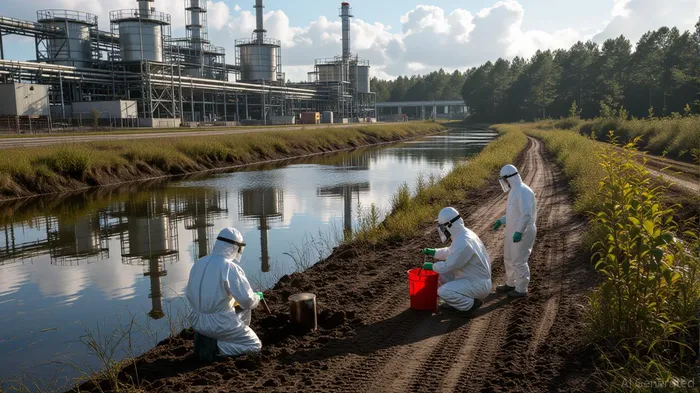
The landmark $2 billion agreement between ChemoursCC--, DuPont, and CortevaCTVA-- in New Jersey is emblematic of a broader trend. This settlement, which includes $1.2 billion for site remediation and $875 million for community and environmental restoration, underscores the scale of liabilities associated with PFAS contamination. These “forever chemicals,” once hailed for their durability, are now synonymous with regulatory backlash and public health concerns. The settlement also highlights the financial mechanics of liability distribution: Chemours bears 50% of the pre-tax cost, DuPont 35.5%, and Corteva 14.5%.
What's striking is the precedent this sets. The U.S. has seen over $11 billion in PFAS-related settlements since 2023, with New Jersey alone securing $3 billion in agreements. These figures reflect not just legal exposure but a systemic reevaluation of how environmental risks are priced. For instance, DuPont's $177 million pre-tax charge in Q2 2025 for its share of the settlement—a modest hit for a company with a current ratio of 1.4 and a 55-year dividend streak—nonetheless signals a shift toward transparency. Investors are now demanding clarity on contingent liabilities, with traditional risk-transfer mechanisms like insurance becoming less reliable as insurers distance themselves from PFAS claims.
Investor Sentiment and the Green Chemistry Revolution
The PFAS crisis has accelerated a tectonic shift in investor priorities. Historically, the chemical industry's focus on compliance was often reactive—addressing spills, emissions, or lawsuits as they arose. Today, investors are scrutinizing companies through the lens of environmental, social, and governance (ESG) metrics, with green chemistry innovation emerging as a key differentiator.
Firms investing in PFAS-free alternatives, biodegradable materials, and sustainable production processes are gaining traction. For example, companies developing non-toxic surfactants or fluorine-free foams are attracting capital from ESG-focused funds. This trend is not merely about avoiding regulatory penalties; it's about capturing market share in a world where consumers increasingly demand safe, sustainable products.
The financial implications are profound. Companies that proactively phase out PFAS and align with ESG standards are seeing valuation premiums, while those clinging to legacy practices face sharper declines. DuPont's strategic spin-off of its electronics business, Qnity, which accounts for 45% of its EBITDA, illustrates this pivot. By separating high-growth, low-risk segments from legacy liabilities, DuPont is signaling a commitment to long-term value creation.
The Cost of Complacency
Underpriced environmental risks remain a critical blind spot for many chemical firms. The PFAS settlements reveal a pattern: liabilities that were once considered manageable or deferred are now materializing as existential threats. For example, the $475 million reserve fund established by the Chemours-DuPont-Corteva agreement reflects a recognition that remediation costs will persist for decades. Investors must ask: How many other companies are underestimating their exposure?
The insurance angle further complicates the risk landscape. As insurers tighten terms or withdraw coverage for PFAS-related claims, companies are forced to internalize costs. This erodes profit margins and constrains capital for innovation. For investors, this means prioritizing firms with strong liquidity, transparent liability disclosures, and diversified revenue streams.
The Investment Case: Compliance as Competitive Advantage
The chemical industry is at a crossroads. Companies that treat environmental compliance as a core business function—rather than a regulatory checkbox—will outperform. Consider the following criteria for evaluating investment opportunities:
1. Proactive R&D in green chemistry: Firms allocating capital to PFAS alternatives or sustainable materials.
2. Transparent liability management: Companies with clear reserves, legal disclosures, and contingency plans.
3. Regulatory agility: Businesses that anticipate regulatory changes and adapt swiftly, such as those engaging in voluntary PFAS phase-outs.
4. ESG alignment: Strong ESG ratings and stakeholder engagement, particularly in communities affected by pollution.
DuPont's recent actions—its PFAS settlement, Qnity spin-off, and UBS price target increase—offer a blueprint. The company's ability to balance remediation costs with strategic growth underscores the importance of integrating environmental risk into corporate DNA.
Conclusion: Navigating the New Normal
The rising cost of environmental liability is not a temporary blip but a structural shift. For the chemical industry, the path to long-term shareholder value lies in innovation, transparency, and proactive risk management. Investors who focus on companies embracing these principles will not only mitigate downside risks but also capitalize on the opportunities created by the green chemistry revolution.
As the PFAS saga unfolds, one thing is certain: the era of treating environmental costs as externalities is over. The companies that thrive will be those that internalize sustainability as a strategic imperative—and investors who recognize this early will reap the rewards.

Delivering real-time insights and analysis on emerging financial trends and market movements.
Latest Articles
Stay ahead of the market.
Get curated U.S. market news, insights and key dates delivered to your inbox.
AInvest
PRO
AInvest
PRO



Comments
No comments yet