
The Rising Cost of Cognitive Decline in Retirement: Why Financial Literacy is the Best Defense
 Aime Summary
The global demographic shift toward an aging population is reshaping the financial landscape in profound ways. By 2025, 7.2 million Americans aged 65 and older live with Alzheimer's dementia, a figure projected to triple to 13.8 million by 2060. The financial implications are staggering: dementia-related healthcare and caregiving costs in the U.S. alone will reach $384 billion this year, with total economic burdens expected to surge to $1.6 trillion by 2050. Yet, the crisis runs deeper than medical expenses. Declining financial literacy among older investors—now at 49.2% for U.S. seniors aged 55 and older—has created a perfect storm of vulnerability, where poor decisions, fraud, and mismanaged assets threaten long-term portfolio resilience.
The Dual Threat: Cognitive Decline and Financial Illiteracy
Cognitive decline, particularly in conditions like Alzheimer's, erodes the ability to make sound financial choices. For instance, individuals with mild cognitive impairment (MCI) are more likely to make suboptimal decisions regarding Social Security claiming, Medicare enrollment, and long-term care planning. These errors accelerate the depletion of retirement savings, often forcing early withdrawals or asset liquidation. Compounding this, declining financial literacy amplifies susceptibility to fraud. Studies show that for every 1% annual drop in financial literacy, scam vulnerability rises by 0.34 standard deviations. With global elder fraud losses exceeding $36 billion annually, the risks are existential for aging portfolios.
The human and economic toll is immense. Unpaid caregiving alone contributes $413.5 billion to the economy in 2024, while out-of-pocket expenses for dementia care consume up to 50% of total costs. For retirees in nursing homes, median monthly out-of-pocket long-term care expenses reach $1,465, often exceeding their income. These pressures are exacerbated by racial and socioeconomic disparities: Black and Latino families, who face higher dementia prevalence and lower wealth accumulation, dedicate up to 47% of their income to caregiving.
The Market Response: Innovation in Financial Resilience
The crisis has spurred a $10 trillion longevity-driven market, where fintech, behavioral economics, and insurance are converging to address aging-related vulnerabilities.
1. Education-Driven Fintech
Artificial intelligence (AI) is transforming financial tools for older investors. Platforms like Jumio use AI-driven identity verification to reduce scam losses by 40%, while others optimize Social Security claiming strategies or detect fraudulent transactions. These tools reduce cognitive load, enabling seniors to manage portfolios independently. The demand for such solutions is surging: fintech firms specializing in elder financial security are projected to grow at 15% annually through 2030. Investors should consider companies like Jumio (JUMI) or Onfido (ONFD), whose RegTech solutions combat fraud, or broader fintech indices like the S&P Global Fintech Index.
2. Behavioral Economics and Cognitive Health
Behavioral nudges—such as automatic enrollment in retirement plans or dynamic withdrawal strategies—are proving effective in mitigating poor decisions. Startups are integrating cognitive health analytics into financial platforms, offering modular tools that delay financial mismanagement through social and educational activities. For example, cognitive stimulation programs can extend decision-making independence by up to two years, preserving portfolio value. Investors might explore behavioral economics-focused ETFs or companies like Betterment, which incorporates nudges into its robo-advisory models.
3. Longevity Insurance and Annuities
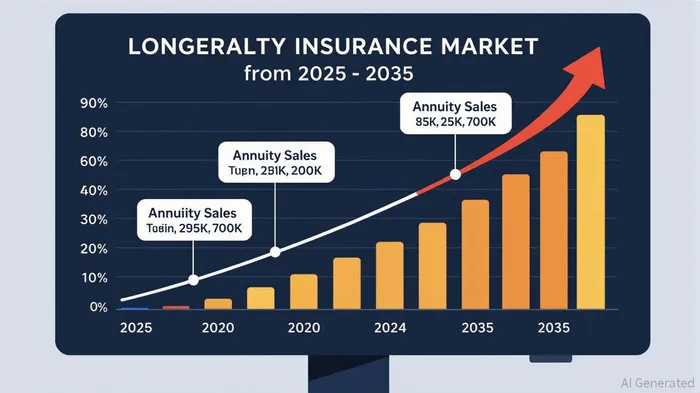
Fixed-indexed annuities (FIAs) and registered index-linked annuities (RILAs) are gaining traction as solutions to longevity risk. With U.S. annuity sales reaching $120 billion in 2024, these products provide guaranteed income streams, shielding retirees from outliving their savings. Innovators like PrudentialPUK-- (PRU) and MetLifeMET-- (MET) are developing cognitive health-linked annuities, adjusting payouts based on mental acuity. Longevity bonds, which hedge demographic risks, also offer compelling opportunities for institutional investors.
Strategic Investment Recommendations
To build long-term portfolio resilience in an aging world, investors should prioritize three areas:
- Fintech and RegTech: Allocate to firms leveraging AI and behavioral insights to protect aging portfolios. This includes identity verification platforms, automated financial advisors, and fraud detection systems.
- Longevity Insurance: Diversify into annuities and longevity bonds, which counterbalance the risks of cognitive decline and longevity.
- Behavioral Health Integration: Support companies merging financial education with cognitive health tools, such as platforms offering social engagement programs or decision-making aids.
Regulatory tailwinds are also emerging. States like Pennsylvania and California now allow banks to freeze suspicious transactions, a policy that could reduce fraud losses by 30%. Investors should monitor legislative trends and favor firms with strong compliance frameworks.
Conclusion: A Call for Proactive Resilience
The aging population crisis is not a distant threat but an urgent reality. As cognitive decline and financial illiteracy erode portfolio sustainability, the market's response—through fintech, behavioral economics, and insurance—offers a blueprint for resilience. For investors, the imperative is clear: align portfolios with solutions that address both the human and financial dimensions of aging. In doing so, they not only mitigate risk but also capitalize on a $10 trillion opportunity to secure a more stable future for retirees and their families.

Stay ahead of the market.
Get curated U.S. market news, insights and key dates delivered to your inbox.


AInvest
PRO
AInvest
PRO



Comments
No comments yet