
Rising Copper Tariffs: Navigating Opportunities in EVs and Appliances Amid Trade Uncertainty
The global shift toward electrification has turned copper into the "gold of the 21st century," with its demand soaring for EV batteries, solar panels, and smart appliances. Now, a proposed 50% U.S. tariff on copper imports—pending since February 2025—threatens to upend supply chains and amplify cost pressures. For investors, this regulatory crossroads presents both risks and rewards. Let's dissect how EV manufacturers and appliance firms are adapting, and where to find resilient opportunities.
The Copper Tariff Crossroads: What's at Stake?
The U.S. Department of Commerce's Section 232 investigation into copper imports remains unresolved, with a final decision expected by November 2025. If implemented, the tariff would target Latin American suppliers like Chile (the top U.S. copper source), potentially adding billions to production costs. For industries reliant on copper—EVs (each requires ~80 pounds of copper) and appliances (refrigerators use ~50 pounds)—the stakes are existential.
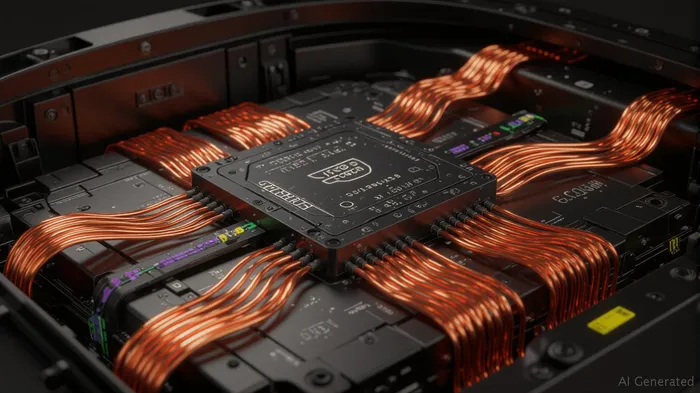
EV Sector: Diversify or Perish
EV manufacturers face a stark choice: lean on volatile imports or build resilient supply chains. Those with diversified sourcing strategies and alternative material R&D are best positioned to weather the storm.
Winners to Watch:
- Lucid Group (LCID):
- Partnerships with Syrah Resources (graphite) and investments in midstream recycling reduce reliance on single suppliers.
Lucid's focus on vertical integration, including battery cell production, offers insulation from commodity swings.
Tesla (TSLA):
- Already ahead in material innovation, Tesla's use of copper-alternative chemistries in batteries and its Gigafactories' scale provide cost advantages.
Tesla's direct mining partnerships (e.g., with Australian nickel/copper mines) further mitigate supply risks.
Ford (F):
- Ford's collaboration with Redwood Materials, a lithium-ion battery recycler, positions it to tap into the circular economy. Recycling could meet up to 20% of U.S. copper demand by 2030.
Risks:
- Laggards like Nio (NIO) and Rivian (RIVN), which lack diversified supply chains or pricing power, face margin erosion if tariffs materialize.
Appliance Sector: Pricing Power and Pragmatism
Appliance firms are already hiking prices to offset tariff-driven cost increases. The key differentiator? Dynamic pricing mechanisms and localization of production.
Top Performers:
- Samsung (SSNLF) and LG (LPL):
- Both are relocating production to the U.S. (e.g., South Carolina and Tennessee) to bypass tariffs.
Aggressive promotions (e.g., Memorial Day discounts) and premium pricing for high-end models (e.g., Sub-Zero refrigerators) maintain margins.
Whirlpool (WHR):
- A long-time U.S. manufacturer with deep supply chain roots, Whirlpool's localized sourcing (85% of parts sourced domestically) shields it from import tariffs.
Bosch (ETR:BOGS):
- Strategic SKUs rationalization (e.g., cutting dishwasher models from 104 to 52) reduces complexity and costs.
Risks:
- Smaller brands like ZLINE and Thor face existential threats due to reliance on Chinese/Vietnamese components. Avoid these names unless tariffs are delayed indefinitely.
Investment Strategy: Play Defense and Offense
- Defensive Picks:
- Lucid (LCID) and Whirlpool (WHR) offer defensive exposure due to their supply chain resilience.
ETFs: Consider the Global X Copper Miners ETF (COPX) for pure-play copper exposure, but pair it with EV/appliance stocks for balance.
Offensive Plays:
- Tesla (TSLA) and Samsung (SSNLF) combine innovation with scale.
Recycling Plays: RedwoodCRAQ-- Materials (private) or public peers like First Solar (FSLR) (copper indium selenide solar tech).
Key Metrics to Watch:
- Track the Section 232 decision timeline.
- Monitor copper futures prices (). A price dip below $8,500/ton could signal tariff delays.
- Watch appliance companies' gross margins post-tariff implementation.
Conclusion: A Copper-Proof Portfolio
The copper tariff saga is far from over, but it's already reshaping industry dynamics. Investors should prioritize firms with geographically diversified supply chains, recycling capabilities, and pricing power. While EVs face near-term volatility, their long-term growth trajectory remains intact. Appliance firms with U.S. manufacturing footprints and agile pricing strategies will outperform.
For now, take a measured approach: allocate 30% to EV leaders like TeslaTSLA--, 30% to appliance stalwarts like WhirlpoolWHR--, and 40% to copper ETFs or miners. Stay nimble—tariff clarity by late 2025 could trigger sector-wide revaluation.
In the words of the market: Follow the copper, but don't let it sink your portfolio.

Delivering real-time insights and analysis on emerging financial trends and market movements.
Latest Articles
Stay ahead of the market.
Get curated U.S. market news, insights and key dates delivered to your inbox.




Comments
No comments yet