
Rising Conforming Loan Limits and Housing Market Implications


 Aime Summary
Policy Mechanics and Historical Context
The FHFA's adjustments are rooted in a statutory framework designed to align loan limits with median home price trends. Since 2010, the national baseline has risen from $417,000 to $806,500 in 2025, with high-cost areas historically receiving a 50% premium. This mechanism ensures that conventional mortgage financing remains accessible in markets where home values outpace the national average. For instance, in 2010, Alaska and Hawaii's limits were $625,500, compared to the national $417,000 according to FHFA research. By 2026, these regions will see limits exceeding $1.2 million, underscoring the compounding effect of sustained price growth in high-cost locales.
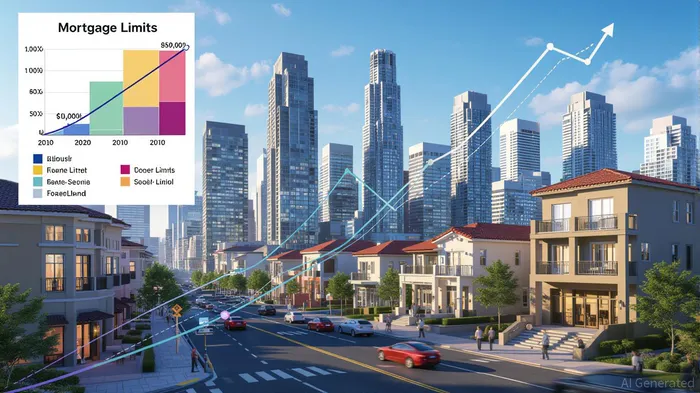
Historically, such adjustments have served dual purposes: stabilizing access to credit and mitigating the risk of market distortions. A 2023 analysis by the FHFA noted that while conforming loan limits have expanded significantly since 2017, they have not disproportionately supported high-end properties. Instead, homes purchased with loans near the limit have consistently clustered around the 90th percentile of local price distributions, with high-cost areas centering below the 80th percentile. This suggests that policy-driven increases in loan limits have primarily preserved affordability for middle-market buyers rather than inflating luxury segments.
Market Dynamics and Recovery Signals
The 2026 adjustments arrive amid a housing market that has remained sluggish since 2022, despite declining mortgage rates. A report by Bloomberg highlights that home price growth in 2025 has been modest, averaging 3.3% year-over-year. This tepid performance contrasts with the aggressive rate cuts of 2024, which failed to catalyze demand. The FHFA's decision to raise loan limits, therefore, reflects a recognition that structural barriers-such as inventory shortages and demographic shifts-require complementary policy interventions.
In high-cost regions, the impact is more pronounced. For example, Los Angeles County's 2026 limit of $1,249,125 accommodates a median home price that has outpaced national trends for over a decade. By expanding the pool of eligible borrowers, the policy aims to stimulate demand in markets where affordability gaps have constrained entry for first-time buyers and moderate-income households. This aligns with broader efforts to rebalance supply and demand, particularly as millennials-now the largest home-buying cohort-prioritize access to credit over luxury features.
Cautions and Considerations
While the policy shift is a positive signal, its efficacy hinges on broader economic conditions. A 2025 study by the National Association of Realtors cautions that rising loan limits alone cannot offset the drag from stagnant wage growth and regulatory hurdles. Moreover, the FHFA's own analysis notes that historical increases in loan limits have not led to a "flight to quality" in high-cost areas, where homes near the limit remain concentrated in mid-tier price brackets according to FHFA insights. This suggests that the primary benefit of higher limits is maintaining liquidity in the conventional mortgage market rather than driving speculative activity.
For investors, the implications are twofold. First, the FHFA's adjustments signal institutional confidence in the housing market's resilience, even amid macroeconomic uncertainties. Second, they highlight the importance of regional differentiation. High-cost markets, while still constrained by supply-side bottlenecks, may see incremental gains from improved financing access, whereas lower-cost regions could lag due to weaker demand.
Conclusion
The 2026 conforming loan limit increases represent a measured yet critical step in aligning mortgage policy with the realities of a fragmented housing market. By expanding access to conventional financing in high-cost areas, the FHFA is addressing a key constraint for moderate-income buyers while avoiding the pitfalls of overstimulation. However, the policy's success will depend on its interplay with other factors, including inventory replenishment, labor market trends, and regulatory reforms. For investors, the message is clear: the housing market's recovery is not a monolithic event but a mosaic of regional adjustments, with policy shifts like these serving as both a stabilizer and a signal of cautious optimism.

Delivering real-time insights and analysis on emerging financial trends and market movements.
Latest Articles
Stay ahead of the market.
Get curated U.S. market news, insights and key dates delivered to your inbox.






Comments
No comments yet