
Rising to the Challenge: Affordable Rental REITs and Tech Innovators in the Housing Crisis
The U.S. housing market is at a crossroads. With mortgage rates hovering near 7%, home price growth slowing to 2.4% annually, and inventory constrained to just 3.5 months' supply, the affordability crisis is deepening. For investors, this isn't a time to retreat—it's an opportunity to capitalize on two sectors that are uniquely positioned to address the imbalance: affordable rental REITs and homebuilding technology innovators. Here's why these sectors are primed for growth, backed by data and macro trends.
The Case for Affordable Rental REITs: Stability in a Volatile Market
The housing affordability crisis has shifted demand decisively toward rentals. With first-time buyers priced out and millennials and Gen Z prioritizing flexibility, multifamily housing—especially affordable rentals—is becoming the new homeownership.
Why REITs?
- High occupancy, steady yields: REITs like BSR Realty (BSR) exemplify this trend. In Q2 2025, BSRBSR-- maintained 95.7% occupancy in its Texas portfolio, with rental renewal rates climbing 1.7% even as new lease rates dipped 4.5%. The blended rate decline of just 0.3% underscores tenant retention's role in stabilizing cash flows.
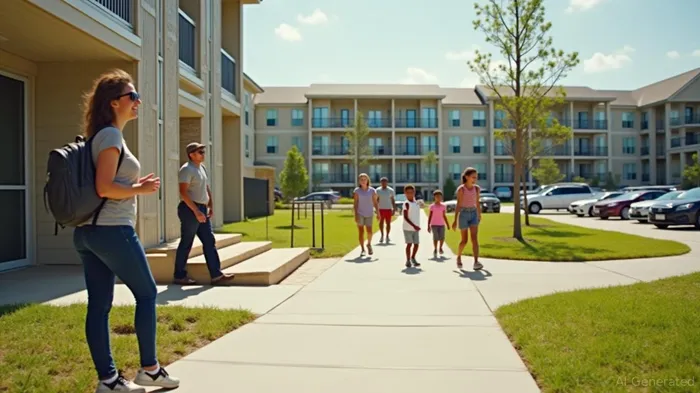
- Sun Belt outperformance: Markets like Houston (+0.5% blended rate growth) and Oklahoma City (+4.0%) are outperforming oversupplied regions like Austin (-11.4% new lease rates). Affordable housing REITs focused on these growth areas are capturing 7-8% gross rental yields, per Q3 2024 data (see chart below).
Key Metrics to Watch:
- .
- Track occupancy rates in high-growth Sun Belt markets versus coastal regions.
Investment Pick: BSR RealtyBSR-- (BSR) for its Texas-centric portfolio and focus on tenant retention.
Homebuilding Tech Innovators: Cutting Costs to Meet Demand
While rental REITs address demand, construction tech firms are tackling the supply side. High mortgage rates and rising material costs (up 6.3% due to tariffs) have made traditional homebuilding prohibitively expensive. Enter modular construction, AI-driven design, and automation—technologies that could slash costs by 15-30% and accelerate timelines.
The Tech Edge:
- Modular construction: Companies like ModSpace are building homes in factories, reducing labor disputes and waste. This cuts costs by $10k-$20k per home.
- AI in design: Startups like PlanGrid use AI to optimize layouts for affordability, ensuring homes meet Fannie Mae's new “affordable housing” criteria.
- Material efficiency: Tech-driven sourcing platforms (e.g., BuildDirect) reduce tariff impacts by 20-25% through alternative supply chains.
Why Now?
- Regulatory tailwinds: The U.S.-Mexico-Canada Agreement (USMCA) offers exemptions for critical materials, easing tariff pressures.
- Cost efficiency = higher margins: Builders adopting these technologies are seeing margin expansions of 2-4%, even as housing starts drop 11.4% in March RequestMethod=POST 2025.
Investment Pick: ModSpace (MODX) for its modular solutions targeting affordable housing.
The Macro Backdrop: Tailwinds and Risks
Tailwinds:
- Rising rental demand: Urbanization and job growth in Sun Belt markets (e.g., Orlando's 2% annual job growth) will sustain multifamily demand.
- Regulatory push: Federal policies like the Affordable Housing Credit Improvement Act incentivize REITs and tech firms to expand supply.
Risks:
- Interest rate sensitivity: A Fed rate hike could pressure REIT valuations. Monitor 10-year Treasury yields ().
- Regional overhang: Markets like Austin face oversupply; avoid REITs overly exposed to these areas.
Tactical Allocation Strategy
Allocate 10-15% of a growth portfolio to this theme, split equally between:
1. Affordable REITs: Focus on geographically diversified REITs with Sun Belt exposure (e.g., BSR) or national players like Equity Residential (EQR).
2. Construction tech stocks: Prioritize companies with scalable solutions (e.g., MODX) and avoid pure-play construction firms reliant on traditional methods.
Due Diligence Checklist:
- For REITs: Check occupancy trends, renewal rate spreads, and geographic diversification.
- For tech firms: Assess partnerships with major builders and cost-savings track record.
Conclusion: Position for the New Housing Paradigm
The era of homeownership as the default is over. Investors who pivot to affordable rentals and construction innovation will capture the next wave of growth. With rental yields in key markets outperforming bonds and stocks, and tech-driven solutions turning housing shortages into opportunities, this is a buy-the-dip sector. Act now—before the market catches up.
Disclaimer: Past performance does not guarantee future results. Consult a financial advisor before making investment decisions.

Stay ahead of the market.
Get curated U.S. market news, insights and key dates delivered to your inbox.
AInvest
PRO
AInvest
PRO



Comments
No comments yet