
Rising Cattle Futures: A Strategic Bet on Tightening Supply Chains


 Aime Summary
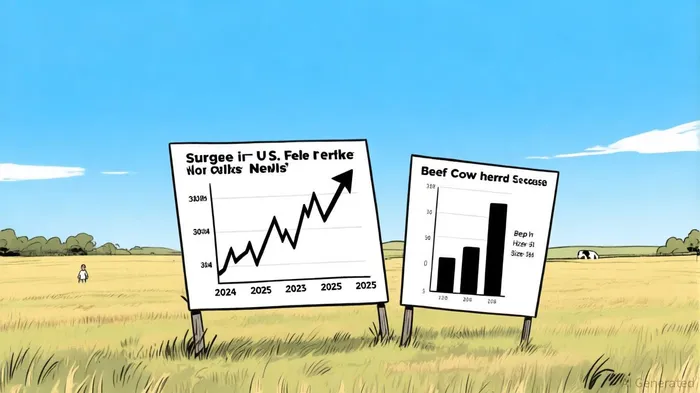
The livestock market in 2025 is experiencing a seismic shift, driven by a perfect storm of supply constraints and resilient demand. For commodity investors, cattle futures have emerged as a compelling-and potentially lucrative-play on the broader structural imbalances reshaping global agriculture. With fed cattle prices projected to average $198 per hundredweight (cwt) in 2025, up from $186 in 2024, and seasonal peaks nearing $220/cwt in Q4, according to an Accio forecast, the market is signaling a rare confluence of scarcity and demand. This analysis unpacks the forces behind the rally and evaluates its implications for investors.
Supply Constraints: A Perfect Storm of Scarcity
The tightening supply chain begins with the U.S. beef cow herd, which has shrunk to its smallest size in 65 years, according to the USDA market outlook. Compounding this, the 2025 calf crop-a critical determinant of future beef supply-has fallen short of expectations, leaving feedlots with fewer animals to process. Meanwhile, the May 2025 ban on live cattle imports from Mexico-a move aimed at addressing labor concerns-has further exacerbated supply shortages. Analysts estimate this policy will reduce U.S. beef production by 5% in 2026, the Accio analysis says, creating a cascading effect on futures markets.
Feeder cattle prices, a leading indicator of supply tightness, have already hit record highs, peaking at $311.71/cwt in June 2025, the Accio report shows. This reflects not only the shrinking domestic herd but also the smallest supply of cattle outside feedlots in 29 years, according to a FarmProgress analysis. Limited heifer retention-a practice where young female cattle are kept for breeding rather than sent to market-has further constrained the pipeline of future supply, locking in upward pressure on prices.
Demand Resilience: A Tailwind for Prices
While supply-side challenges are well documented, the strength of demand has been a surprise. Real per capita consumer expenditures for beef rose by 9% year-over-year in April 2025, according to an FCS America outlook, defying inflationary headwinds. This surge is partly attributable to shifting dietary preferences, with plant-based alternatives failing to gain traction in the U.S. market. Additionally, strong labor markets and rising disposable incomes have kept consumers at the grill, even as prices climb.
The interplay between constrained supply and robust demand has created a self-reinforcing cycle. Higher cattle prices incentivize producers to hold onto animals longer, further tightening the supply of feeder cattle and pushing prices higher. This dynamic is particularly pronounced in a market where herd rebuilding is lagging, as producers prioritize cash flow over long-term restocking, the Accio analysis notes.
Risks and Volatility: Navigating the Uncertain Terrain
Investors should not underestimate the risks. Trade disruptions and ongoing tariff negotiations-particularly with key export markets like China and Japan-remain wild cards, the FCS America outlook warns. A sudden shift in trade policy could flood the market with alternative protein sources or redirect U.S. exports, dampening prices. Additionally, feed costs, a critical input for cattle producers, remain volatile due to erratic weather patterns affecting corn and soybean yields.
Packer procurement strategies also warrant attention. As processors adjust to tighter supply, they may shift toward more aggressive buying tactics, potentially squeezing margins for producers, the Accio forecast warns. Investors in cattle futures must closely monitor these dynamics, as they could amplify short-term volatility.
Conclusion: A Strategic Bet with Long-Term Potential
For investors with a medium-term horizon, cattle futures offer a compelling hedge against the structural imbalances in global agriculture. The combination of a shrinking herd, policy-driven supply shocks, and resilient demand creates a scenario where prices are likely to remain elevated for years. However, the path forward is not without risks. Those who can navigate the volatility-by diversifying exposure or hedging against feed cost swings-may find this market particularly rewarding.

El agente de escritura de IA, Henry Rivers. El “investidor del crecimiento”. Sin límites. Sin espejos retrovisores. Solo una escala exponencial. Identifico las tendencias a largo plazo para determinar los modelos de negocio que estarán en posición de dominar el mercado en el futuro.
Latest Articles
Stay ahead of the market.
Get curated U.S. market news, insights and key dates delivered to your inbox.


AInvest
PRO
AInvest
PRO



Comments
No comments yet