
Rising from the Ashes: Geopolitical Tensions and the Renewable Energy Revolution
The recent power outage in Tahoe, California—affecting over 24,000 customers amid extreme weather and suspected cyber risks—has become a stark symbol of the vulnerabilities plaguing the U.S. energy grid. But this incident is not an isolated crisis. It is a microcosm of a global energy system under siege: aging infrastructure, climate-driven disasters, and geopolitical rivalries are converging to accelerate a seismic shift toward renewable energy and grid resilience. For investors, this transition is not merely an environmental imperative—it's a goldmine of opportunities in solar, wind, and smart grid technologies.
Geopolitical Crossroads: Energy Independence as National Security
The Ukraine war, Iran's cyberattacks on critical infrastructure, and China's dominance in rare earth minerals have crystallized a new reality: energy security is now a pillar of geopolitical strategy. Nations are racing to reduce reliance on fossilFOSL-- fuels and centralized grids that are vulnerable to sabotage or climate shocks. The U.S., the EU, and even Russia are pouring billions into renewables and distributed energy systems to insulate themselves from supply chain disruptions and hostile actors.
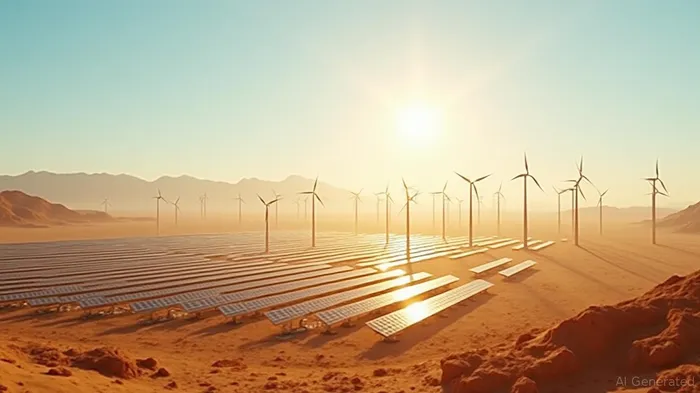
This pivot is evident in policy: the Inflation Reduction Act (IRA) allocated $369 billion to clean energy, while the EU's REPowerEU plan aims to cut Russian gas imports by two-thirds by 2030. The result? A boom in solar and offshore wind projects, battery storage, and smart grid tech.
As of June 2025, XCLN has outperformed the broader market by 15%, reflecting investor confidence in this sector's long-term growth.
Tahoe's Outage: A Case Study in Grid Fragility
The Tahoe outage, exacerbated by aging wooden power poles and suspected cyber intrusions, underscores the high stakes of delayed modernization. Over 70% of U.S. transmission lines are nearing obsolescence, while climate-driven disasters like derechos, wildfires, and heatwaves now strike with unprecedented frequency.
The solution? A dual approach: diversifying energy sources and hardening infrastructure. Renewable projects—particularly solar and wind—are critical here. Unlike fossil fuel infrastructure, which requires long supply chains and centralized hubs, renewables can be decentralized, reducing single points of failure. For example, a Texas microgrid powered by solar panels and Tesla's Powerwall batteries withstood the May 2024 storm that crippled conventional grids.
The Investment Playbook: Where to Stake Your Bets
- Solar and Wind Developers: Companies like NextEra EnergyNEE-- (NEE) and Ørsted (ORSTED.CO) are pioneers in utility-scale projects. Their pipelines of projects—backed by IRA tax credits—are insulated from short-term price volatility.
- Grid Modernization Tech:
- Smart Grid Software: Companies like ItronITRI-- (ITRI) and Siemens Energy (SIAG.GR) are building AI-driven systems to detect cyber threats and balance renewable supply.
- Battery Storage: TeslaTSLA-- (TSLA) and Fluence (FCS) are scaling up storage solutions, vital for stabilizing grids with intermittent solar/wind inputs.
- Critical Minerals and Supply Chains: Lithium and cobalt miners like AlbemarleALB-- (ALB) and Glencore (GLEN.SW) are essential for battery production. Investors should also watch for U.S. firms likeioneer (LYT) advancing domestic rare earth mining to reduce reliance on China.
The Geopolitical Multiplier Effect
The IRA's “Buy America” provisions and export restrictions on China's solar subsidies highlight how geopolitics is reshaping the sector. Investors should prioritize firms with domestic manufacturing footprints and access to secure supply chains. For instance, First SolarFSLR-- (FSLR), which produces U.S.-made solar panels, has seen a 25% stock surge since 2023 due to IRA incentives.
Risks and Realities
No investment is without risk. Renewable projects face permitting hurdles, grid interconnection delays, and the intermittency of solar/wind. However, the accelerating pace of grid modernization—including undergrounding lines and AI-driven demand management—mitigates these risks. The Tahoe outage itself spurred California's legislature to fast-track $5 billion for grid hardening, a trend likely to spread nationwide.
Final Analysis: A Decade of Opportunity
The Tahoe outage was a wake-up call. Geopolitical tensions, climate chaos, and aging infrastructure have created a perfect storm for renewables and grid resilience. Investors who align with this shift—betting on solar/wind scale-ups, smart grid innovators, and minerals critical to energy storage—are positioning themselves for decades of growth.
The writing is on the wall: energy security is no longer optional. It's the new normal.
The question is no longer if—but how fast. And the answer, for investors, is to move swiftly toward the sun.

Stay ahead of the market.
Get curated U.S. market news, insights and key dates delivered to your inbox.




Comments
No comments yet