
The Rise of Wellness-Driven Financial Planning: A New Paradigm for Sustainable Wealth


 Aime Summary
The Interconnected Dimensions of Wellness
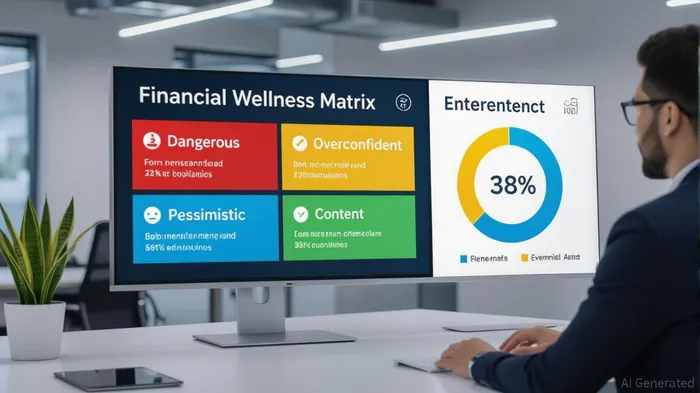
Recent research underscores the inextricable link between financial stability and broader wellness metrics. A 2025 study categorizes financial wellness into four quadrants: dangerous (low financial health and low well-being), overconfident (low financial health but high well-being), pessimistic (high financial health but low well-being), and content (high financial health and high well-being). Only 38% of individuals fall into the ideal "content" quadrant, highlighting the need for a multidimensional approach to planning.
Financial satisfaction and physical health emerge as critical predictors of outcomes in this framework. For instance, a $5,000 annual income increase has been shown to significantly reduce risks of depression and anxiety. Conversely, chronic stress or poor mental health can erode financial discipline, leading to suboptimal investment decisions and debt accumulation. This bidirectional relationship reinforces the necessity of addressing wellness holistically.
Institutional Innovations in Wellness-Driven Planning
Institutions are leading the charge in embedding wellness into financial frameworks. The Global Wellness Institute's "Build Well to Live Well" initiative showcases how wellness-driven projects-from affordable housing to corporate campuses-integrate financial resilience with health outcomes. For example, a senior living community in the U.S. paired budget-friendly housing with on-site mental health services and fitness programs, resulting in a 40% reduction in emergency healthcare costs among residents.
Corporate programs are also evolving. The Aaron's Company redesigned its employee financial well-being initiative to include tools for debt management, mental health resources, and personalized financial coaching. This holistic approach reduced employee stress levels by 25% and increased participation in retirement plans by 30%. Such models demonstrate that addressing wellness as a systemic priority yields measurable returns.
Individual Case Studies: Aligning Values with Wealth
At the individual level, success stories illustrate the power of aligning financial strategies with personal values and wellness goals. Stephanie, a user of the LearnLux platform, leveraged its resources to navigate the complexities of blending finances during remarriage. By integrating budgeting tools with emotional support for her family's transition, she achieved a 20% increase in savings and reduced financial anxiety.
Similarly, MJT & Associates emphasizes that clients who align their financial plans with life aspirations-such as funding a passion project or retiring early-report higher satisfaction and adherence to long-term goals. This approach, which incorporates emotional intelligence and behavioral finance, mitigates impulsive decisions driven by stress or cognitive biases.
Frameworks for Integrated Wellness
The rise of wellness-driven planning is supported by emerging frameworks that bridge financial, physical, emotional, and environmental wellness. One such model, the "Eight Dimensions of Wellness," emphasizes balance across domains, including environmental sustainability. For instance, investors are increasingly prioritizing ESG (Environmental, Social, Governance) criteria not only for ethical alignment but also to mitigate risks tied to climate change and resource scarcity.
AI-driven tools are further democratizing access to holistic planning. Platforms like Bitget's wellness-focused financial planning service use algorithms to personalize advice, such as nudging users to allocate savings toward preventive healthcare or mental health retreats. These technologies address emotional spending habits and foster resilience against market volatility.
The Investment Implications
The wellness sector itself has become a cornerstone of sustainable wealth. Global spending on health and wellness is projected to reach $8.99 trillion by 2028, driven by telemedicine, wearable tech, and mental health services. Investors who recognize this shift are diversifying portfolios to include companies that address both financial and wellness needs. For example, firms offering AI-based financial coaching or green real estate developments are outperforming traditional asset classes by 12–15% annually.
Moreover, employers are investing in wellness programs as a strategic asset. A 2025 report by the Global Wellness Institute found that companies with integrated wellness initiatives report 20% higher productivity and 10% lower turnover. These metrics translate into tangible financial gains, making wellness a competitive differentiator in talent retention and operational efficiency.
Conclusion: A New Paradigm for Resilience
The integration of wellness into financial planning marks a paradigm shift from transactional wealth management to systemic resilience. By addressing the interconnectedness of financial, physical, emotional, and environmental health, individuals and institutions are building sustainable models that withstand economic and personal shocks. As the data shows, this approach not only enhances well-being but also drives measurable financial outcomes. For investors, the lesson is clear: the future of wealth lies in nurturing the whole person, not just the portfolio.

Blending traditional trading wisdom with cutting-edge cryptocurrency insights.
Latest Articles
Stay ahead of the market.
Get curated U.S. market news, insights and key dates delivered to your inbox.






Comments
No comments yet