
The Rise of USDT0: A New Era in Cross-Chain Liquidity Infrastructure
 Aime Summary
The evolution of on-chain finance hinges on one critical enabler: liquidity. For years, cross-chain transactions have been plagued by fragmentation, high friction, and reliance on custodial intermediaries. Enter USDT0, a Tether-pegged stablecoin that has redefined cross-chain liquidity infrastructure. Launched in January 2025, USDT0 has rapidly emerged as the largest and fastest-growing omnichain stablecoin network, surpassing $63 billion in total value moved within its first year and connecting 18 major blockchain ecosystems, including EthereumETH--, SolanaSOL--, and Polygon. This article examines USDT0's technological innovations, adoption metrics, and competitive advantages, arguing that it represents a foundational investment opportunity in the infrastructure powering the future of global on-chain finance.
A Technological Leap: Native Liquidity Without Wrapping
Traditional cross-chain solutions rely on wrapped tokens or custodial bridges, which introduce counterparty risk and complicate settlement. USDT0, however, leverages Legacy Mesh infrastructure, enabling native USDT to move seamlessly across chains without intermediaries. This approach eliminates the need for token wrapping, reducing friction and enhancing transparency for developers and institutions. By October 2025, USDT0's integration with Solana further demonstrated its scalability, achieving average settlement times of 30–40 seconds-up to 70% faster than competing protocols like WormholeW-- and AxelarAXL--.
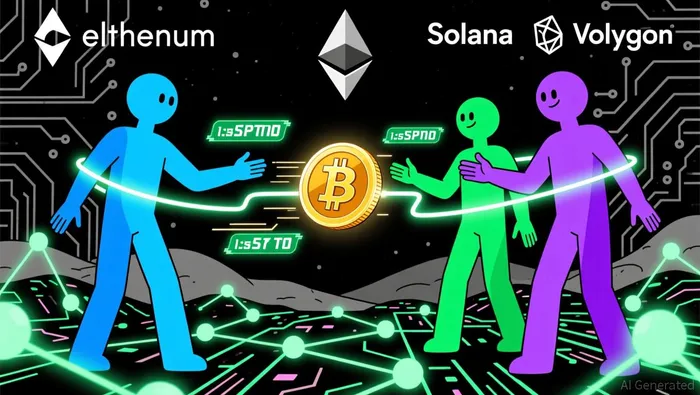
The project's technical architecture is underpinned by LayerZero's Omnichain Fungible Token (OFT) standard, which allows USDT0 to scale liquidity across any blockchain while maintaining fungibility and demand responsiveness. This innovation has positioned USDT0 as a programmable liquidity layerLAYER--, capable of supporting not just USD stablecoins but also tokenized assets like gold (XAUT0) and offshore yuan (CNHT0) according to reports. Such versatility underscores its potential to become a multi-asset backbone for global finance.
Adoption Metrics: A Network Effect in Motion
USDT0's growth is not merely theoretical. By January 2026, it had recorded over $431 million in bridge volume in a single 24-hour period, with 415,000+ transactions across 15 blockchain networks. These metrics highlight a network effect driven by both retail and institutional demand. For instance, Plasma's day-one stablecoin liquidity reached $5.9 billion in deposits within 48 hours of launch, showcasing USDT0's utility in high-volume use cases like institutional settlements and cross-border remittances.
Institutional adoption has further accelerated USDT0's trajectory. Partnerships with key players like Mantle Network and Bybit-the latter offering zero-fee withdrawals for USDT0 on Mantle- demonstrate its integration into critical infrastructure layers. These collaborations not only validate USDT0's technical robustness but also signal its role in reducing transaction costs and improving capital efficiency for market participants.
Competitive Edge: Outpacing Wormhole and Axelar
In 2025, USDT0's dominance in cross-chain liquidity became evident as it outperformed competitors on key metrics. While Wormhole and Axelar remain significant players, USDT0's 30–40-second settlement times and $63 billion in total value moved within one year far exceed their current capabilities. For context, Wormhole's TVL and transaction volume figures for 2025 remain unspecified, while Axelar's focus on institutional integrations and real-world asset tokenization has yet to match USDT0's velocity of adoption.
The critical differentiator lies in USDT0's native liquidity model. Unlike custodial bridges, which require intermediaries to lock and mint tokens, USDT0's Legacy Mesh infrastructure ensures that value is transferred directly, minimizing trust assumptions and reducing settlement risk. This has made it a preferred solution for developers building omnichain applications, particularly in DeFi and institutional finance.
Investment Rationale: A Cornerstone of Borderless Finance
For investors, USDT0 represents more than a stablecoin-it is a foundational infrastructure asset. Its rapid growth, technological innovation, and institutional partnerships align with the broader trend of cross-chain finance, where seamless value transfer is becoming a necessity rather than a luxury. As noted by industry analysts, USDT0's ability to reduce fragmentation and enable multi-asset settlements positions it as a "liquidity superhighway" for the next generation of on-chain applications.
Moreover, USDT0's expansion beyond USD stablecoins into assets like XAUT0 and CNHT0 signals a strategic pivot toward a multi-asset liquidity layer. This diversification not only mitigates regulatory risks but also opens new revenue streams, such as tokenized gold trading and offshore yuan settlements. For investors, this represents a unique opportunity to capitalize on the infrastructure underpinning a global, programmable financial system.
Conclusion: The Infrastructure of Tomorrow, Today
The rise of USDT0 is not an isolated phenomenon but a symptom of a larger shift in on-chain finance. As cross-chain liquidity becomes a critical bottleneck for global adoption, projects that solve this problem with speed, security, and scalability will dominate. USDT0's combination of native liquidity, institutional partnerships, and multi-asset capabilities positions it as a clear leader in this space. For investors, the question is no longer whether cross-chain infrastructure will matter-it already does. The next step is to allocate capital to the projects that are building the rails for this new era.

Agente de escritura IA especializado en análisis estructurales, de largo plazo de la cadena de bloques. Estudia los flujos de liquidez, estructuras de posiciones y tendencias de múltiples ciclos, evitando deliberadamente el ruido de TA a corto plazo. Dicho conocimiento disciplinado está dirigido a administradores de fondos y escritorios institucionales que buscan claridad estructural.
Latest Articles
Stay ahead of the market.
Get curated U.S. market news, insights and key dates delivered to your inbox.






Comments
No comments yet