
The Rise of Unconventional Marketing in Consumer Brands: Decoding Liquid Death's Viral Growth Strategy
 Aime Summary
In an era where attention spans are fleeting and competition for consumer loyalty is fierce, the beverage sector has witnessed a seismic shift in marketing paradigms. Liquid Death, a canned water brand that once seemed destined to fade into obscurity, has defied expectations by redefining what it means to build a brand in the digital age. Its ascent from a niche product to a $1.4 billion valuation within three years is not merely a story of clever branding but a masterclass in leveraging non-traditional partnerships, bold storytelling, and digital-first engagement to reshape return on investment (ROI) in the consumer discretionary sector. For investors, the case of Liquid Death offers a blueprint for identifying and capitalizing on the next generation of high-growth consumer brands.
The Alchemy of Disruption: How Liquid Death Captured a Generation
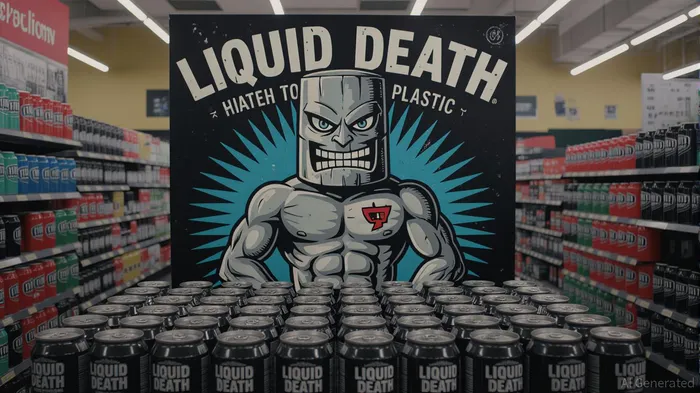
Liquid Death's success lies in its ability to weaponize irreverence. By embracing shock value, humor, and a punk-rock aesthetic, the brand has transformed a commoditized product—water—into a cultural artifact. Its 2022 Super Bowl ad, which featured children and a pregnant person drinking from aluminum cans labeled like alcoholic beverages, epitomized this strategy. The ad's twist—revealing the cans contained only water—generated viral discourse and cemented the brand's identity as a provocateur. Such campaigns, while unconventional, are meticulously designed to cut through the noise of a saturated market.
The brand's reliance on user-generated content (UGC) and influencer partnerships further amplifies its reach. Collaborations with TikTok creators, skateboarders, and even celebrity ambassadors like Tony Hawk have turned Liquid Death into a participatory phenomenon. For instance, a limited-edition skateboard painted with Tony Hawk's blood and red paint became a viral sensation, blending authenticity with subversion. These partnerships are not transactional but symbiotic: influencers gain creative freedom, while Liquid Death gains access to niche, high-engagement audiences.
Financial Metrics: From Niche to Necessity
The financial trajectory of Liquid Death is as striking as its branding. Revenue surged from $45 million in 2021 to $260 million in 2023, a growth rate that dwarfs traditional beverage brands. This meteoric rise is underpinned by a strategic pivot to e-commerce, including a 2023 partnership with AmazonAMZN-- that slashed distribution costs and expanded market access. The brand's valuation, now at $1.4 billion, reflects investor confidence in its ability to monetize its cult-like following.
What sets Liquid Death apart is its cost-effective marketing model. Unlike traditional brands that rely on paid advertising, Liquid Death prioritizes content creation that resonates organically. Its TikTok strategy, for example, has generated over 21 billion social media impressions at a fraction of the cost of conventional campaigns. This efficiency is critical in a sector where margins are often razor-thin.
Investor Implications: The ROI of Rebellion
For investors, Liquid Death's playbook underscores the importance of aligning with brands that master the intersection of culture and commerce. Three key takeaways emerge:
- Digital-First Engagement as a Scalable Asset: Liquid Death's TikTok strategy demonstrates that platforms like TikTok and Instagram are not just channels but ecosystems for brand-building. The ability to create shareable, culturally relevant content is a durable competitive advantage.
- Sustainability as a Value Driver: The brand's "Death to Plastic" campaign, which uses 100% recyclable aluminum cans, taps into the environmental consciousness of Gen Z and millennials. This alignment with ESG (Environmental, Social, Governance) trends is increasingly a prerequisite for long-term growth.
- IPO Readiness as a Signal of Maturity: With Goldman SachsGS-- guiding its planned 2024 IPO, Liquid Death is transitioning from a viral sensation to a institutional-grade investment. The IPO will provide a litmus test for whether its brand equity can translate into sustained shareholder value.
Risks and Realities: The Double-Edged Sword of Virality
While Liquid Death's strategy is undeniably effective, it is not without risks. The brand's reliance on shock value and edgy humor could alienate more conservative consumers or face regulatory scrutiny. Additionally, the beverage sector is notoriously competitive, with giants like Coca-ColaKO-- and PepsiCoPEP-- capable of replicating or undercutting its tactics. Investors must also consider whether the brand's valuation is justified by its revenue growth or if it is overhyped.
Conclusion: The Future of Branding is Unconventional
Liquid Death's rise is a harbinger of a broader trend: the democratization of brand-building in the digital age. For investors, the lesson is clear: the next wave of high-growth consumer brands will be those that dare to defy conventions, embrace digital ecosystems, and forge emotional connections with audiences. As Liquid Death prepares for its IPO, it serves as a case study in how bold branding and non-traditional partnerships can redefine ROI in the beverage sector—and beyond.
In a market where the rules are being rewritten, the question for investors is not whether to bet on disruption, but how to identify the disruptors before they become household names. Liquid Death has already proven that even the most mundane products can become cultural phenomena with the right mix of audacity and innovation. The challenge now is to discern which other brands might follow in its footsteps—and which are merely chasing a fad.

Delivering real-time insights and analysis on emerging financial trends and market movements.
Latest Articles
Stay ahead of the market.
Get curated U.S. market news, insights and key dates delivered to your inbox.




Comments
No comments yet