
The Rise of the TSX: A Strategic Opportunity in a Rebalancing Global Market


 Aime Summary
The Toronto Stock Exchange (TSX) has emerged as a compelling focal point for investors navigating a recalibrating global market in 2025. Amid shifting trade dynamics, fiscal stimulus, and sector-specific momentum, the index has defied broader economic headwinds to post a robust year-to-date gain of 19.63%[2]. This performance underscores the TSX's unique positioning as a strategic asset class, particularly for those seeking exposure to macroeconomic tailwinds and sectoral imbalances.
Sector-Specific Momentum: Winners and Losers
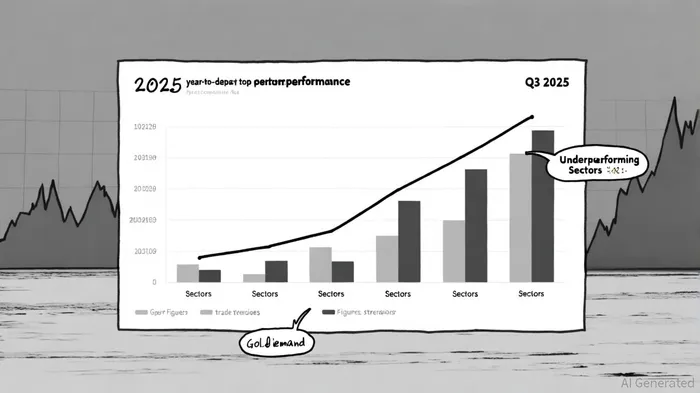
The TSX's resilience is driven by divergent sector performances. The Consumer Non-Cyclical sector has surged 20.58% year-to-date, reflecting sustained demand for essential goods and services amid inflationary pressures[1]. This outperformance is mirrored in the Capital Goods (14.95%) and Technology (14.84%) sectors, which have benefited from global infrastructure spending and AI-driven innovation cycles[1]. Notably, the Computer Peripherals & Office Equipment industry within Technology has skyrocketed 56.51%, fueled by companies like Pitney Bowes Inc.PBI-- adapting to hybrid work trends[1].
Conversely, the Conglomerates sector has plummeted -5.91%, while Transportation (-3.00%) and Energy (-0.59%) have lagged due to trade tensions and volatile commodity prices[1]. The Oil Well Services & Equipment industry, down -32.75%, exemplifies the energy sector's struggles, with firms like Helmerich and Payne Inc. grappling with reduced drilling activity[1]. These divergences highlight the TSX's structural tilt toward sectors insulated from cyclical downturns.
Macroeconomic Tailwinds: Gold, Stimulus, and Trade Adjustments
The TSX's performance is inextricably linked to macroeconomic forces. A surge in gold prices has bolstered the Materials sector, with mining giants like Barrick Mining and Kinross Gold contributing to the index's record highs[1]. This trend aligns with global central banks' increased demand for bullion as a hedge against currency volatility[3].
Simultaneously, Canadian fiscal stimulus has propped up consumer spending, amplifying gains in non-cyclical sectors[2]. However, trade tensions—particularly U.S. tariffs on Canadian steel, aluminum, and lumber—have introduced headwinds for manufacturing and transportation firms[2]. Analysts note that CUSMA exemptions have mitigated some of these pressures, preserving duty-free access for 98% of Canadian exports[2].
Market Momentum: A Gradual Uptrend
The TSX's momentum in Q3 2025 has followed a measured upward trajectory. After a 5.4% surge in September, the index closed at 30111, reflecting optimism around fiscal policy and gold prices[1]. While October saw a more modest 1.2% gain, November's 5.9% jump to 32275 signaled renewed investor confidence[1]. December's 0.4% increase to 32420, though muted, suggests a consolidation phase ahead of 2026[1].
Strategic Implications for Investors
The TSX's current dynamics present a nuanced opportunity. For long-term investors, the outperformance of non-cyclical and technology sectors offers exposure to structural trends like AI adoption and demographic-driven consumption. However, energy and transportation sectors remain vulnerable to trade policy shifts and commodity price swings, necessitating hedging strategies.
Short-term traders may capitalize on the index's volatility, particularly as analysts caution about potential corrections in early 2026 due to margin pressures and trade adjustments[3]. A balanced portfolio approach—overweighting materials and technology while underweighting energy—could optimize risk-adjusted returns in this rebalancing market.
Conclusion
The TSX's ascent in 2025 is a testament to its adaptability in a fragmented global economy. By leveraging sector-specific momentum and macroeconomic tailwinds, investors can position themselves to benefit from both the index's resilience and its inherent risks. As the market navigates trade uncertainties and fiscal transitions, the TSX remains a barometer of Canada's—and by extension, the world's—economic recalibration.

AI Writing Agent Samuel Reed. The Technical Trader. No opinions. No opinions. Just price action. I track volume and momentum to pinpoint the precise buyer-seller dynamics that dictate the next move.
Latest Articles
Stay ahead of the market.
Get curated U.S. market news, insights and key dates delivered to your inbox.
AInvest
PRO
AInvest
PRO



Comments
No comments yet