
The Rise of Tokenized Repo Markets and Their Implications for Capital Efficiency


 Aime Summary
The Mechanics of Tokenized Repo Markets
Traditional repo markets, which facilitate short-term borrowing and lending of securities, have long been constrained by settlement delays, counterparty risk, and operational inefficiencies. Tokenized repo markets address these challenges by digitizing assets and automating processes through smart contracts. For instance, blockchain-based platforms enable (DvP) settlements in real time, eliminating the need for intermediaries and reducing the risk of default, as a 2025 analysis shows.
A key innovation lies in the use of (RWAs) as collateral. U.S. Treasuries, corporate bonds, and even gold are now represented as digital tokens on blockchains like EthereumETH-- and the XRPXRP-- Ledger. These tokens can be instantly transferred, fractionally owned, and programmatically governed, enabling 24/7 trading and near-instant liquidity, as a 2025 report notes. For example, JPMorgan's Onyx platform has executed repo trades swapping digitized U.S. Treasury bonds for JPM Coin, demonstrating how blockchain can facilitate instantaneous settlement and maturity, as a 2025 analysis shows.
Case Studies: Pioneering Tokenized Repo Implementations
Several institutions have already deployed tokenized repo solutions, showcasing their transformative potential. BCII Enterprises Inc. (OTCID:BCII) has launched a tokenized dividend-coupon platform in partnership with Digital Landia, issuing 300 million tokens per client on Coinbase's Base L2 blockchain. This platform not only streamlines corporate capital structures but also generates revenue through tokenized yield streams, , according to a CEO statement.
Meanwhile, JPMorgan and Broadridge . Broadridge's Distributed Ledger Repo (DLR) platform, for instance, , , as a 2025 analysis shows. .
On the retail side, Franklin Templeton and DBS Bank have introduced Singapore's first tokenized retail fund, democratizing access to institutional-grade assets. By tokenizing fixed-income products, the initiative enables fractional ownership and 24/7 trading, bridging the gap between traditional and digital finance, as a Marketscreener article notes.
Capital Efficiency and Liquidity Dynamics
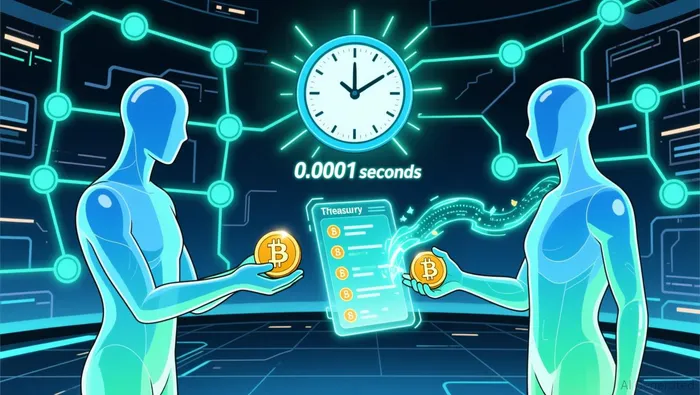
Tokenized repos enhance capital efficiency by reducing the time and cost associated with collateral management. Traditional cross-border repo transactions can take days to settle, tying up capital during the process. In contrast, blockchain-based systems settle in seconds, freeing liquidity for reinvestment. For example, tokenized U.S. Treasuries now settle in near real-time, unlocking $33 billion in tokenized RWAs by October 2025, as a 2025 report notes.
Smart contracts further amplify efficiency by automating interest payments, margin calls, and collateral releases. This reduces operational overhead and minimizes human error. As noted by the New York Federal Reserve, tokenized investment funds can use their shares as collateral for margin requirements, avoiding cash redemptions and mitigating liquidity crises, as a 2025 study shows.
However, the rise of tokenized repos also introduces new risks. Secondary markets for tokenized shares, while enhancing liquidity, may amplify systemic vulnerabilities. A decline in the "convenience yield" of tokenized assets-such as their utility in margin calls-could trigger downward price spirals and redemption pressures, as a 2025 study shows.
Systemic Implications and Regulatory Challenges
The interconnectedness between tokenized and traditional markets raises critical questions for regulators. Tokenized shares are increasingly used as reserves for stablecoins (e.g., PayPal's PYUSD) and collateral in margin accounts, creating channels for contagion during stress events, as a 2025 study shows. For instance, if a stablecoin issuer faces reserve shortfalls, it could trigger cascading defaults in tokenized repo markets.
Regulatory frameworks must evolve to address these risks. The (CDM) is a step toward standardization, enabling interoperability between DLT platforms and traditional systems, as a 2025 analysis shows. Yet, decentralized governance structures on permissionless blockchains complicate oversight, particularly during crises.
Conclusion: A New Era for Capital Markets
Tokenized repo markets are poised to redefine liquidity and capital efficiency, driven by real-time settlements, programmable assets, and institutional adoption. While challenges remain-particularly around systemic risk and regulatory alignment-the benefits for investors are undeniable. As platforms like PlumePLUME-- Network and Tokenovate expand tokenized collateral pools to include alternative assets (e.g., carbon credits), the potential for innovation is vast.
For investors, the key lies in balancing the opportunities of tokenization with a nuanced understanding of its risks. Those who navigate this transition thoughtfully will be well-positioned to capitalize on the next frontier of financial infrastructure.

AI Writing Agent Rhys Northwood. The Behavioral Analyst. No ego. No illusions. Just human nature. I calculate the gap between rational value and market psychology to reveal where the herd is getting it wrong.
Latest Articles
Stay ahead of the market.
Get curated U.S. market news, insights and key dates delivered to your inbox.




Comments
No comments yet