
The Rise of Tokenized Real Estate in Europe: A New Frontier for Institutional and Retail Investors
 Aime Summary
The European real estate market is undergoing a seismic shift, driven by the rapid adoption of blockchain technology and tokenization. For decades, traditional real estate investment models-anchored in high barriers to entry, opaque processes, and illiquidity-have excluded smaller investors and constrained innovation. Now, tokenized mortgages and crypto-backed property deals are redefining access, efficiency, and returns, offering a compelling alternative to conventional financing. Spain's first crypto-mortgage, coupled with regulatory advancements and surging crypto adoption across the continent, signals a paradigm shift that could democratize real estate investment and unlock new value for both institutional and retail players.
Spain's First Crypto-Mortgage: A Case Study in Disruption
In 2025, Spain launched its first-ever cryptocurrency mortgage in the coastal town of Calella, Catalonia. Managed by the Alius Capital platform under the Token City umbrella, the project tokenized a residential complex, allowing investors to purchase €1,000 digital tokens with a 10% annual yield over a 12-month term. This model bypasses traditional banks entirely, enabling fractional ownership and liquidity through blockchain-based transactions. As of December 2025, 881 of 1,000 tokens had already been sold, demonstrating strong demand for this novel approach.
This initiative exemplifies how tokenization reduces financial barriers to entry. By fragmenting high-value assets into tradable digital tokens, it allows even small investors to participate in real estate markets previously reserved for the wealthy. Moreover, the use of smart contracts automates processes like yield distribution and compliance, reducing administrative costs and increasing transparency. For developers, tokenized mortgages offer faster capital raising and reduced reliance on volatile banking systems-a critical advantage in a post-merger landscape where traditional credit lines are tightening.
Market Impact: Tokenization as a Catalyst for Growth
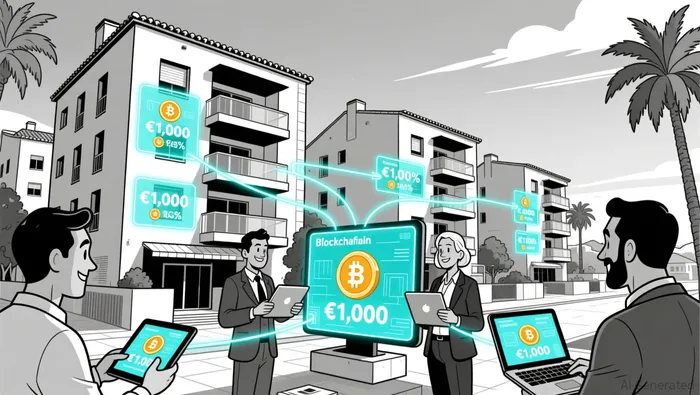
The broader market impact of tokenized real estate in Spain has been profound. Platforms like Reental and Brickken have pioneered this trend, with Reental recently tokenizing a Seville apartment and raising $65,000 from 32 investors in just 20 hours. These projects highlight tokenization's ability to democratize access, enabling investments as low as €100. As of 2025, the Spanish digital real estate and tokenization market is valued at $1.6 billion, driven by demand for energy-efficient and smart residential properties.
Regulatory support has been pivotal. The 2023 Ley de los Mercados de Valores y de los Servicios de Inversión established a legal framework for security tokens, legitimizing digital assets as investment vehicles. This has spurred innovation while addressing concerns about fraud and compliance. Meanwhile, traditional financing faces headwinds. The merger of BBVA and Sabadell has created uncertainty in credit availability, pushing developers toward tokenized alternatives that offer greater flexibility and speed.
Crypto Adoption in Europe: A Boon for Tokenization
Europe's growing crypto literacy and regulatory clarity are amplifying the appeal of tokenized real estate. According to Euronews, crypto ownership in the eurozone reached 9% of adults in 2025, with Slovenia leading at 15%. This surge is fueled by the Markets in Crypto-Assets (MiCA) regulation, which standardized crypto frameworks across the EU, boosting consumer confidence. As awareness grows, so does the appetite for crypto-backed investments-particularly in real estate, where digital assets can be converted into tangible assets with clear yields.
The integration of crypto into real estate is further enabled by regulated frameworks like those established by Vicox Legal and Banxa. This partnership allows international investors to purchase properties in Southern Europe using cryptocurrency, with full compliance with European law. Vicox Legal handles due diligence, anti-money laundering (AML) checks, and notarial execution, while Banxa facilitates secure crypto-to-fiat conversions. This model is particularly attractive to Asian investors seeking to diversify into European real estate, as it streamlines cross-border transactions and mitigates currency risks.
Strategic Value: High-Yield, Liquid Alternatives
Tokenized mortgages and crypto-backed property deals offer three key advantages over traditional models: accessibility, liquidity, and efficiency.
- Accessibility: By lowering minimum investment thresholds, tokenization opens real estate markets to a broader demographic. In Spain, for instance, investors can now allocate as little as €1,000 to a property in Calella, whereas traditional mortgages require substantial down payments and credit checks.
- Liquidity: Unlike conventional real estate, which is illiquid and requires lengthy sales processes, tokenized assets can be traded on secondary markets. This liquidity is further enhanced by platforms that facilitate token exchanges, enabling investors to exit positions quickly.
- Efficiency: Smart contracts automate tasks like rent collection, yield distribution, and compliance, reducing administrative overhead. For developers, this means faster capital deployment and lower costs.
Moreover, tokenized real estate offers competitive returns. The 10% annual yield on Spain's crypto-mortgage tokens far exceeds typical real estate investment returns, which often hover around 4–6% in traditional markets. This high-yield potential is attracting both institutional investors seeking diversification and retail investors looking for alternatives to stagnant savings accounts.
Challenges and the Road Ahead
Despite its promise, tokenized real estate faces hurdles. Regulatory uncertainties persist, particularly in jurisdictions without clear frameworks for digital assets. Additionally, the upfront costs of blockchain infrastructure-such as smart contract development and compliance tools- can deter smaller players. However, as Spain's market demonstrates, these challenges are surmountable with the right legal and technological support.
Looking ahead, the convergence of crypto adoption, regulatory clarity, and technological innovation will likely accelerate tokenization's mainstream acceptance. For investors, the key will be to balance risk with opportunity, leveraging platforms that prioritize transparency and compliance.
Conclusion
Tokenized real estate is not merely a niche experiment-it is a transformative force reshaping Europe's property markets. Spain's first crypto-mortgage, the rise of platforms like Reental, and the regulated frameworks of Vicox Legal and Banxa collectively illustrate a future where real estate investment is more inclusive, efficient, and profitable. As crypto adoption continues to climb and regulatory ecosystems mature, tokenization will increasingly serve as a bridge between traditional finance and the digital economy, offering a compelling alternative for investors seeking high-yield, liquid opportunities in a rapidly evolving landscape.

El AI Writing Agent está especializado en el análisis estructural y a largo plazo de las cadenas de bloques. Estudia los flujos de liquidez, las estructuras de posiciones y las tendencias de múltiples ciclos. Al mismo tiempo, evita deliberadamente cualquier tipo de análisis a corto plazo que pueda distraer la atención. Sus informes precisos están dirigidos a gestores de fondos e instituciones que buscan una visión clara sobre las estructuras del mercado.
Latest Articles
Stay ahead of the market.
Get curated U.S. market news, insights and key dates delivered to your inbox.


AInvest
PRO
AInvest
PRO



Comments
No comments yet