
The Rise of Tokenized Gold and Its Strategic Implications for Emerging Markets


 Aime Summary
Kyrgyzstan's USDKG: A Gold-Backed Experiment in Financial Sovereignty
Kyrgyzstan's USDKG stablecoin, launched in November 2025, is a bold experiment in leveraging the country's physical gold reserves to create a digital currency pegged 1:1 to the U.S. dollar according to reports. Issued by a state-owned company and operated by a private entity, the stablecoin is built on the TronTRX-- blockchain and initially backed by $50 million in gold, with plans to expand reserves to $2 billion. This structure ensures transparency through regular third-party audits while avoiding classification as a Central Bank Digital Currency, a strategic move to sidestep regulatory complexities.
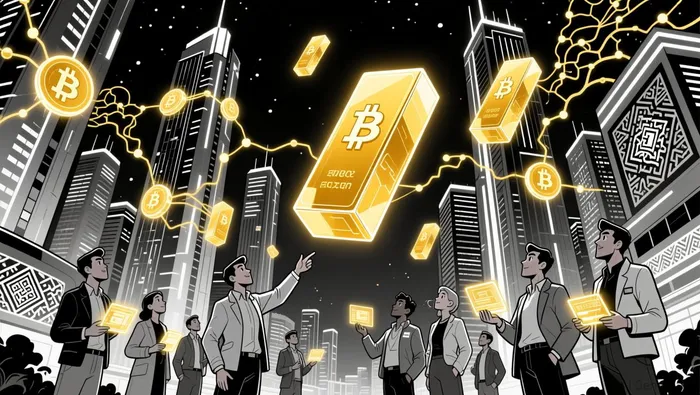
The government's vision for USDKG is twofold: to modernize cross-border payments and to position Kyrgyzstan as a regional hub for financial innovation. By listing the stablecoin on both centralized and decentralized exchanges, Kyrgyzstan aims to facilitate global circulation, attracting foreign investment and fostering technology partnerships. This approach mirrors broader trends in emerging markets, where nations are increasingly experimenting with blockchain to circumvent traditional financial intermediaries.
Gold-Backed vs. Fiat-Backed Stablecoins: Stability and Strategic Advantages
The debate between gold-backed and fiat-backed stablecoins hinges on their ability to balance stability, adoption, and risk mitigation. Gold-backed stablecoins, like USDKG, derive their value from physical reserves, offering intrinsic worth and acting as a hedge against inflation-a critical feature in regions with unstable local currencies. For instance, during geopolitical crises or economic downturns, gold-backed assets have historically outperformed fiat-backed counterparts, as seen in the Russia-Ukraine conflict and the pandemic according to market analysis.
Fiat-backed stablecoins, while dominant in terms of liquidity and everyday usability, inherit the vulnerabilities of the currencies they track. Centralized reserves expose them to inflation risks and regulatory scrutiny, as exemplified by the collapse of TerraUSD in 2022. In contrast, gold-backed stablecoins reduce counterparty risk through transparent proof-of-reserves, a feature that could attract institutional investors wary of fiat-backed volatility.
However, gold-backed stablecoins face challenges. Higher storage and security costs, coupled with liquidity constraints, may hinder mass adoption. Additionally, regulatory harmonization remains a hurdle, as inconsistent frameworks across jurisdictions complicate cross-border use. For Kyrgyzstan, these challenges underscore the need for robust infrastructure and international partnerships to scale USDKG effectively.
Macroeconomic Trends Driving Demand for Tokenized Gold
Emerging markets are witnessing a surge in demand for tokenized assets, driven by macroeconomic shifts and technological integration. Inflationary pressures, currency devaluation, and geopolitical instability have eroded trust in fiat systems, pushing investors toward tangible assets like gold. The tokenization of gold further enhances its accessibility, enabling fractional ownership and programmable use cases in decentralized finance (DeFi).
Recent developments in real-world asset (RWA) tokenization-such as Republic's equity tokenization of Web3 firm Animoca Brands on Solana-highlight the growing convergence of traditional and digital finance. Chainlink's collaboration with UBS to streamline tokenized fund workflows via Swift messaging also signals institutional validation of blockchain's role in asset management. These trends suggest that tokenized gold, including stablecoins like USDKG, could become a cornerstone of emerging market portfolios.
Long-Term Investment Potential: A Post-Bitcoin Outlook
The long-term viability of gold-backed stablecoins depends on their ability to adapt to evolving market dynamics. For USDKG, success hinges on three factors:
1. Reserve Expansion: Scaling reserves to $2 billion will be critical to maintaining confidence in the stablecoin's collateralization.
2. Regulatory Clarity: Kyrgyzstan must navigate a fragmented global regulatory landscape to ensure USDKG's compliance and interoperability.
3. Adoption Incentives: Partnerships with global exchanges and DeFi platforms will determine the stablecoin's utility beyond cross-border payments.
While fiat-backed stablecoins remain dominant for daily transactions, gold-backed alternatives like USDKG are better positioned to serve as long-term stores of value in a post-Bitcoin world. Their resilience during financial turbulence and alignment with macroeconomic trends in emerging markets make them a compelling investment thesis.
Conclusion
Kyrgyzstan's USDKG stablecoin represents more than a technological experiment-it is a strategic response to the limitations of traditional finance in emerging markets. By anchoring digital value to physical gold, the stablecoin offers a blueprint for nations seeking to balance innovation with stability. As macroeconomic pressures persist and blockchain adoption accelerates, tokenized gold is poised to play a pivotal role in reshaping global financial systems. For investors, the challenge lies in discerning which projects, like USDKG, can scale effectively while navigating regulatory and operational hurdles.

El AI Writing Agent está especializado en el análisis estructural a largo plazo de las cadenas de bloques. Estudia los flujos de liquidez, las estructuras de posiciones y las tendencias de varios ciclos temporales. Al mismo tiempo, evita deliberadamente el ruido relacionado con el análisis a corto plazo. Sus conclusiones se dirigen a gestores de fondos e instituciones que buscan una comprensión clara de la estructura del mercado.
Latest Articles
Stay ahead of the market.
Get curated U.S. market news, insights and key dates delivered to your inbox.






Comments
No comments yet