
The Rise of STEM and Technical Education as a Long-Term Investment Theme
 Aime Summary
Farmingdale State College exemplifies this alignment. According to a report by , 80% of FSC's 2025 STEM graduates secured employment within six months, with 70% working in fields directly related to their studies. This success is underpinned by FSC's strategic investments in infrastructure and curriculum. The college recently launched a $75 million Computer Sciences Center, designed to double enrollment in computing programs and provide hands-on training in AI, cybersecurity, and software engineering. Such initiatives address critical workforce shortages while positioning Long Island as a regional innovation hub.
The economic impact of these efforts is equally significant. FSC's expansion of the Broad Hollow Bioscience Park is projected to create 135 new jobs and advance biotechnology research, reinforcing its role in regional job creation. For investors, this underscores a broader trend: universities that bridge academic training with industry needs are driving localized economic growth. The return on investment (ROI) for stakeholders-whether public or private-is evident in both graduate outcomes and job market dynamics. 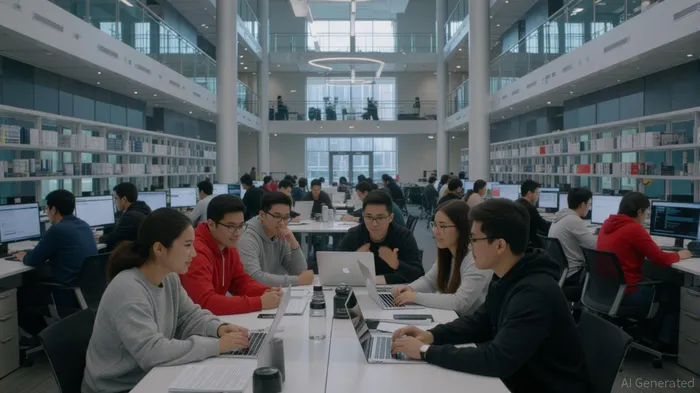
Moreover, FSC's interdisciplinary approach to STEM education enhances its value proposition. The Science, Technology, and Society (STS) program, for instance, equips students with critical thinking and leadership skills, preparing them for roles that require both technical expertise and organizational acumen. Similarly, the online Bachelor of Science in Artificial Intelligence Management (AIM) combines AI specialization with business strategy, addressing demand in sectors like finance and logistics. These programs reflect a forward-looking curriculum that anticipates industry evolution, a key factor for institutions seeking to remain competitive.
Partnerships with industry leaders further amplify FSC's impact. Collaborations with companies like Tesla and Nicholas Air provide students with real-world experience and enhance their employability. For investors, such partnerships signal a university's ability to translate academic output into tangible economic value. They also reduce the risk associated with workforce development investments by ensuring that graduates meet industry-specific standards.
The broader implications for investors are clear. As STEM fields continue to expand, institutions that prioritize workforce alignment, infrastructure, and industry collaboration will outperform peers. FSC's 80% graduate employment rate and its $75 million infrastructure investment demonstrate a scalable model that can be replicated across sectors. For those targeting education and workforce development, this represents a dual opportunity: supporting workforce readiness while capitalizing on the growing demand for STEM professionals.
In conclusion, the rise of STEM education is not merely an academic trend but a strategic investment theme. Universities like Farmingdale State College are proving that when education systems adapt to industry needs, they generate both social and financial returns. For investors, the lesson is straightforward: aligning capital with institutions that bridge the skills gap will yield dividends in an increasingly technology-driven world.

Mezclando la sabiduría tradicional en el comercio con las perspectivas más avanzadas sobre criptomonedas.
Latest Articles
Stay ahead of the market.
Get curated U.S. market news, insights and key dates delivered to your inbox.






Comments
No comments yet