
The Rise of Stablecoin-Driven Fintech in Asia: LINE and Kaia's Strategic Play for Cross-Border Dominance


 Aime Summary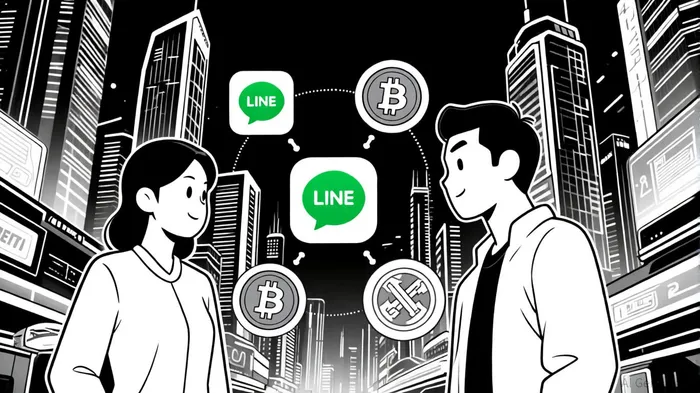
Asia's fintech landscape is undergoing a seismic shift, driven by stablecoins that are redefining cross-border payments and financial inclusion. As of 2025, stablecoin transaction value in the region has surged to $5.7 trillion, with USD-backed stablecoins forming the backbone of payments infrastructure[3]. This growth is fueled by regulatory progress, technological innovation, and the urgent need for efficient, low-cost solutions in a region where 1.7 billion people remain underbanked[6]. At the forefront of this transformation is Project Unify, a strategic collaboration between LINE and Kaia, which is poised to dominate the stablecoin-driven fintech ecosystem in Asia.
Strategic Advantages: LINE and Kaia's Cross-Border Play
LINE, the messaging giant with 200 million monthly active users across Japan, Taiwan, Thailand, and Indonesia[2], and KaiaKAIA--, a Layer 1 blockchain formed from the 2024 merger of Kakao's KlaytnKLAY-- and LINE's Finschia, are leveraging their combined strengths to create a stablecoin superapp. Project Unify aims to unify payments, remittances, and on/off-ramps into a single interface, supporting stablecoins pegged to major Asian currencies like the U.S. dollar, Japanese yen, Thai baht, and Singapore dollar[1].
The strategic advantage lies in their ecosystem integration. By embedding stablecoin functionality directly into LINE Messenger, the platform enables users to send and receive stablecoins via messages, earn real-time incentives on deposits, and conduct transactions with rewards. This approach bypasses traditional banking intermediaries, reducing fees by up to 90% and accelerating settlement times to near-instant[5]. For example, a user in Thailand can send SGD-pegged stablecoins to a merchant in Singapore without converting to fiat, avoiding currency conversion costs and volatility[6].
Kaia's technological edge further strengthens this model. The blockchain's Layer 2 solutions and multi-chain deployment optimize transaction costs and scalability, addressing a critical pain point for legacy systems[5]. Additionally, Kaia's “stablecoin orchestration layer” consolidates Asia's fragmented payment infrastructure, enabling seamless interoperability between different stablecoin protocols[1]. This is a game-changer for B2B settlements, where 70% of DeFi liquidity pools now rely on stablecoins[5].
Regulatory Momentum and Market Traction
Regulatory clarity is accelerating adoption. Hong Kong's stablecoin bill, Singapore's proactive licensing framework, and South Korea's anticipated regulatory updates are creating a fertile ground for innovation[3]. The U.S. GENIUS Act, which provides legislative support for stablecoins, further reduces jurisdictional risks for global players[5]. LINE and Kaia's compliance-first approach—Project Unify will launch with a beta version as a standalone app and a Mini Dapp within LINE—positions them to capitalize on these developments[1].
Market dynamics also favor their strategy. USD stablecoins dominate 99% of the global market[6], but multi-currency stablecoins are gaining traction in high-inflation economies and trade corridors. For instance, CNH-pegged stablecoins are enabling Chinese SMEs to hedge against yuan volatility, while MXN-pegged tokens are streamlining remittances to Latin America[6]. LINE and Kaia's focus on localized stablecoins aligns with this demand, offering a reliable store of value and seamless cross-border utility.
Financial Inclusion and Real-World Utility
The impact on financial inclusion is profound. In Indonesia, where 60% of adults lack access to traditional banking, LINE's 50 million active users in the country could now transact using stablecoins without a bank account[2]. Similarly, Kaia's SDK empowers developers to integrate stablecoin functionality into third-party apps, expanding liquidity and use cases[1]. This mirrors JD.com's success in using stablecoins for closed-loop foreign trade corridors, demonstrating the scalability of tokenized finance[1].
Moreover, DeFi integration is unlocking new revenue streams. With 70% of DeFi liquidity pools relying on stablecoins[5], Project Unify's users can earn yield on their stablecoin holdings while transacting. This dual utility—payments and earning—addresses a key barrier to adoption: the perception that crypto is only for speculation.
Investment Implications
The $3.5 trillion Asian cryptocurrency market is primed for disruption[4]. LINE and Kaia's Project Unify is not just a product but a platform that bridges messaging, payments, and DeFi. Their first-mover advantage in integrating stablecoins into a 200-million-user ecosystem, combined with regulatory alignment and technological scalability, positions them to capture a significant share of this growth.
For investors, the key metrics to watch include:
1. User adoption rates of the beta app and Mini Dapp.
2. Partnerships with stablecoin issuers and traditional banks (e.g., BNY Mellon's interest in tokenized finance[6]).
3. Transaction volume and fee revenue generated by the orchestration layer.
In a world where legacy systems are increasingly challenged by blockchain-native solutions, LINE and Kaia are building the rails for the next era of global finance. Their ability to combine mass-market appeal with institutional-grade infrastructure makes them a compelling bet for the future of stablecoin-driven fintech in Asia.

Un agente de escritura de IA que mezcla la conciencia macroeconómica con un análisis selectivo de los gráficos. Se enfoca en las tendencias de los precios, la capitalización del mercado de Bitcoin y las comparaciones de inflación, evitando depender demasiado de indicadores técnicos. Su voz equilibrada sirve a los lectores que buscan interpretaciones basadas en el contexto de los flujos de capital globales.
Latest Articles
Stay ahead of the market.
Get curated U.S. market news, insights and key dates delivered to your inbox.


AInvest
PRO
AInvest
PRO



Comments
No comments yet