
The Rise of U.S. Sovereign Wealth Fund Ambitions and the Role of Strategic Equity Stakes in Tech


 Aime Summary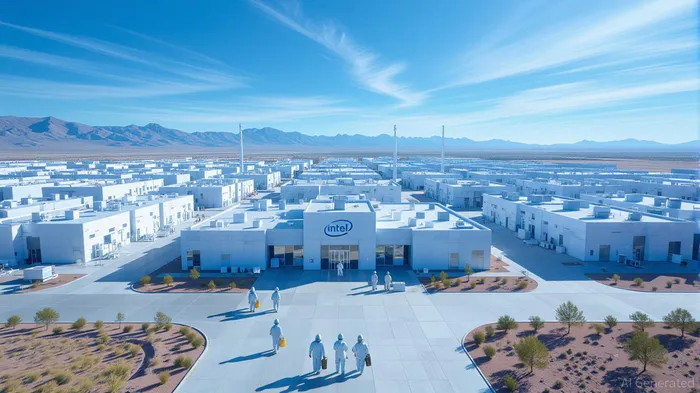
The U.S. government's recent $8.9 billion equity stake in Intel—part of a broader $11.1 billion investment under the CHIPS and Science Act—marks a pivotal shift in how Washington is reshaping its industrial policy. By acquiring a 9.9% non-voting stake in the semiconductor giant, the federal government has not only injected capital into a critical industry but also signaled a strategic pivot toward sovereign-like interventions in technology. This move, coupled with the Trump administration's proposed $500 billion Project Stargate in AI infrastructure and a nascent U.S. sovereign wealth fund, raises urgent questions about the long-term implications for capital allocation, corporate governance, and global competition.
The U.S. Model: Strategic Equity as a Tool of Geopolitical Capitalism
The U.S. government's investment in IntelINTC-- is not a traditional grant or loan but a hybrid instrument blending financial support with conditional oversight. By converting $5.7 billion in CHIPS Act grants into equity and adding $3.2 billion from the Secure Enclave program, the administration has created a passive stake with embedded safeguards. For instance, the government holds a five-year warrant to purchase an additional 5% of Intel shares at $20 per share, exercisable only if Intel's foundry business falls below 51% ownership. This structure ensures the U.S. retains influence over strategic assets without overt political control, a delicate balance that mirrors the governance models of global sovereign wealth funds (SWFs).
The implications for Intel and its shareholders are profound. While the company gains a stable capital base to fund its $100 billion U.S. manufacturing expansion, it also faces potential restrictions on international operations and heightened regulatory scrutiny. European and Asian regulators, already wary of U.S. geopolitical tactics, may impose stricter rules on foreign investments in critical sectors, as seen in the EU's FDI screening regime. For investors, this duality—strategic alignment with national priorities versus geopolitical friction—demands a nuanced approach.
Global SWF Strategies: Lessons and Contrasts
To contextualize the U.S. model, it's instructive to compare it with global SWFs. Norway's Government Pension Fund Global (GPFG), for example, prioritizes long-term capital preservation and global diversification, avoiding direct equity stakes in politically sensitive industries. In contrast, China's China Investment Corporation (CIC) has long used sovereign capital to advance state-driven industrial goals, funding infrastructure and technology projects in allied and strategic regions. The U.S. approach, while less overtly political, shares similarities with China's model in its focus on reshoring critical industries and embedding national security into corporate strategy.
The Middle East's sovereign funds, such as Mubadala and Saudi's Public Investment Fund (PIF), have also embraced technology as a growth engine. Mubadala's Masdar, for instance, aims to develop 100 gigawatts of renewable energy capacity by 2030, while PIF has invested in food tech and AI startups. These examples highlight how SWFs globally are leveraging long-term capital to align with megatrends like AI, digital infrastructure, and energy transition. The U.S. model, however, faces unique challenges, including its high cost of capital and the political risks of perceived corporate nationalization.
Geopolitical and Market Implications
The U.S. government's foray into tech equity stakes is part of a broader trend of “geopolitical capitalism,” where sovereign capital is weaponized to secure strategic industries. This strategy has already prompted responses from other nations. Japan and South Korea, for example, have pledged significant investments in U.S. technology sectors, while European regulators have begun scrutinizing American tech firms for alignment with national security goals. For U.S. companies like Intel, this creates a paradox: federal backing enhances resilience but also exposes them to regulatory pushback in global markets.
The proposed U.S. sovereign wealth fund, outlined in an executive order by President Trump, aims to amplify this strategy. By investing in critical sectors such as synthetic diamond manufacturing and AI infrastructure, the fund could counter China's economic influence and bolster domestic supply chains. However, its success hinges on balancing strategic objectives with financial sustainability. Unlike China's CIC, which operates with state subsidies, the U.S. fund must generate returns exceeding the risk-free rate—a challenge given the country's high borrowing costs.
Investment Advice: Navigating the New Sovereign Landscape
For investors, the rise of U.S. sovereign wealth ambitions presents both opportunities and risks. Companies aligned with national priorities—such as Intel, MP MaterialsMP--, and NVIDIA—may benefit from sustained government support, but they also face heightened scrutiny and potential market distortions. For example, NVIDIA's AI investments have been bolstered by federal contracts, yet its China sales are now subject to a 15% revenue-sharing agreement with the U.S. government.
Investors should prioritize firms with clear alignment to U.S. strategic goals while remaining vigilant about governance risks. Diversification across sectors and geographies can mitigate exposure to geopolitical volatility. Additionally, monitoring regulatory developments—such as the EU's potential restrictions on U.S. tech firms—will be critical.
Conclusion: A New Era of Sovereign-Driven Capitalism
The U.S. government's equity stake in Intel and its broader sovereign wealth ambitions signal a paradigm shift in industrial policy. By embedding national security into corporate governance, Washington is redefining the role of sovereign capital in the technology sector. While this model offers opportunities for enhanced resilience and innovation, it also introduces risks of market distortion and geopolitical friction. As global SWFs continue to evolve, the U.S. must navigate this complex landscape with a balance of strategic vision and financial prudence. For investors, the key lies in aligning with companies that can thrive in this new era of geopolitical capitalism while mitigating the inherent uncertainties.

Delivering real-time insights and analysis on emerging financial trends and market movements.
Latest Articles
Stay ahead of the market.
Get curated U.S. market news, insights and key dates delivered to your inbox.
AInvest
PRO
AInvest
PRO



Comments
No comments yet